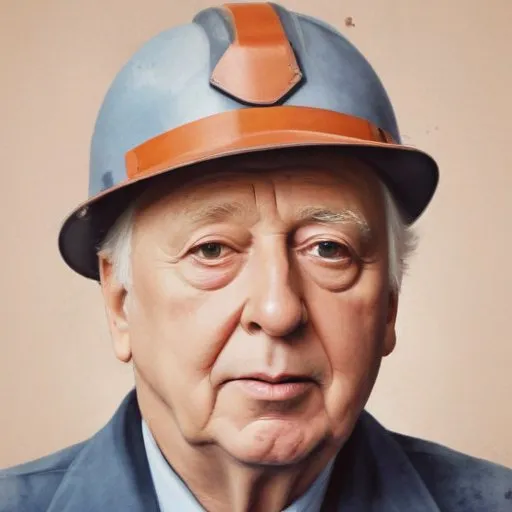
Arthur Scargill: The Miners' Champion and a Symbol of Resistance
The Face of the 1984-1985 UK Miners' Strike
Arthur Scargill is a name synonymous with the struggles of the British working class. As the President of the National Union of Mineworkers (NUM) from 1982 to 2002, he led the iconic 1984-1985 UK miners' strike, a pivotal event in the history of the British labour movement.
A Life of Service and Activism
Born on January 11, 1938, in Worsbrough Dale, West Riding of Yorkshire, Scargill's early life was shaped by his father's experiences as a miner and a member of the Communist Party of Great Britain. His mother, a professional cook, instilled in him a strong sense of social justice. Scargill's own journey as a miner began at the tender age of 15, when he left school to work at Woolley Colliery. The harsh realities of the mining industry soon galvanized him into action, and he became a formidable force in the trade union movement.
Rise to Prominence
Scargill's political awakening began in 1955, when he joined the Young Communist League. He quickly rose through the ranks, becoming the Yorkshire District Chair in 1956 and a member of the National Executive Committee. In 1957, he was elected NUM Yorkshire Area Youth Delegate, marking the beginning of his lifelong commitment to the miners' cause.
The 1984-1985 Miners' Strike: A Defining Moment
The strike, which lasted from March 1984 to March 1985, was a confrontation between the NUM and the Conservative government of
Margaret Thatcher. Scargill's leadership and unwavering commitment to the miners' cause made him a household name, as well as a thorn in the side of the government. Although the strike ultimately ended in defeat for the NUM, it served as a rallying cry for the British labour movement.
Beyond the Strike: A Lifetime of Activism
Scargill's influence extended far beyond the miners' strike. He played a key role in the strikes of 1972 and 1974, which contributed to the downfall of
Edward Heath's Conservative government. In 1996, he founded the Socialist Labour Party (SLP), which he continues to lead to this day.
Personal Milestones and Key Life Events
- 1953: Left school at 15 to work as a coal miner at Woolley Colliery
- 1955: Joined the Young Communist League
- 1957: Elected NUM Yorkshire Area Youth Delegate
- 1982-2002: President of the National Union of Mineworkers (NUM)
- 1996: Founded the Socialist Labour Party (SLP)
Philosophical Contributions and Beliefs
Scargill's unwavering commitment to socialism and the working class has inspired generations of activists. His leadership during the miners' strike embodied the principles of solidarity, collective action, and resistance to oppressive authority.
Legacy and Impact
Arthur Scargill's legacy extends far beyond the miners' strike. He has become a symbol of resistance against oppressive authority, a beacon of hope for the marginalized, and a champion of the working class. As a testament to his enduring influence, Scargill continues to inspire social justice movements around the world.
Awards and Honors
- 1984: Awarded the Gold Medal of the Soviet Union's Committee for Solidarity with the Workers of the UK
Personal Relationships and Anecdotes
Scargill's personal relationships have been shaped by his commitment to the miners' cause. His unwavering dedication to his wife, Anne, has been a source of strength throughout his life. The couple has two children, Julia and Paul.
Trivia and Fun Facts
- Scargill was a talented cricketer in his youth, playing for the Woolley Colliery team.
- He was a fan of the Soviet Union's Red Army Choir and would often play their music during strikes.
Influence on Modern Society
Scargill's impact on modern society is immeasurable. He has inspired countless social justice movements, from the anti-apartheid movement to the environmental movement. His unwavering commitment to the working class has left an indelible mark on British politics.
Historical Context and Legacy
Arthur Scargill's life and legacy serve as a testament to the power of collective action and resistance. His leadership during the miners' strike will forever be etched in the annals of British history, inspiring future generations to stand up against oppression and fight for social justice.
FAQ
What was Arthur Scargills role in the UK miners strike of 1984-85?
Arthur Scargill was the president of the National Union of Mineworkers (NUM) during the UK miners strike of 1984-85. He led the strike against the British governments plans to close unprofitable coal mines, and his leadership was seen as a key factor in the strikes outcome.
What were Arthur Scargills early years like?
Arthur Scargill was born in 1938 in Barnsley, Yorkshire. He grew up in a mining family and began work as a miner at the age of 15. He became involved in union activism and politics from an early age.
What were the main issues behind the UK miners strike?
The UK miners strike was sparked by the Conservative governments plans to close unprofitable coal mines, which would have led to widespread job losses and devastated mining communities. The strike was also seen as a struggle against the governments broader policy of privatization and deregulation.
What was the outcome of the UK miners strike?
The UK miners strike ended in defeat for the miners in March 1985. Despite widespread support from other unions and the public, the strike was ultimately unsuccessful in stopping the governments plans to close the mines.
What was Arthur Scargills legacy in the labor movement?
Arthur Scargills legacy in the labor movement is complex and contested. While he is seen by many as a hero for his commitment to the miners and his leadership during the strike, others have criticized his tactics and the outcome of the strike.