


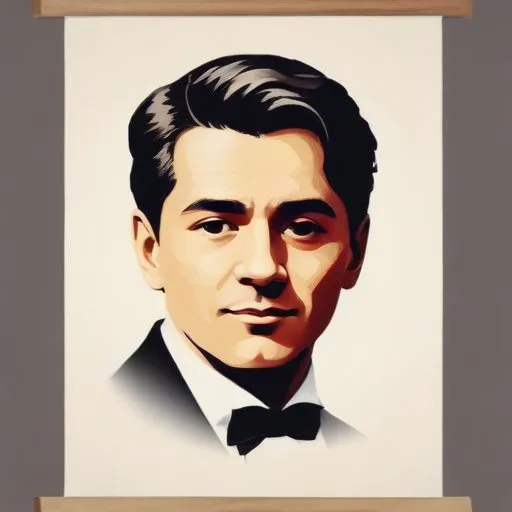
A renowned pianist and composer, known for his poetic and introspective performances of Beethoven's sonatas, which set a new standard for interpreting classical music.
Renowned for his intellectual seriousness and profound musicianship, Artur Schnabel is celebrated as one of the 20th century's most respected and important pianists. His recordings of the complete Beethoven piano sonatas, considered a landmark in the history of classical music, earned him the title "the man who invented Beethoven."
Born Aaron Schnabel on April 17, 1882, in Lipnik, Austro-Hungarian Empire (now part of Poland), he was the youngest of three children to Isidor Schnabel, a textile merchant, and his wife, Ernestine Taube née Labin. Schnabel's family moved to Vienna in 1884, where he began learning the piano at the age of four, initially taking an interest in his sister Clara's piano lessons.
Between 1891 and 1897, Schnabel studied under the tutelage of Theodor Leschetizky, a renowned piano teacher. Leschetizky's guidance allowed Schnabel to focus on Schubert's sonatas, which were largely neglected at the time. This period laid the foundation for Schnabel's future success and earned him the praise of his teacher, who said, "You will never be a pianist – you are a musician."
Schnabel's career was marked by several milestones, including his debut recital in 1897 and his first performance with the Vienna Philharmonic in 1900. He went on to perform with major orchestras and collaborate with prominent conductors, solidifying his reputation as a master pianist.
Schnabel's approach to music was deeply rooted in intellectual curiosity and a passion for understanding the composer's intent. He believed that a true artist must convey the essence of the music, rather than mere technical bravura. This philosophy guided his performances, which were characterized by marked vitality, profundity, and spirituality.
Throughout his life, Schnabel maintained a strong connection to his European roots, even after moving to the United States in 1939. He became an American citizen in 1944 and continued to perform and teach until his passing on August 15, 1951.
Artur Schnabel's contributions to classical music continue to inspire generations of pianists and music lovers. His commitment to artistic expression and intellectual inquiry has left an indelible mark on the world of classical music, solidifying his position as one of the most important pianists of the 20th century.
As music critic Harold C. Schonberg so aptly put it, "Schnabel was the man who invented Beethoven," and his legacy continues to echo through the halls of concert halls and music schools around the world.
Born in 1877
Renowned for his poetic and expressive playing style, this pianist and conductor was a leading figure in the early 20th-century classical music scene, known for his interpretations of Chopin and other Romantic composers.
Born in 1895
A renowned pianist and composer, celebrated for his poetic and introspective performances of French and German repertoire, particularly Debussy and Ravel.
Born in 1819
A renowned 19th-century pianist and composer, she was one of the first females to achieve recognition in a male-dominated field, creating over 60 pieces of music. Her compositions showcased romanticism and lyricism.
Born in 1810
A renowned Romantic-era composer and influential music critic, known for his expressive and emotionally charged works, including symphonies, piano music, and art songs.
Born in 1833
A renowned pianist and composer, he crafted complex, expressive works that blended traditional and innovative techniques, leaving an indelible mark on classical music.
Born in 1811
A virtuosic pianist and composer who revolutionized classical music with his technically demanding and emotionally expressive works, blending Hungarian folk influences with Romantic-era drama.
Born in 1809
A renowned 19th-century musician who masterfully blended classical and romantic styles, creating iconic works like the "Wedding March" and "Elijah" oratorio. His compositions continue to inspire and influence generations of artists.
Born in 1822
A Belgian organist and composer who created iconic works that blended Romanticism and Impressionism, leaving a lasting impact on classical music.
