


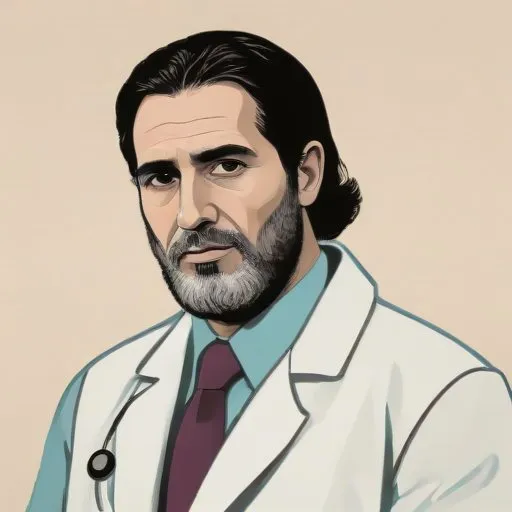
A pioneering molecular biologist and author who made significant contributions to the field of genetics, particularly in the discovery of genetic mutations causing inherited diseases.
Asael Lubotzky, a renowned Israeli physician, author, and molecular biologist, has made groundbreaking contributions to the field of cancer research, earning him numerous prestigious awards and recognition. His innovative work on circulating cell-free DNA (cfDNA) as cancer diagnostic markers has opened up new avenues for early disease detection and treatment.
Lubotzky's journey began with his military service in the Israel Defense Forces (IDF), where he served as an officer commanding a platoon of the Golani Brigade. His experiences during the Second Lebanon War, including a severe injury in the Battle of Bint Jbeil, sparked his interest in medicine and motivated him to pursue a career in the field.
After completing his medical studies at the Hebrew University Hadassah Medical School, Lubotzky specialized in pediatrics at the Shaare Zedek Hospital in Jerusalem. He then joined the lab of Professor Haim Cedar and became a PhD student of Professor Yuval Dor and Ruth Shemer at the Hebrew University's Department of Developmental Biology and Cancer Research.
Lubotzky's research has focused on identifying circulating cfDNA as cancer diagnostic markers, enabling early detection and personalized treatment of various cancers. His team's work has also explored the potential of blood tests for early diagnosis of Alzheimer's disease.
Lubotzky's work is driven by a deep commitment to improving human health and well-being. His research embodies the importance of interdisciplinary collaboration, combining cutting-edge scientific techniques with a passion for patient care.
Born on January 21, 1983, Lubotzky grew up in Efrat, Israel, and studied at the Hesder yeshiva in Maale Adumim. His military service and subsequent medical career have been marked by moments of courage and resilience, inspiring future generations of scientists and medical professionals.
Asael Lubotzky's contributions to cancer research have the potential to transform the lives of millions worldwide. His work serves as a testament to the power of human ingenuity and the importance of investing in scientific innovation.
Lubotzky's research is part of a larger landscape of innovative cancer research globally. His work builds upon and complements the findings of other leading scientists, highlighting the importance of international collaboration and knowledge sharing in the pursuit of a cancer-free future.
Lubotzky's journey from combat veteran to cancer researcher serves as a beacon of hope and inspiration, demonstrating the human capacity for resilience, growth, and transformation.
99 Years Old
Developed groundbreaking techniques for producing monoclonal antibodies, revolutionizing the field of immunology and leading to numerous medical breakthroughs.
79 Years Old
A pioneering biologist and physician who discovered the ubiquitin proteasome system, a crucial cellular process that regulates protein degradation, earning him the Nobel Prize in Chemistry in 2004.
88 Years Old
A Hungarian-Israeli biochemist and physician who discovered the ubiquitin system, a crucial cellular process that regulates protein degradation, earning him a Nobel Prize in Chemistry in 2004.
79 Years Old
Discovered the molecular mechanism of transcription, a crucial process by which cells read genetic information, and was awarded the Nobel Prize in Chemistry in 2006 for this groundbreaking work.
85 Years Old
A Nobel Prize-winning chemist who discovered quasicrystals, a new form of matter with unique properties, revolutionizing materials science and earning a Nobel Prize in Chemistry.
