


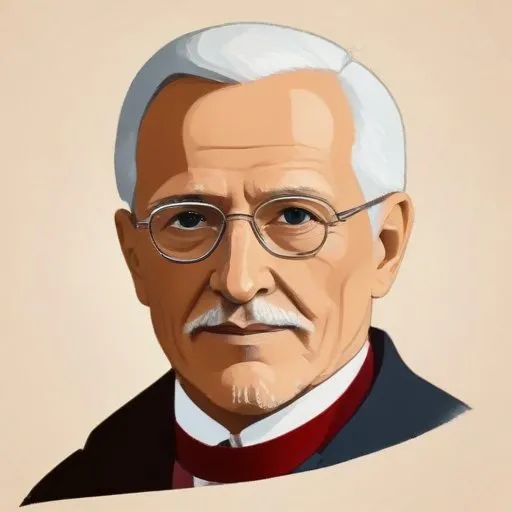
Developed the "Stammbaumtheorie" (family tree theory) of language development, which posits that languages evolve from a common ancestor, and created the Proto-Indo-European language tree.
August Schleicher, a German linguist, is widely regarded as the pioneer of comparative linguistics, revolutionizing the field with his groundbreaking work on the Proto-Indo-European language. His magnum opus, "A Compendium of the Comparative Grammar of the Indo-European Languages," remains a cornerstone of linguistic research, showcasing his unwavering dedication to unraveling the mysteries of language evolution.
Born on February 19, 1821, in Meiningen, Duchy of Saxe-Meiningen, Schleicher was destined for intellectual greatness. He pursued his academic endeavors at the University of Tübingen and Bonn, where he delved into theology, Oriental languages, and the works of Georg Wilhelm Friedrich Hegel.
Schleicher's most significant contribution lies in his theory that languages, like living organisms, undergo periods of development, maturity, and decline. He proposed that languages begin in a state of primitive simplicity, followed by growth and increased complexity, eventually slowing and culminating in decay. This idea challenged traditional views on language and cemented his position as a luminary in the field of linguistics.
To demonstrate the reconstructed vocabulary and societal aspects of Proto-Indo-European, Schleicher crafted a short tale, known as "Schleicher's Fable." This innovative approach allowed him to bring the ancient language to life, providing a tangible representation of his theoretical framework.
Schleicher's life was unfortunately cut short by tuberculosis, claiming his life on December 6, 1868, at the age of 47. Despite his untimely passing, his contributions to linguistics continue to inspire and inform researchers, solidifying his position as one of the most important linguists of the 19th century.
Schleicher's work was instrumental in establishing linguistics as a distinct field of study, paving the way for future scholars to build upon his foundation. His influence can be seen in the development of linguistic theories, language reconstruction, and comparative grammar. As the "Father of Comparative Linguistics," August Schleicher's impact on the field of linguistics remains unparalleled.
Born in 1857
Developed the foundation of modern linguistics, introducing concepts like signs, signifiers, and structuralism, revolutionizing the study of language and its role in shaping culture.
97 Years Old
Developed groundbreaking theories on language acquisition and universal grammar, and is a prominent critic of power and propaganda in modern society.
Born in 1896
A pioneering linguist and theorist who developed groundbreaking concepts in phonology, morphology, and semiotics, shaping modern linguistics and literary theory.
Born in 1746
A pioneer in comparative linguistics, deciphering ancient scripts, and founding the Asiatic Society, he's renowned for discovering the Indo-European language family.
