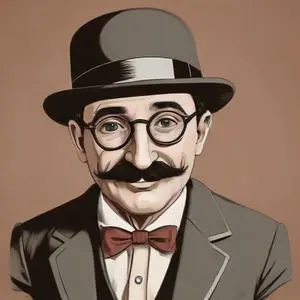
Auguste Lumière: The Visionary Behind the Cinematograph
A Pioneer in Motion Pictures
Auguste Lumière is renowned for inventing the cinematograph, a motion picture camera and projection device that revolutionized the entertainment industry in the late 19th century. Alongside his brother Louis, he developed this innovative technology, which premiered in 1895 and captivated audiences worldwide.
The Early Years
Born on October 19, 1862, in Besançon, France, Auguste Lumière was destined for greatness. He attended the Martinière Technical School, where he honed his skills in engineering and industrialism. Later, he worked as a manager at his father's photographic company, Claude-Antoine Lumière. This experience laid the foundation for his future inventions.
The Inspiration Behind the Cinematograph
In 1894, Auguste was invited to witness a demonstration of
Thomas Edison's Kinetoscope, a device that displayed moving images. This encounter sparked his creativity, and he began working on the cinematograph with his brother Louis. Their hard work paid off, and they successfully presented their invention to the public in December 1895.
A Skeptic's Success
Despite his initial doubts about the commercial viability of the cinematograph, Auguste's invention went on to achieve unprecedented success. He opened a chain of cinemas worldwide, showcasing the magic of motion pictures to the masses. However, Auguste remained humble, acknowledging the limitations of his invention, stating, "My invention can be exploited... as a scientific curiosity, but apart from that, it has no commercial value whatsoever."
A Versatile Innovator
Auguste's contributions didn't stop at the cinematograph. He went on to make significant strides in the biomedical field, pioneering the use of X-rays to examine fractures. Additionally, he developed a catalytic heater, which enabled cold-weather engine starts in military aircraft. This multifaceted genius demonstrated his boundless creativity and innovative spirit.
Awards and Legacy
Auguste Lumière's groundbreaking work earned him a place in history. He received numerous accolades for his contributions to science, technology, and entertainment. His legacy continues to inspire generations of inventors, filmmakers, and entrepreneurs.
Personal Life and Later Years
Auguste Lumière passed away on April 10, 1954, at the age of 91, in Lyon, France. Throughout his life, he remained committed to his work, leaving behind a rich legacy of innovation and progress.
Interesting Facts
- Auguste Lumière was a self-taught engineer and industrialist.
- He held over 100 patents in various fields, including photography, cinematography, and biomedicine.
- The Lumière brothers' cinematograph was initially met with skepticism by the scientific community.
Conclusion
Auguste Lumière's remarkable life is a testament to the power of innovation, perseverance, and creativity. His invention of the cinematograph marked the dawn of a new era in entertainment, and his contributions to various fields have left an indelible mark on human history.
FAQ
What was Auguste Lumières role in the development of cinema?
Auguste Lumière, along with his brother Louis, is credited with inventing the Cinématographe, a device that could capture, develop, and project motion pictures, revolutionizing the film industry.
What were some of Auguste Lumières notable film productions?
Auguste Lumière produced several short films, including La Sortie des Usines Lumière à Lyon, which showcased the daily lives of workers leaving the Lumière factory, and LArroseur Arrosé, a comedy film that is considered one of the earliest narrative films.
How did Auguste Lumières invention impact the world?
The invention of the Cinématographe by Auguste and Louis Lumière had a profound impact on the world, giving birth to the film industry and changing the way people consumed entertainment and information.
How did Auguste Lumières work influence other filmmakers?
Auguste Lumières pioneering work in cinema influenced many other filmmakers, including Georges Méliès and Thomas Edison, who built upon his innovations to further develop the art of filmmaking.