


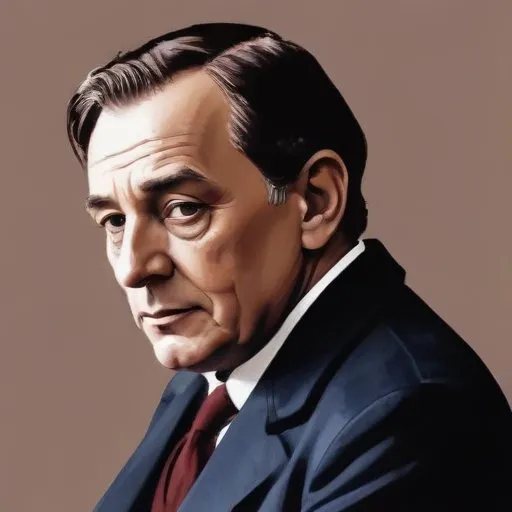
A pioneering playwright and theater manager who introduced realism to the American stage, producing over 200 plays and mentoring notable actors.
Augustin Daly, a towering figure in American theatre, was the first recognized stage director in the United States, known for his tyrannical control over every aspect of his productions. With an iron grip, he shaped the course of American theatre, earning the nickname "the autocrat of the stage."
Born on July 20, 1838, in Plymouth, North Carolina, Daly was the son of Captain Denis Daly, a seacaptain and shipowner, and Elizabeth, daughter of Lieutenant John Duffy of the British Army. After his father's death, his mother moved the family to New York City, where Daly developed a passion for theatre, frequenting performances and joining amateur groups such as the Burton Association and the Murdoch Association, precursors to the Little Theatre Movement.
Daly began his career as a dramatic critic for several New York papers in 1859. He soon turned to playwriting, adapting and writing several plays, including his first success, Under the Gaslight, in 1867. In 1869, he became the manager of the Fifth Avenue Theatre, and in 1873, he took over the Fifth Avenue Theatre on 28th Street.
In 1879, Daly rebuilt and opened Daly's Theatre on Broadway and 30th Street in New York, and in 1893, Daly's Theatre in London. These venues became hubs for his innovative productions, featuring a company of players, led by the talented Ada Rehan. Daly adapted plays from foreign sources and revived Shakespearean comedies in a way that was previously unknown in America.
Daly took his company on tour, visiting England, Germany, and France, where they performed to critical acclaim. Many renowned actors, including Henry Irving and Ellen Terry, credited Daly with their training and early successes. His company's performances set a new standard for American theatre, elevating the art form and paving the way for future generations.
Daly's influence on American theatre was immense. He introduced a new level of professionalism, setting high standards for actors, playwrights, and directors. His emphasis on ensemble playing, careful rehearsal, and attention to detail raised the bar for theatrical productions. Daly's innovative approach to stage direction and his commitment to excellence continue to inspire theatre practitioners today.
Daly believed in the importance of ensemble playing, careful rehearsal, and attention to detail. He was known for his perfectionism and his ability to bring out the best in his actors. Daly's emphasis on discipline and hard work set a new standard for American theatre, influencing generations of theatre practitioners.
Daly's partnership with Ada Rehan, a talented actress, was instrumental in shaping his career. Rehan became the leading lady of Daly's company, and their artistic collaboration produced some of the most memorable performances of the era.
Daly's notable works include Under the Gaslight, A Flash of Lightning, Divorce, and The Triumph of Love. His productions of Shakespearean comedies, such as A Midsummer Night's Dream and The Taming of the Shrew, were hailed as innovative and groundbreaking.
Daly received widespread recognition for his contributions to American theatre. He was hailed as a pioneer and a visionary, and his legacy continues to inspire and influence theatre practitioners today.
In conclusion, Augustin Daly's impact on American theatre was profound and far-reaching. His innovative approach to stage direction, his commitment to excellence, and his emphasis on discipline and hard work set a new standard for theatrical productions. As "the autocrat of the stage," Daly left an indelible mark on the world of theatre, shaping the course of American drama for generations to come.
Born in 1854
A witty and flamboyant literary mastermind, renowned for crafting clever, humorous, and poignant works that continue to delight audiences with their clever wordplay and societal commentary.
Born in 1856
A renowned Irish playwright and critic, known for his witty, thought-provoking plays that often challenged social norms and conventions. His works include Pygmalion and My Fair Lady.
Born in 1855
A renowned figure in London's West End, he wrote and directed numerous plays, often blending comedy and drama, and was a pioneer of the "problem play" genre. His works tackled social issues, sparking controversy and conversation.
Born in 1843
A renowned literary mastermind, celebrated for crafting psychologically complex, atmospheric novels and short stories that probed the human condition, often exploring the intricacies of the American and European aristocracy.
Born in 1862
A pioneering female author of novels and short stories that explored the social conventions and morals of the Gilded Age, known for her witty and insightful portrayals of the American aristocracy.
Born in 1871
A pioneering realist writer who chronicled the lives of the American working class, capturing the gritty realities of urban existence through novels like "Sister Carrie" and "An American Tragedy".
Born in 1878
A pioneering muckraker, exposing social and economic injustices through influential novels, most notably "The Jungle", which led to significant reforms in the meatpacking industry.
Born in 1888
A pioneering playwright who explored the American experience through powerful, psychologically complex dramas, earning the Nobel Prize in Literature in 1936.
