


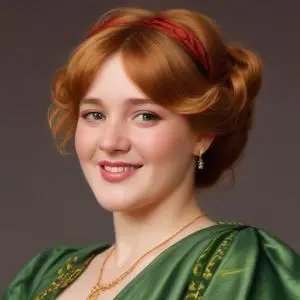
A renowned stage actress of the late 19th and early 20th centuries, celebrated for her powerful performances in Shakespearean plays and her iconic beauty.
Ellen Terry, a name synonymous with Shakespearean excellence, was a leading English actress of the late 19th and early 20th centuries. Her remarkable career spanned nearly seven decades, earning her the reputation as one of the greatest actresses of her time.
Born on February 27, 1847, in Coventry, England, Ellen Terry was the third surviving child of a theatrical family. Her parents, Benjamin and Sarah Terry, were comic actors in a Portsmouth-based touring company. Ellen's early life was surrounded by the hustle and bustle of the theater, and she made her stage debut as a child, acting in Shakespeare plays in London.
At the tender age of 16, Ellen married the 46-year-old artist George Frederic Watts, but the union was short-lived, and they separated within a year. This brief interlude did not deter Ellen from pursuing her passion for acting, and she soon returned to the stage.
In 1874, Ellen resumed her acting career and was immediately acclaimed for her portrayal of roles in Shakespeare and other classics. Her talent and dedication quickly earned her recognition, and in 1878, she joined Henry Irving's company as his leading lady.
For over two decades, Ellen was considered the leading Shakespearean and comic actress in Britain. Her performances as Portia in The Merchant of Venice and Beatrice in Much Ado About Nothing are still revered today. Her partnership with Irving was a highly successful one, and they toured extensively in America and Britain, earning widespread acclaim.
In 1903, Ellen took over the management of London's Imperial Theatre, focusing on the plays of George Bernard Shaw and Henrik Ibsen. Although the venture was ultimately a financial failure, Ellen's determination did not waver. She turned to touring and lecturing, continuing to find success on stage until 1920.
In 1916, Ellen began her foray into film, appearing in several films until 1922. Her adaptability and willingness to explore new mediums are a testament to her dedication to her craft.
Ellen Terry's remarkable career has left an indelible mark on the world of theater. Her contributions to the performing arts are still celebrated today, and she remains one of the most revered actresses of her time.
Ellen's legacy extends beyond her impressive body of work. She paved the way for future generations of actresses, inspiring them to pursue careers in the performing arts. Her commitment to her craft and her dedication to her audience have made her a beloved figure in the world of theater.
Ellen's personal life was marked by several significant relationships. Her relationship with the architect Edward William Godwin resulted in a daughter, Edith Craig, who went on to become a prominent theater director and producer. Ellen's later years were marked by a close friendship with the actress and writer, Christabel Marshall.
Ellen Terry's immense talent and contributions to the performing arts were recognized with several awards and honors during her lifetime. She was appointed a Dame Commander of the British Empire in 1925, a testament to her enduring impact on the world of theater.
In conclusion, Ellen Terry's remarkable career, spanning nearly seven decades, is a testament to her unwavering dedication to her craft. Her legacy continues to inspire generations of actresses, and her contributions to the world of theater remain unparalleled.
Born in 1838
A renowned Victorian-era actor and theatre manager, known for his powerful stage presence and innovative productions that raised the standards of English theatre.
Born in 1854
A witty and flamboyant literary mastermind, renowned for crafting clever, humorous, and poignant works that continue to delight audiences with their clever wordplay and societal commentary.
Born in 1856
A renowned Irish playwright and critic, known for his witty, thought-provoking plays that often challenged social norms and conventions. His works include Pygmalion and My Fair Lady.
Born in 1899
A renowned English actor, playwright, and composer, known for his witty humor, sophisticated style, and iconic works like "Private Lives" and "Blithe Spirit".
Born in 1907
A renowned thespian who dominated the British stage and screen, bringing Shakespearean characters to life with his commanding presence and rich voice.
Born in 1913
A talented actress who won two Academy Awards for her iconic portrayals of Southern belles in "Gone with the Wind" and "A Streetcar Named Desire".
Born in 1902
A renowned stage and screen actor, celebrated for his distinctive voice and authoritative presence, starring in iconic films like "David Copperfield" and "Doctor Zhivago".
Born in 1904
A renowned thespian, celebrated for his commanding stage presence and iconic performances in Shakespearean plays and films, earning him a knighthood.
