


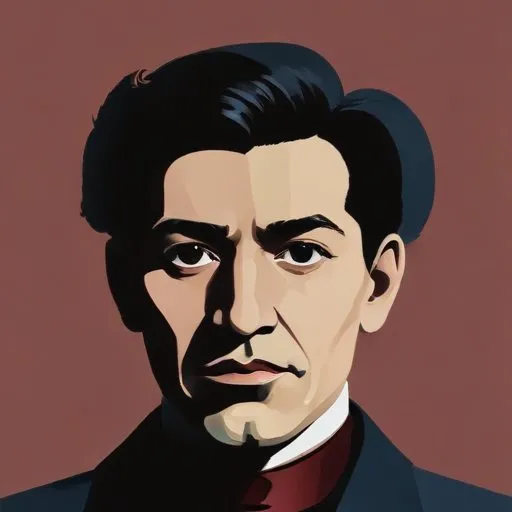
Paraguayan novelist who wrote influential works that explored the country's history, politics, and culture, most notably the epic novel "I the Supreme".
Augusto Roa Bastos is best known for his magnum opus, Yo el Supremo (I the Supreme), a complex novel that delves into the dictations and inner thoughts of José Gaspar Rodríguez de Francia, the eccentric dictator of Paraguay. This literary masterpiece earned him the coveted Premio Miguel de Cervantes in 1989, Spanish literature's most prestigious prize.
Roa Bastos' life was marked by experience with dictatorial military regimes. As a teenager, he fought in the Chaco War between Paraguay and Bolivia. Later, he worked as a journalist, screenwriter, and professor, until he was forced into exile in Argentina in 1947 and later in France in 1976, fleeing political persecution.
Despite the turmoil, Roa Bastos continued to write, fiercely tackling Paraguayan social and historical issues in his work. Most of his writing was done in exile, but this did not deter him from incorporating Paraguayan myths and symbols into his unique style, known as magical realism.
Roa Bastos' writing is characterized by a rich blend of Spanish and Guaran, the indigenous language of Paraguay. His use of magical realism, a style that combines fantastical elements with realistic depictions of everyday life, has been hailed as a masterpiece of Latin American literature.
His canon includes notable works such as Hijo de hombre (Son of Man, 1960), El fiscal (The Prosecutor, 1993), numerous short stories, poems, and screenplays. Roa Bastos is considered a latecomer to the Latin American Boom literary movement, but his work has had a profound impact on the literary world.
Augusto Roa Bastos' work has left an indelible mark on Paraguayan literature and culture. His unique style and fierce critique of dictatorial regimes have inspired generations of writers and artists. Today, his work continues to be celebrated and studied, offering a glimpse into the complexities of Paraguayan history and identity.
Roa Bastos' legacy is a testament to the power of literature to challenge and transform society. His unwavering commitment to social justice and human rights has inspired a new wave of Paraguayan writers and artists, ensuring that his impact will be felt for generations to come.
99 Years Old
A Colombian journalist and author who crafted magical realism, a literary style that blends fantasy and reality, and won the Nobel Prize in Literature in 1982. His works are known for their vivid storytelling and exploration of human experience.
90 Years Old
A Nobel Prize-winning writer and politician who explored the complexities of Peruvian society through his novels and essays, and later ran for president. His works often blended politics, history, and fiction.
Born in 1914
A pioneering figure in magical realism, blending fantastical elements with everyday life in his novels and short stories, exploring the human condition and social commentary.
Born in 1899
A visionary writer who crafted intricate, philosophical tales that blurred reality and fantasy, influencing generations of authors and thinkers. 82
84 Years Old
A Chilean-American writer who weaves magical realism into her novels, exploring themes of love, family, and social justice, captivating readers worldwide with her lyrical prose.
Born in 1904
A Chilean poet and diplomat who wrote passionate and evocative poetry that explored love, politics, and the human condition, and was awarded the Nobel Prize in Literature in 1971.
Born in 1914
A Mexican poet and diplomat who won the Nobel Prize in Literature in 1990 for his work that explores the intersection of poetry, philosophy, and politics. He's known for his lyrical and introspective style that explores the human condition.
97 Years Old
A renowned Mexican writer, celebrated for his novels and essays that explored the complexities of Mexican identity, politics, and culture. His works often blended mythology, history, and fantasy to create a unique narrative style.
