


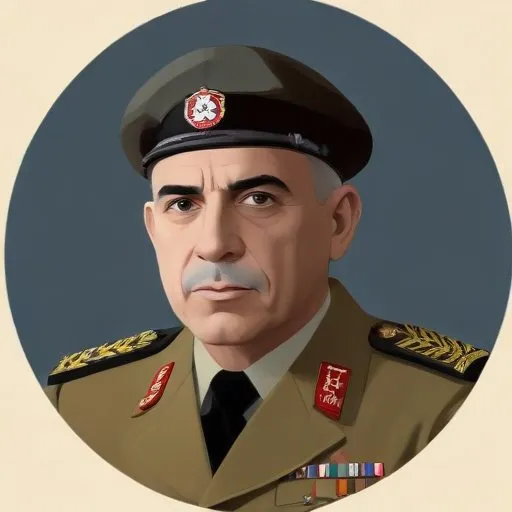
Israeli general who played a key role in the 1967 Six-Day War and was the first to reach the Suez Canal, marking a crucial victory for Israel. He later became a prominent figure in Israeli politics and diplomacy.
Avraham Adan, a prominent figure in Israeli history, is renowned for raising the Ink Flag of the State of Israel at the southernmost tip of the country, marking the end of the First Arab-Israeli War. This iconic moment, captured in a photograph, has become an enduring symbol of Israel's independence and a testament to Adan's bravery and leadership.
Born on October 5, 1926, in Kfar Giladi, British Mandatory Palestine, Adan was part of a Jewish family that would later change their surname to Adan as part of the Hebraization process. In 1943, he joined the Palmach, an elite force within the Haganah paramilitary organization, where he began his journey as a soldier and commander.
During the First Arab-Israeli War, Adan served as a company commander in the 8th battalion of the Negev Brigade, playing a pivotal role in Operation Uvda. On March 13, 1949, he led the capture of the Jordanian-held outpost of Umm al-Rashrash, now known as Eilat, at the southernmost tip of Israel. It was here that Adan, then a captain in the Israel Defense Forces (IDF), raised the Ink Flag, marking the end of the war and cementing his place in history.
In 1949, Adan joined the Israeli Armoured Corps and founded the first M4 Sherman tank unit of the IDF. He went on to command the 82nd battalion of the 7th Armoured Brigade during the Suez Crisis of 1956. Throughout his military career, Adan fought in all major Arab-Israeli wars, earning him the respect and admiration of his peers and the nation.
Adan's legacy extends beyond his military achievements. He has written several books about his experiences, providing valuable insights into Israel's early years and the sacrifices made by its soldiers. His contributions to Israeli literature and history have solidified his place as one of the country's most revered figures.
Avraham Adan retired from the IDF in 1977, after dedicating nearly three decades to the Israeli military. He passed away on September 28, 2012, leaving behind a legacy that continues to inspire generations of Israelis and people around the world.
Avraham Adan's remarkable life and achievements serve as a testament to his unwavering dedication to Israel and its people. His bravery, leadership, and contributions to Israeli literature and history have left an indelible mark on the nation, ensuring his legacy will endure for generations to come.
Born in 1915
A renowned Israeli military leader and statesman who played a key role in shaping Israel's foreign policy and defense strategy, known for his iconic eye patch and daring military operations.
Born in 1922
A renowned Israeli leader and peacemaker who played a crucial role in shaping the country's history and was awarded the Nobel Prize for his efforts towards peace in the Middle East.
98 Years Old
The 11th Prime Minister of Israel, a military leader who played a key role in shaping the country's history, known for his controversial yet influential decisions that continue to impact the Middle East.
84 Years Old
A decorated military leader who later navigated Israel's complex political landscape as Prime Minister, known for his efforts to resolve the Israeli-Palestinian conflict.
Born in 1923
A Nobel Peace Prize winner who served as Israel's President and Prime Minister, known for his efforts to bring peace to the Middle East through diplomatic negotiations.
Born in 1913
A Belarusian-born Israeli politician who served as Prime Minister of Israel and was awarded the Nobel Peace Prize for his efforts to establish a peace treaty with Egypt. He's known for his strong leadership and commitment to Israeli security.
Born in 1921
The fifth President of Israel, serving from 1978 to 1983, and a playwright who promoted Israeli culture and education. He was the first-born Israeli to hold the presidency.
Born in 1918
The 6th President of Israel, a decorated military leader and statesman, played a crucial role in shaping Israel's foreign policy and diplomatic relations. He's most known for his strong leadership during the 1982 Lebanon War.
