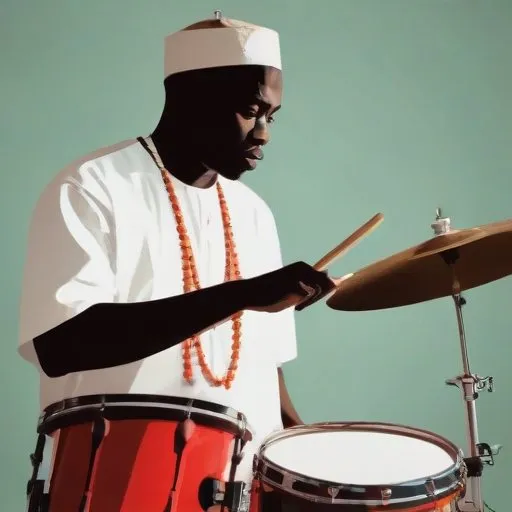
Babatunde Olatunji: The Pioneering Drummer and Cultural Ambassador
A Legacy of Rhythmic Innovation
Babatunde Olatunji, a Nigerian drummer, educator, social activist, and recording artist, is renowned for popularizing African music and culture globally, thereby bridging the gap between traditional and modern rhythms. Through his innovative drumming style, which seamlessly blended African beats with Western jazz, Olatunji left an indelible mark on the music world, inspiring generations of musicians and cultural enthusiasts alike.
Early Life and Influence
Born on April 7, 1927, in the village of Ajido, near Badagry, Lagos State, southwestern Nigeria, Olatunji was introduced to traditional African music at a tender age. As a member of the Ogu people, he was immersed in the rich cultural heritage of his community, which instilled in him a deep appreciation for the complexities of African rhythms. His name, "Babatunde," meaning "father has returned," was a testament to his perceived reincarnation of his father, Zannu, an Ogu Egun man who had passed away two months prior to Olatunji's birth.
Education and Early Career
In 1950, Olatunji received a Rotary scholarship to attend Morehouse College in Atlanta, Georgia, where he pursued his passion for music. During his time at Morehouse, he collaborated with Dr. Wendell P. Whalum, the director of the Morehouse College Glee Club, on the Nigerian Christmas carol "Betelehemu," which became a staple of the choir's repertoire. After graduating from Morehouse, Olatunji went on to New York University to study public administration, while also forming a small percussion group to support himself financially.
Career Highlights and Major Works
Olatunji's breakthrough came when he performed with the 66-piece Radio City Music Hall orchestra, which led to a recording contract with Columbia Records. His debut album, "Drums of Passion," released in 1959, became a huge success, introducing African rhythms to a global audience. This album was followed by several critically acclaimed works, including "Zungo!" (1961), "Soul Makossa" (1973), and "Heart of the Beat" (1989).
Philosophical Contributions and Beliefs
Olatunji's music was deeply rooted in his philosophical beliefs, which centered around the concept of "oro," or the unity of all things. He believed that music was a universal language, capable of transcending cultural boundaries and promoting global understanding. Through his music, Olatunji aimed to create a sense of community and shared human experience, reflecting his commitment to social activism and cultural exchange.
Influence on Modern Society and Pop Culture
Olatunji's innovative drumming style and cultural ambassadorship have had a profound impact on modern music and society. He has inspired a wide range of artists, from
John Coltrane and
Bill Cosby to
Carlos Santana and
Stevie Wonder. His music has also been featured in various films, television shows, and commercials, ensuring his legacy continues to resonate with new generations.
Awards and Honors
Throughout his illustrious career, Olatunji has received numerous awards and honors, including a Grammy nomination for Best Folk Recording for his album "Dance to the Beat of My Drum" (1985). He was also recognized for his contributions to education, receiving an honorary doctorate from the California Institute of the Arts in 1997.
Legacy and Historical Context
Babatunde Olatunji's remarkable life and career serve as a testament to the power of cultural exchange and the universality of music. As a pioneer in popularizing African rhythms and culture, he has left an indelible mark on the music world, paving the way for future generations of musicians and cultural ambassadors. His legacy continues to inspire and educate, ensuring that the rich cultural heritage of Africa remains a vital part of our shared human experience.
Trivia and Fun Facts
- Olatunji was a skilled craftsman and made his own drums, which he called "oro."
- He was an avid sportsman and enjoyed playing soccer and tennis.
- Olatunji was a talented linguist, speaking several languages, including Gun, Ogu, Yoruba, and English.