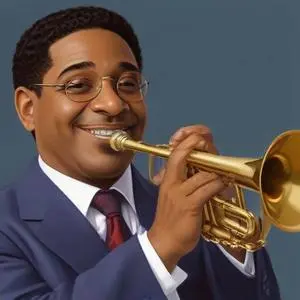
Dizzy Gillespie: The Virtuoso Trumpeter and Bebop Icon
The Quintessential Trumpeter and Jazz Pioneer
Dizzy Gillespie, the legendary American jazz trumpeter, bandleader, composer, and educator, is widely regarded as one of the most influential figures in jazz history. His innovative and virtuosic playing style, characterized by lightning-fast solos and complex harmonies, helped shape the trajectory of modern jazz, particularly in the development of bebop.
Early Life and Career
Born John Birks Gillespie on October 21, 1917, in Cheraw, South Carolina, Gillespie was the youngest of nine children to Lottie and James Gillespie. His father, a local bandleader, provided instruments for the children, and Gillespie began playing the piano at the age of four. After his father's death when he was ten, Gillespie taught himself to play the trombone and trumpet by the age of twelve.
Rise to Prominence
Gillespie's big break came in the 1940s when he joined the Teddy Hill Orchestra, where he met
Charlie Parker, with whom he would go on to form a legendary partnership. Together, they pioneered the development of bebop, a fast-paced and complex style of jazz that revolutionized the music scene. Gillespie's unique playing style, marked by his bent horn, pouched cheeks, and signature beret and horn-rimmed spectacles, became an iconic image of the era.
Legacy and Influence
Gillespie's impact on jazz is immeasurable. He taught and influenced numerous musicians, including trumpet legends
Miles Davis,
Jon Faddis, and
Arturo Sandoval, as well as vocalists like Johnny Hartman. His Afro-Cuban jazz fusion, which he pioneered in the 1940s and 1950s, helped define the genre. Gillespie's Grammy Awards and numerous accolades are a testament to his enduring legacy.
Philosophical Contributions and Beliefs
Gillespie was not only a master musician but also a philosopher. He believed that music should be a reflection of life, and his playing style embodied this philosophy. He often incorporated humor and wit into his performances, making him an endearing figure to audiences worldwide.
Personal Milestones and Key Life Events
- 1940s: Gillespie forms a partnership with Charlie Parker, pioneering the development of bebop.
- 1947: Gillespie records his first solo album, Dizzy Gillespie Sextet.
- 1950s: Gillespie becomes a leading figure in Afro-Cuban jazz fusion.
- 1960s: Gillespie performs with jazz legends like John Coltrane and Thelonious Monk.
- 1980s: Gillespie wins several Grammy Awards for his contributions to jazz.
Quotes and Memorable Sayings
- "It's taken me all my life to learn what not to play."
- "You can't write music that's more beautiful than the blues."
Historical Context and Legacy
Gillespie's legacy extends beyond his music. He played a significant role in breaking down racial barriers in the music industry, paving the way for future generations of African American musicians. His wit, humor, and charisma have made him an enduring icon of American cultural heritage.
Career Highlights and Major Works
- "A Night in Tunisia" (1942)
- "Manteca" (1947)
- "Groovin' High" (1945)
- "Dizzy's Big 4" (1974)
Influence on Modern Society
Gillespie's influence extends far beyond the jazz community. His music has inspired generations of musicians across genres, from rock to hip-hop. His legacy continues to shape the course of modern music, ensuring his place as one of the most significant figures in American cultural history.
FAQ
What was Dizzy Gillespies impact on jazz?
Dizzy Gillespie was a towering figure in jazz, known for his virtuosic trumpet playing and his role in developing the style of bebop. He was a prolific composer and bandleader, and his music had a profound influence on the development of modern jazz.
How did Dizzy Gillespie contribute to the development of bebop?
Dizzy Gillespie, along with Charlie Parker, was a key figure in the development of bebop, a fast-paced, complex style of jazz that emphasized improvisation and technical virtuosity. His playing style, which featured rapid-fire phrasing and complex harmonies, helped to define the sound of bebop.
What was Dizzy Gillespies personality like?
Dizzy Gillespie was known for his charismatic personality, his sense of humor, and his desire to entertain audiences. He was a natural showman, and his music was infused with a sense of joy and spontaneity.
What awards and honors did Dizzy Gillespie receive?
Dizzy Gillespie received numerous awards and honors, including a Grammy Lifetime Achievement Award and a place in the DownBeat Jazz Hall of Fame. He was also recognized for his contributions to jazz with a star on the Hollywood Walk of Fame.
How did Dizzy Gillespies Afro-Cuban music influence jazz?
Dizzy Gillespies Afro-Cuban music, which blended elements of jazz, Latin American music, and African rhythms, helped to expand the scope of jazz and paved the way for later fusions of jazz and world music.