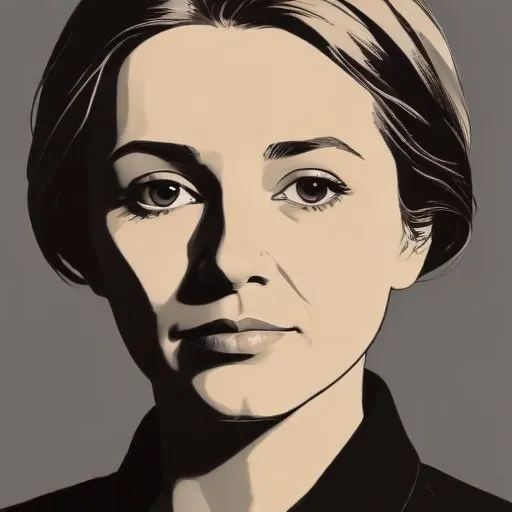
Barbara Buczek: The Polish Composer Who Left a Lasting Legacy
A Pioneer in Contemporary Classical Music
Barbara Buczek was a renowned Polish composer, best known for her innovative and provocative works that pushed the boundaries of contemporary classical music. Born on January 9, 1940, in Kraków, Poland, Buczek's unique compositional style and contributions to the world of music have left an indelible mark.
Early Life and Education
Buczek's passion for music began at a young age, and she went on to study composition at the Academy of Music in Kraków. Her education was marked by a strong foundation in classical music, which would later influence her experimental approach to composition.
Major Works and Contributions
Buczek's compositional output includes a wide range of works, from solo pieces to large-scale concertos. Some of her most notable works include:
- Mikrosonata for violin solo (1968), a pioneering work that explored the possibilities of microtonality;
- Blaeserquintett (1969), a wind quintet that showcased her mastery of timbre and texture;
- Anekumena, a concerto for 89 instruments (1974), a work that demonstrated her ability to write for large ensembles;
- Eidos III for bassoon solo (1979), a piece that highlighted her innovative approach to instrumental technique;
- String Quartet No. 2, Transgressio (1985), a work that pushed the boundaries of traditional quartet writing;
- Study No. 1 for flute solo (1990), a piece that showcased her mastery of melodic writing.
Philosophical Contributions and Beliefs
Buczek's music was deeply rooted in her philosophical beliefs about the nature of sound and the role of the composer. She believed that music should be a reflection of the human experience, with all its complexities and contradictions. Her compositions were often characterized by a sense of tension and release, reflecting her fascination with the human condition.
Influence on Modern Society
Buczek's music has had a significant impact on modern society, inspiring a new generation of composers to experiment with innovative techniques and sounds. Her legacy continues to be felt in the world of contemporary classical music, with many composers citing her as a source of inspiration.
Personal Milestones and Key Life Events
Throughout her life, Buczek was driven by a passion for music and a desire to push the boundaries of what was possible. Her compositional output was marked by a series of milestones, each one showcasing her growth and development as a composer. Despite her untimely passing on January 17, 1993, Buczek's music continues to inspire and influence new generations of musicians and composers.
Legacy and Impact
Barbara Buczek's legacy is one of innovation, experimentation, and artistic vision. Her music continues to be performed and celebrated around the world, a testament to her enduring impact on the world of classical music. As a composer, she will always be remembered for her bravery, her innovative spirit, and her unwavering commitment to her art.
FAQ
What type of music does Barbara Buczek compose?
Barbara Buczek is a Polish composer who specializes in choral and orchestral music.
What notable works has Barbara Buczek composed?
Barbara Buczek has composed several notable works, including a Requiem Mass and a cantata for choir and orchestra.
Has Barbara Buczek received any awards?
Yes, Barbara Buczek has received several awards for her compositions, including the Polish Minister of Culture and National Heritage Award.
Is Barbara Buczek still active in music?
Yes, Barbara Buczek is still active in music, continuing to compose and perform her works.
What is Barbara Buczeks contribution to Polish music?
Barbara Buczeks contribution to Polish music is significant, as she has enriched the countrys cultural heritage with her unique and expressive compositions.