


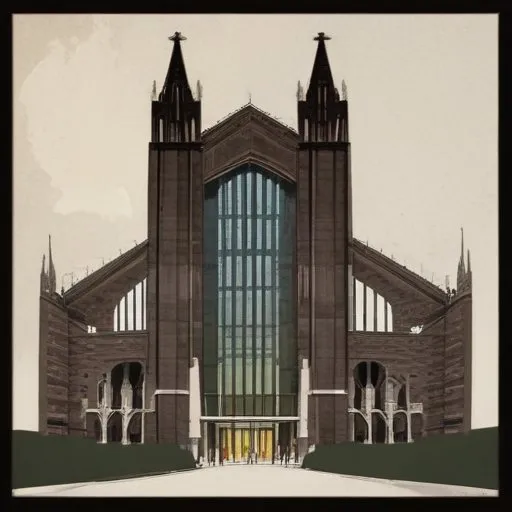
A renowned Scottish architect who designed the iconic Coventry Cathedral, a symbol of hope and reconciliation after World War II. His work blended modernism with historical sensitivity.
Sir Basil Urwin Spence, a renowned Scottish architect, is celebrated for his iconic contributions to the world of architecture, particularly his work on Coventry Cathedral in England and the Beehive in New Zealand, which exemplify his unique Modernist-Brutalist style.
Spence was born on August 13, 1907, in Bombay, British India, to Urwin Archibald Spence, an assayer with the Royal Mint. He received his early education at the John Connon School in Bombay and later attended George Watson's College in Edinburgh, Scotland, from 1919 to 1925.
Spence enrolled at the Edinburgh College of Art (ECA) in 1925, where he studied architecture and secured a maintenance scholarship due to his exceptional talent. During his time at ECA, he won several prizes and worked on paid projects, drawing architectural perspectives for prominent architects, including Leslie Grahame-Thomson, Reginald Fairlie, and Frank Mears.
Spence's early career was marked by a year-long stint as an assistant to Sir Edwin Lutyens in London, where he worked on designs for the Viceroy's House in New Delhi, India. This experience greatly influenced his architectural style. Upon returning to ECA, he was appointed a junior lecturer, a testament to his exceptional skills and dedication.
In 1931, Spence co-founded a practice with William Kininmonth, focusing on residential commissions in Edinburgh.
Spence's talent for illustration led to commissions to draw architectural perspectives for other architects, including the Southside Garage project.
Spence's magnum opus, Coventry Cathedral, was completed in 1962, featuring a soaring design that blended modernity with historical elements. This iconic structure cemented his reputation as a master of Modernist-Brutalist architecture.
In New Zealand, Spence designed the Beehive, an executive wing of the New Zealand Parliament Buildings, which was completed in 1982. This distinctive structure's unique design has made it a beloved landmark in Wellington.
Sir Basil Urwin Spence's contributions to architecture have left an indelible mark on the built environment. His innovative style, which blended Modernist and Brutalist elements, has inspired generations of architects and continues to influence contemporary design.
Through his works, Spence has demonstrated a deep understanding of the relationship between architecture, art, and society, leaving behind a lasting legacy that continues to inspire and influence architects, designers, and artists around the world.
Born in 1924
Designed iconic buildings in Birmingham, including the Central Library, blending modernist and brutalist styles. His work transformed the city's landscape and continues to inspire architects today.
Born in 1914
Designed iconic buildings that blend brutalism with elegance, including the Royal National Theatre, leaving a lasting impact on modern architecture.
Born in 1902
Pioneering creator of iconic American musicals, blending music, dance, and drama to craft timeless classics like Oklahoma! and The Sound of Music.
Born in 1926
A renowned architect celebrated for designing iconic buildings that blend modernity with historical context, such as the Staatsgalerie Stuttgart and Seeley Historical Library.
