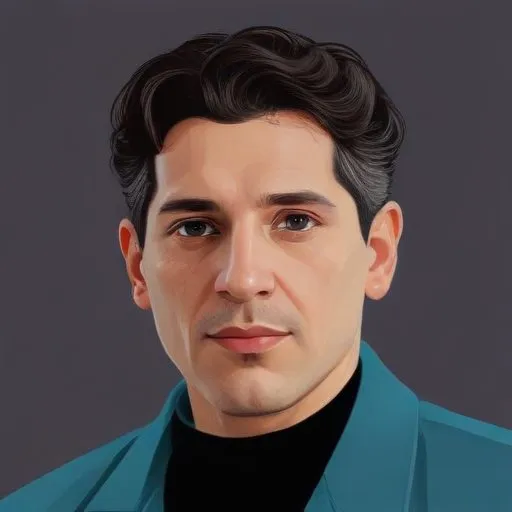
Benjamin Fain

Benjamin Fain

Benjamin Fain was born on February 17th, 1930

Full Name: Benjamin Fain
Place of Birth: Ukraine
Profession: Physicist, Academic
Nationality: Ukrainian-Israeli
Born: 1930
Notable Work: Research in Theoretical Physics
Education: Tel Aviv University
Awards: Multiple Awards

A Ukrainian-Israeli physicist and academic who made significant contributions to the fields of quantum mechanics, thermodynamics, and statistical physics, particularly in the area of non-equilibrium thermodynamics.

Written by: Aisha Patel Aisha Patel

Benjamin Fain: The courageous refusenik who defied Soviet oppression

A physicist, a patriot, and a champion of Jewish rights

Benjamin Fain was a renowned Israeli physicist, professor, and former refusenik who lived a life marked by courage, conviction, and an unwavering commitment to his people. Born in Kyiv, Ukraine in 1930, Fain's remarkable journey took him from the esteemed halls of Soviet academia to the forefront of the Jewish rights movement, earning him a reputation as a beacon of hope and defiance in the face of oppression.

Early life and education

Fain's love for science was instilled in him by his mathematician father, who encouraged his curiosity and nurtured a strong national sentiment. During World War II, the family was evacuated and relocated several times, eventually settling in Dushanbe, where Fain completed his schooling. He went on to study at the Moscow Institute of Energetics, where he developed a passion for physics and was inspired by the visit of Golda Meir, Israel's first ambassador to the USSR.

Academic achievements and refusenik movement

Fain's academic prowess earned him a professorship at Gorky University, where he graduated summa cum laude under the tutelage of future Nobel laureate Vitaly Ginzburg. He went on to publish several scientific books translated into English and German, solidifying his reputation as a leading physicist. However, it was his involvement in the Zionist movement and his application for an exit visa to Israel in 1974 that led to his dismissal from his job and his designation as a refusenik.

A pioneer in sociological research

In 1976, Fain initiated a groundbreaking sociological research project on Soviet Jewry, which aimed to shed light on the experiences and challenges faced by Jewish communities in the USSR. Despite facing intense scrutiny and harassment from the KGB, Fain persisted in his work, eventually becoming a prominent figure in the refusenik movement.

Personal milestones and legacy

Fain's unwavering dedication to his people and his principles earned him international recognition and acclaim. His story serves as a testament to the power of courage and conviction in the face of adversity, inspiring generations to come. Through his work, Fain left an indelible mark on the scientific community, the Jewish rights movement, and the world at large.

Awards and honors

  • Fain was awarded the Israeli Ministry of Absorption's Prize for his contributions to the Jewish community.
  • He was honored with the title of Professor Emeritus by the Israeli government.

Personal anecdotes and quotes

Fain once said, "As a scientist, I always sought to uncover the truth. As a Jew, I realized that the greatest truth of all is the right to live freely and proudly."

Visual timeline and milestones

  • 1930: Born in Kyiv, Ukraine
  • 1950: Transfers to the Faculty of Physics, Gorky University
  • 1965: Becomes a professor at Gorky University
  • 1972: Begins participating in the Zionist movement
  • 1974: Applies for exit visa to Israel and becomes a refusenik
  • 1976: Initiates sociological research on Soviet Jewry
  • 2013: Passes away on April 15
Timeline
1930
Born in Ukraine
Benjamin Fain was born on November 12, 1930, in Ukraine. He would go on to become a renowned physicist and academic.
1955
Graduated from Kiev University
Fain graduated from Kiev University with a degree in physics. This marked the beginning of his illustrious academic career.
1965
Emigrated to Israel
Fain emigrated to Israel, where he would continue his research and teaching career. He became a prominent figure in the Israeli academic community.
1980
Appointed Professor at Tel Aviv University
Fain was appointed Professor of Physics at Tel Aviv University, a position he held until his retirement.
2013
Awarded the Israel Prize
Fain was awarded the Israel Prize for his contributions to the field of physics. This is Israels highest honor in science and technology.
Benjamin Fain

Benjamin Fain Quiz

What field of physics did Benjamin Fain make significant contributions to?

Score: 0/5
FAQ
What is Benjamin Fains area of expertise in physics?
Benjamin Fain is a Ukrainian-Israeli physicist who has made significant contributions to the field of quantum mechanics and statistical physics. His research has focused on the behavior of complex systems and phase transitions.
What are Benjamin Fains most notable academic achievements?
Benjamin Fain has published numerous papers on quantum mechanics and statistical physics, and has received several awards for his research, including the Landau Prize and the Rothschild Prize.
What is Benjamin Fains involvement in academic institutions?
Benjamin Fain has taught at several universities, including the University of Tel Aviv and the Weizmann Institute of Science. He has also served as a visiting professor at several international institutions.
What is Benjamin Fains contribution to the development of quantum computing?
Benjamin Fains research has laid the foundation for the development of quantum computing. His work on quantum error correction and quantum information processing has been instrumental in the advancement of the field.
What awards has Benjamin Fain received for his contributions to physics?
Benjamin Fain has received several awards for his contributions to physics, including the Israel Prize and the EMET Prize.

Related People:

Lev Landau

Born in 1908

A renowned physicist and academic who made groundbreaking contributions to our understanding of quantum mechanics, superfluidity, and particle physics, earning a Nobel Prize in Physics in 1962.

Isaak Khalatnikov

Born in 1919

Theoretical physicist and academic who made significant contributions to the development of quantum field theory and cosmology, particularly in the area of black holes and the early universe.

Andrei Sakharov

Born in 1921

A Soviet physicist and dissident who advocated for human rights and nuclear disarmament, earning a Nobel Peace Prize in 1975. He's known for his courageous stance against the Soviet regime, promoting peace and democracy.

Vitaly Ginzburg

Born in 1916

A Soviet physicist who made groundbreaking contributions to the theory of superconductivity and superfluidity, earning him the Nobel Prize in Physics in 2003.