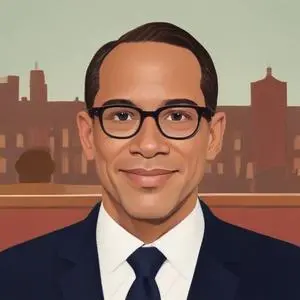
Benjamin Hooks: A Champion of Civil Rights and Social Justice
A Life Dedicated to Fighting for Equality
Benjamin Hooks, a prominent American civil rights leader and government official, spent his life advocating for the rights of African Americans and marginalized communities. As the executive director of the National Association for the Advancement of Colored People (NAACP) from 1977 to 1992, Hooks played a crucial role in shaping the civil rights movement in the United States.
Early Life and Inspirations
Born on January 31, 1925, in Memphis, Tennessee, Hooks was the fifth son of Robert B. and Bessie White Hooks. His family, considered relatively comfortable for African Americans at the time, instilled in him a strong sense of determination and hard work. Hooks' paternal grandmother, Julia Britton Hooks, was a musical prodigy and one of the first African American women to graduate from college, graduating from Berea College in Kentucky in 1874. Her legacy inspired Hooks to pursue his academic goals and strive for excellence.
Rise to Prominence
Hooks' journey in the civil rights movement began as a practicing attorney and Baptist minister. He became involved with the NAACP in the 1950s, eventually becoming the executive director of the organization in 1977. During his tenure, Hooks worked tirelessly to address issues such as discrimination, voter suppression, and racial inequality. He also served as the first African American member of the Federal Communications Commission (FCC) from 1972 to 1977.
Leadership and Advocacy
Hooks was known for his powerful oratory skills and his ability to inspire and mobilize people to take action. He was a vocal critic of discrimination and inequality, and his leadership played a significant role in shaping the nation's civil rights policies. Under his direction, the NAACP launched several initiatives aimed at promoting voting rights, education, and economic empowerment for African Americans.
Awards and Honors
Hooks received numerous awards and honors for his contributions to the civil rights movement, including:
- The NAACP's highest honor, the Spingarn Medal
- The Presidential Medal of Freedom, awarded by President Bill Clinton in 2007
- The Jefferson Award for Public Service
Legacy and Impact
Benjamin Hooks' legacy extends far beyond his work with the NAACP. He played a significant role in shaping the civil rights movement and inspiring future generations of leaders and activists. His commitment to social justice and equality continues to inspire people around the world. Hooks passed away on April 15, 2010, but his legacy lives on, serving as a testament to the power of determination and dedication to creating a more just and equitable society.
Quotes and Memorable Sayings
- "If the Negro is not able to demonstrate and protest, then his hopes for equal justice are thin."
- "The NAACP's mission is not to make the Negro a Republican or a Democrat, but to make him a rightful participant in the American democracy."
Personal Milestones and Key Life Events
- 1952: Married Frances Darby, a science teacher
- 1972: Became the first African American member of the Federal Communications Commission (FCC)
- 1977: Became the executive director of the NAACP
- 1992: Retired as executive director of the NAACP
Conclusion
Benjamin Hooks' life and legacy serve as a powerful reminder of the importance of fighting for social justice and equality. His commitment to the civil rights movement inspired generations of leaders and continues to shape the course of American history. As a champion of civil rights and social justice, Hooks' impact will be felt for generations to come.
FAQ
What was Benjamin Hooks role in the Civil Rights Movement?
Benjamin Hooks was a prominent figure in the Civil Rights Movement, serving as the executive director of the NAACP from 1977 to 1992, and working closely with leaders like Martin Luther King Jr.
What were Benjamin Hooks accomplishments as NAACP executive director?
During his tenure as NAACP executive director, Benjamin Hooks focused on issues like voting rights, education, and economic empowerment for African Americans, and helped to increase the organizations membership and influence.
What was Benjamin Hooks background and education?
Benjamin Hooks was born on January 31, 1925, in Memphis, Tennessee. He earned a degree in law from DePaul University and became a lawyer, later entering the ministry and becoming a Baptist minister.
What awards and honors did Benjamin Hooks receive?
Benjamin Hooks received numerous awards and honors for his civil rights work, including the Presidential Medal of Freedom, the NAACPs Spingarn Medal, and several honorary degrees.
How did Benjamin Hooks legacy impact the civil rights movement?
Benjamin Hooks leadership and advocacy helped to advance the civil rights movement, and his legacy continues to inspire future generations of activists and leaders working towards social justice.