


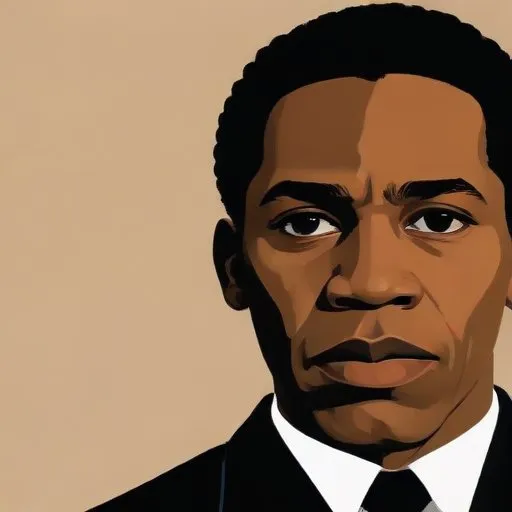
A prominent figure in the Civil Rights Movement, he organized pivotal protests and marches, including the Selma to Montgomery Marches, to end segregation and secure voting rights. 42
James Bevel is widely regarded as the strategist and architect of the 1960s Civil Rights Movement, playing a pivotal role in shaping the course of American history. Bevel's contributions, often overshadowed by his contemporaries, include initiating, strategizing, and developing three major successes: the 1963 Birmingham Children's Crusade, the 1965 Selma voting rights movement, and the 1966 Chicago open housing movement.
James Luther Bevel was born on October 19, 1936, in Itta Bena, Mississippi. He grew up in a family of 13 children and was raised by his mother, a devout Christian, after his father's death when Bevel was just 10 years old. Bevel's early life was marked by poverty and racial segregation, experiences that would later shape his activism.
In the late 1950s, Bevel became involved in the Nashville Student Movement, where he participated in the 1960 Nashville LunchCounter Sit-Ins and the 1961 Open Theater Movement. He recruited students to continue the 1961 Freedom Rides after they were attacked, demonstrating his unwavering commitment to the cause.
Bevel's work with the Southern Christian Leadership Conference (SCLC) began in 1961, where he played a crucial role in initiating, strategizing, and developing the organization's three major successes. Bevel's suggestions, including calling for and joining the 1963 March on Washington, contributed to the passage of the 1965 Voting Rights Act.
Bevel's leadership style was characterized by his unwavering commitment to nonviolent direct action and his ability to mobilize diverse groups of people. He believed that social change could be achieved through grassroots organizing, community engagement, and strategic planning.
In 1967, Bevel became the chairman of the Spring Mobilization Committee to End the War in Vietnam, and he initiated the 1967 March on the United Nations as part of the antiwar movement. Bevel's final major action was as co-initiator of the 1995 Day of Atonement/Million Man March in Washington, D.C.
In 2005, Bevel was accused of incest by one of his daughters and abuse by three others. He was tried in April 2008, convicted of incest, and sentenced to 15 years in prison. Bevel served seven months before being released pending appeal, and he died of pancreatic cancer in December 2008.
James Bevel's contributions to the Civil Rights Movement have had a lasting impact on modern society. His work laid the groundwork for the passage of landmark legislation, including the 1965 Voting Rights Act, and inspired generations of activists to continue the fight for social justice.
"We must learn to live together as brothers or perish together as fools." - James Bevel
Bevel's words continue to resonate, serving as a reminder of the importance of unity and collective action in the pursuit of social justice.
Despite his significant contributions to the Civil Rights Movement, Bevel received little recognition during his lifetime. However, his legacy continues to inspire, and his work remains a testament to the power of strategic planning and community engagement in achieving social change.
James Bevel's story serves as a powerful reminder of the importance of acknowledging and celebrating the contributions of unsung heroes who have shaped the course of American history.
97 Years Old
A prominent leader in the civil rights movement, advocating for racial equality and social justice through nonviolent means, leaving a lasting impact on American history.
Born in 1926
A prominent leader in the American Civil Rights Movement, he worked closely with Martin Luther King Jr. to advocate for racial equality and social justice through nonviolent means.
94 Years Old
A prominent civil rights leader and diplomat who served as a key advisor to Martin Luther King Jr. and later became the first African American to hold a top post in an American presidential administration.
Born in 1880
Led a powerful miners' union, fighting for workers' rights and fair wages, and was a key figure in shaping America's labor movement. Known for his charismatic leadership and militant tactics.
Born in 1912
A pioneering figure in the struggle for racial and gender equality, she dedicated her life to empowering African American women and promoting education and social justice.
Born in 1912
A pioneering civil rights activist who played a key role in organizing the 1963 March on Washington, where Martin Luther King Jr. delivered his iconic "I Have a Dream" speech.
Born in 1889
Leader of the Brotherhood of Sleeping Car Porters, pioneering the Civil Rights Movement through nonviolent protests and advocacy for African American workers' rights.
85 Years Old
A prominent figure in the Civil Rights Movement, advocating for Black Power and self-defense, and famously coining the term "Black Power" in 1966. Known for his radical approach to achieving racial equality.
