


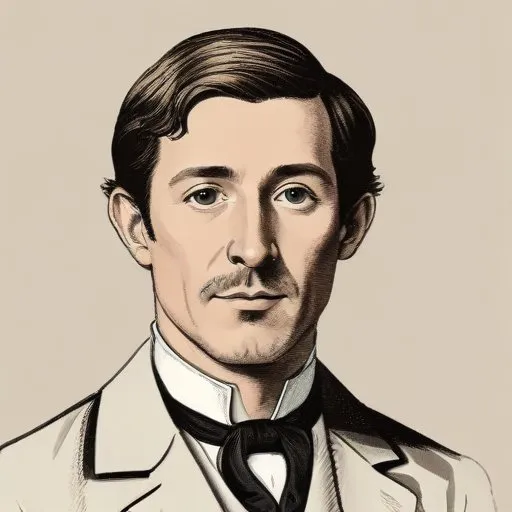
Pioneering botanist and physician who discovered and classified numerous plant species, and wrote influential books on botany and natural history.
Benjamin Smith Barton is renowned as one of the first professors of natural history in the United States and the builder of the largest collection of botanical specimens in the country. He is also credited with authoring the first American textbook on botany, earning him a revered place in the annals of American scientific history.
Born on February 10, 1766, to Rev. Thomas Barton and Esther Rittenhouse, Benjamin's early life was marked by a strong inclination towards drawing and collecting natural history specimens. He attended York Academy in Lancaster, Pennsylvania, between 1780 and 1782, where he honed his skills in these areas.
Subsequently, he enrolled in the College of Philadelphia School of Medicine, studying medicine under Thomas Shippen and attending Benjamin Rush's lectures in 1785. His accompanying his uncle, David Rittenhouse, on a surveying expedition to the western boundary of Pennsylvania in 1785 sparked a lifelong fascination with Native Americans.
Barton's pursuit of knowledge took him to the University of Edinburgh in 1786, where he spent two years studying before leaving due to financial constraints and disagreements with professors. Although it is unclear whether he studied at the University of Göttingen, he received a diploma from the Lisbon Academy in Portugal and an honorary degree from the University of Kiel.
Upon his return to Philadelphia in 1789, Barton established himself as a practicing physician. In 1790, he was elected a fellow of the College of Physicians, Philadelphia, and succeeded Adam Kuhn as professor of Natural History and Botany at the College of Philadelphia.
As a professor, Barton's contributions to the field of botany were immense. He authored the groundbreaking textbook, "Elements of Botany," in 1803, which became a seminal work in American botanical education. This comprehensive tome not only introduced American students to the world of botany but also provided a platform for further research and exploration.
Barton's influence on American scientific society cannot be overstated. He played a pivotal role in shaping the country's botanical landscape, inspiring future generations of botanists and naturalists. His work also contributed significantly to the development of natural history and medicine in the United States.
Today, Benjamin Smith Barton is remembered as a pioneering figure in American botanical history, whose tireless efforts have left an indelible mark on the scientific community. His legacy serves as a testament to the importance of dedication, perseverance, and innovation in the pursuit of knowledge.
Born in 1774
Led the Corps of Discovery expedition with William Clark, mapping the western United States and establishing trade with Native American tribes. Known for his bravery, leadership, and contributions to American exploration and expansion.
75 Years Old
A renowned blues harmonica virtuoso, known for his soulful, expressive playing style and influential recordings that helped shape the sound of Chicago blues.
Born in 1743
The principal author of the Declaration of Independence and a strong advocate for individual liberties and limited government, shaping America's foundational principles. He oversaw the Louisiana Purchase, doubling the country's territory.
Born in 1699
America's first botanist, who explored and cataloged the New World's flora, introducing many species to Europe and establishing a renowned botanical garden. He's considered the "Father of American Botany".
