


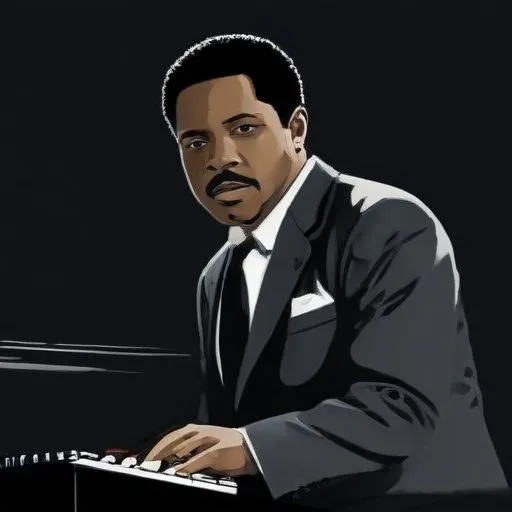
A pioneering jazz pianist and bandleader who led a prominent Kansas City jazz orchestra in the 1920s and 1930s, blending blues, swing, and ragtime styles.
Bennie Moten, born Benjamin Moten on November 13, 1893, was an American jazz pianist and band leader, credited with developing the riffing style that defined the big bands of the 1930s. He is perhaps best known for his iconic composition, "Moten Swing," a jazz standard that has stood the test of time.
Moten was born and raised in Kansas City, Missouri, where he began making music from an early age. He developed as a pianist, eventually gathering a group of musicians to form his own band. In 1923, he made his first recordings for OKeh Records, which showcased his unique blend of New Orleans-style jazz and ragtime.
Moten's orchestra was instrumental in shaping the distinctive Kansas City sound, characterized by a hard-stomping beat and smooth saxophone choruses. His music was deeply rooted in the blues, and his band featured some of the most talented musicians of the time, including Harlan Leonard, Jack Washington, and Willie McWashington.
In 1926, Moten's orchestra signed with Victor Records, where they were heavily influenced by the more sophisticated style of Fletcher Henderson. This partnership led to some of Moten's most iconic recordings, including "South," which became a huge hit in the late 1940s.
Bennie Moten's influence on jazz is immeasurable. His innovative riffing style paved the way for future generations of jazz musicians, and his compositions, such as "Moten Swing," remain an integral part of the jazz canon. Despite his untimely death in 1935, Moten's music continues to inspire and delight audiences to this day.
Bennie Moten's contributions to jazz have been recognized posthumously, with his music being inducted into the Grammy Hall of Fame and the Blues Hall of Fame.
Little is known about Moten's personal life, but it is clear that music was his passion and driving force. He continued to perform and record until his untimely death on April 2, 1935, leaving behind a legacy that continues to inspire generations of jazz musicians.
Born in 1904
A legendary jazz pianist and bandleader who led a iconic orchestra, blending swing and blues to create a unique sound that influenced generations of musicians. Known for his distinctive "less-is-more" style and hits like "April in Paris" and "One O'Clock Jump".
Born in 1899
A legendary jazz pianist, composer, and bandleader who revolutionized the genre with his unique style and iconic compositions, such as "Take the A Train" and "Mood Indigo".
Born in 1897
A pioneering figure in early jazz, leading a renowned orchestra and composing innovative arrangements that influenced generations of musicians.
Born in 1887
A renowned pianist and composer, he was a leading figure in the development of ragtime music, creating iconic songs like "Memories of You" and "I'm Just Wild About Harry".
Born in 1894
A pioneering figure in stride piano, he created a unique blend of jazz, blues, and ragtime, influencing generations of musicians, including Fats Waller and Duke Ellington.
Born in 1903
A pioneering jazz pianist and bandleader, known for his virtuosic solos and innovative style that blended classical and jazz techniques. He was a key figure in the development of swing music.
Born in 1904
A virtuosic pianist and singer-songwriter who blended jazz, blues, and stride piano to create infectious, energetic tunes that still delight audiences today. Known for his soulful, raspy vocals and iconic hits like "Ain't Misbehavin'" and "Honeysuckle Rose".
Born in 1910
A virtuosic clarinetist and innovative bandleader, he revolutionized the swing era with his unique sound and iconic hits like "Begin the Beguine" and "Stardust".
