


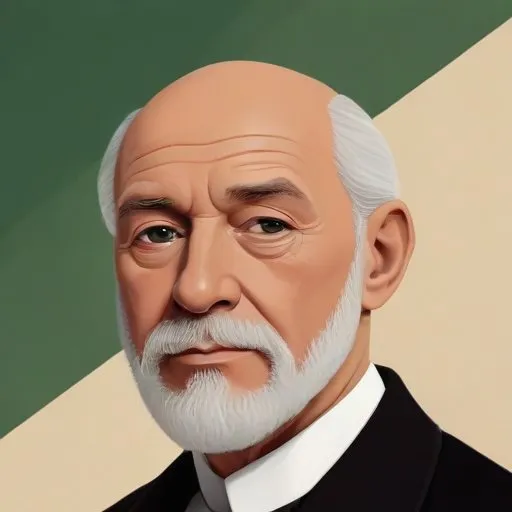
A renowned art historian and connoisseur, credited with developing the discipline of connoisseurship, and authoring influential books on Italian Renaissance art.
Bernard Berenson, a luminary in the field of art history, is renowned for his exhaustive research and expertise in Renaissance art, particularly in attributing Old Masters. His magnum opus, The Drawings of the Florentine Painters, has been hailed as an international success, solidifying his position as a leading authority in the art world.
Born Bernhard Valvrojenski on June 26, 1865, in Butrimonys, Vilnius Governorate (now in Alytus district, Lithuania), Berenson emerged from a Litvak family. His father, Albert Valvrojenski, was an adherent of Haskalah, a European movement that advocated for the integration of Jews into secular society. This exposure to the intersection of faith and culture would later inform Berenson's nuanced understanding of art and history.
Following his family's immigration to Boston, Massachusetts, in 1875, Berenson graduated from Boston Latin School and attended Boston University College of Liberal Arts. He later transferred to Harvard University, where he graduated and eventually converted to Christianity, becoming an Episcopalian. His conversion to Catholicism would occur later, during his time in Italy.
Berenson's expertise in Renaissance art led to groundbreaking research and publications. His most notable works include The Drawings of the Florentine Painters, The Venetian Painters of the Renaissance, and The North Italian Painters of the Renaissance. These comprehensive studies not only demonstrated his mastery of the subject matter but also facilitated a deeper understanding of Renaissance art among art historians, collectors, and enthusiasts alike.
Berenson's discerning eye and rigorous methodology made him a trusted authority in attributing Old Masters. His judgments were highly respected in the art world, particularly among American collectors, who eagerly sought his expertise in authenticating and valuing Renaissance art. This reputation was further solidified through his work as an advisor to prominent collectors, including Isabella Stewart Gardner.
Berenson's marriage to Mary Smith, a notable art historian in her own right, was a union that fostered a deep collaboration and mutual admiration. Together, they resided in Villa I Tatti, a 15th-century Florentine villa, which became a hub for art enthusiasts and scholars. Berenson's relationships with his wife, as well as his involvement with other prominent figures, including Logan Pearsall Smith and Bertrand Russell, demonstrate the extent of his intellectual and artistic network.
Bernard Berenson's contributions to the field of art history have been profound and far-reaching. His rigorous scholarship, exacting standards, and connoisseurship have inspired generations of art historians, curators, and collectors. As a testament to his enduring legacy, the Harvard University Art Museums established the Bernard Berenson Fellowship in his honor, recognizing exceptional scholarship in the field of Renaissance art.
Set against the backdrop of the late 19th and early 20th centuries, Berenson's work intersects with the broader cultural and intellectual currents of his time. His involvement with the Anglo-American art world, as well as his engagement with Italian culture, underscores the complexities of cultural exchange and the role of art historians as mediators between East and West.
“The artist is the only one who knows that the world is a subjective creation, that the world is made by the imagination, and that it is the duty of the artist to imagine.” - Bernard Berenson
Berenson's remarkable contributions to art history have been recognized with numerous awards and honors. He was elected a Fellow of the American Academy of Arts and Sciences in 1924 and received the Gold Medal for Architecture from the American Institute of Architects in 1945.
Bernard Berenson's life and work serve as a testament to the power of rigorous scholarship, connoisseurship, and a deep appreciation for the arts. As we reflect on his enduring legacy, we are reminded of the importance of preserving and promoting our cultural heritage for future generations.
86 Years Old
A British politician who served as Lord High Chancellor of Great Britain, known for his conservative views and influential role in shaping the country's justice system. He's a prominent figure in UK politics, particularly during the 1990s and early 2000s.
85 Years Old
A British chemist and academic who won the Nobel Prize in Chemistry in 1997 for his work on the mechanism of ATP synthase, a crucial enzyme that generates energy in cells.
Born in 1892
A renowned art historian and iconologist who interpreted artworks through a deep understanding of cultural and historical contexts, revealing hidden meanings and symbolism. 82
Born in 1870
A pioneer of modern architecture, he rejected ornate decorations, advocating for simplicity and functionality, influencing the development of modernist design.
Born in 1874
A pioneering figure in modernist literature, known for experimental writing styles and influential salons that fostered artistic innovation. 82
