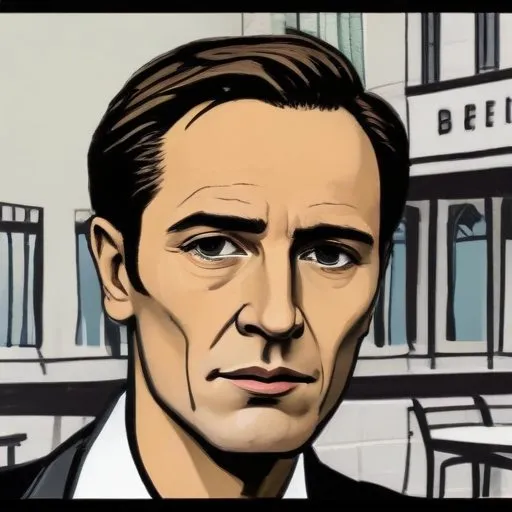
Unveiling the Enigmatic World of Bernard Buffet: A Prolific French Artist
The Artistic Maestro: Expressionist and Miserabilist Masterpieces
Bernard Buffet, a French painter, printmaker, and sculptor, left an indelible mark on the art world with his extensive and varied body of work. Known for his exclusively figurative style, which often oscillated between Expressionism and Miserabilism, Buffet's artistic prowess gained him immense popularity worldwide, especially during the 1950s.
Early Life and Influences
Born on July 10, 1928, in Paris, Buffet spent his childhood surrounded by the artistic richness of the city. His mother, who often took him to the Louvre Museum, instilled in him a deep appreciation for the works of Realist painters like
Gustave Courbet. This early exposure would later influence his artistic style. During the Nazi occupation of Paris, Buffet continued to pursue his passion for art, attending drawing courses in the evenings despite the curfew.
Rise to Fame and Artistic Evolution
Buffet's artistic journey began to take shape during his time at the Lyce Carnot, where he met fellow artists Maurice Boitel and Louis Vuillermoz. Later, he studied art at the École Nationale Supérieure des Beaux-Arts, working under the guidance of painter Eugène Narbonne. The loss of his mother in 1945 had a profound impact on Buffet, and his melancholy would often find expression in his art.
A Prolific Artist with a Wide Range of Themes
Buffet's artistic repertoire was vast and diverse, encompassing themes such as religion, landscapes, portraits, and still lifes. Influenced by Francis Gruber, he often explored Miserabilist scenes of despair, including poverty and the Holocaust. His artistic style, characterized by bold lines, vibrant colors, and a sense of melancholy, set him apart from his contemporaries.
Influence and Legacy
Despite facing a decline in popularity in the latter half of the 1950s, Buffet's art experienced a resurgence in the 21st century. His unique style and prolific output have inspired generations of artists, and his contributions to the world of art remain unparalleled.
Personal Quotes and Philosophy
- "I do not try to reproduce the world, but to recreate it in a manner that is more true to my own." - Bernard Buffet
- "The only reason I paint is to try to say something that cannot be said." - Bernard Buffet
These quotes offer a glimpse into Buffet's artistic philosophy, which was deeply rooted in his desire to express the inexpressible.
Trivia and Fun Facts
- Buffet was known for his remarkable productivity, producing over 8,000 paintings during his lifetime.
- He was often compared to Pablo Picasso due to his immense fame and talent.
- Buffet's artistic style was characterized by a predominance of black, which he believed symbolized the darkness of human existence.
These fascinating facts offer a glimpse into the life and art of Bernard Buffet, a true master of his craft.
FAQ
What style of art is Bernard Buffet known for?
Bernard Buffet is known for his unique and expressive style of figural painting, which often featured distorted and elongated forms.
What was Bernard Buffets most famous subject matter?
Bernard Buffets most famous subject matter was his depiction of clowns, which became a hallmark of his artistic style.
How did Bernard Buffets art career begin?
Bernard Buffets art career began at a young age, with his first solo exhibition taking place in Paris at the age of 19.
Is Bernard Buffet considered a Naive artist?
Yes, Bernard Buffets style is often classified as Naive art, characterized by its simplicity, primitivism, and emotional intensity.
What is the significance of Bernard Buffets use of color?
Bernard Buffets use of color was highly expressive and emotive, often featuring bold, vibrant hues that added to the drama and intensity of his works.