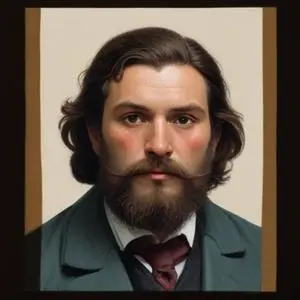
Gustave Courbet: The Radical Realist
Gustave Courbet, the enfant terrible of 19th-century French painting, is renowned for leading the Realism movement and defying artistic conventions. His unapologetic depiction of the mundane and the marginalized earned him both accolades and notoriety, cementing his status as a pioneer in the art world.
A Rebel's Roots
Born on June 10, 1819, in Ornans, France, Courbet grew up in a household steeped in anti-monarchical sentiment. His maternal grandfather, a veteran of the French Revolution, instilled in him a spirit of rebellion that would later manifest in his art. Courbet's sisters, Zoé, Zélie, and Juliette, served as his first models, exposing him to the beauty of everyday life.
The Parisian Provocateur
In 1839, Courbet arrived in Paris, where he briefly studied at the studio of Steuben and Hesse. However, his independent nature soon led him to strike out on his own, devouring the masterpieces of the Louvre and creating copies to hone his skills. This self-directed approach allowed him to develop a unique style that would shake the foundations of the art world.
The Realist Revolution
Courbet's early works, such as
After Dinner at Ornans (1849) and
The Stone Breakers (1849), marked a radical departure from the Romanticism and academic conventions of the time. By depicting ordinary people and scenes with unflinching realism, he challenged the art establishment and paved the way for future movements like Impressionism and Cubism.
Controversy and Consequences
Courbet's unwavering commitment to his artistic vision often led to controversy. His participation in the Paris Commune in 1871 resulted in a six-month imprisonment, and he was forced into exile in Switzerland from 1873 until his death in 1877. Despite these challenges, Courbet continued to produce works that defied the status quo, inspiring generations of artists to come.
A Legacy of Innovation
Today, Courbet's influence can be seen in the works of artists like Édouard Manet,
Claude Monet, and
Pablo Picasso. His emphasis on everyday life and his rejection of idealized beauty continue to inspire artists, photographers, and filmmakers around the world.
Major Works
- The Origin of the World (1866)
- The Painter's Studio (1855)
- The Meeting (1854)
- The Stone Breakers (1849)
- After Dinner at Ornans (1849)
Philosophical Contributions
Courbet's artistic philosophy was rooted in the belief that art should be a reflection of reality, rather than an idealized representation. He advocated for the importance of individuality and the freedom to create without compromise, inspiring a generation of artists to challenge traditional norms and conventions.
Personal Milestones
- 1839: Arrives in Paris to pursue artistic career
- 1849: Exhibits After Dinner at Ornans and The Stone Breakers at the Paris Salon
- 1851: Meets and becomes friends with novelist and playwright, Victor Hugo
- 1871: Participates in the Paris Commune and is imprisoned for six months
- 1873: Forced into exile in Switzerland, where he lives until his death in 1877
Quotes and Memorable Sayings
- "I am not only a socialist, but also a realist, and realism is a step towards socialism."
- "The only thing that counts is the truth, and the truth is that which is."
Historical Context and Legacy
Gustave Courbet's unwavering commitment to his artistic vision and his willingness to challenge authority have made him a lasting figure in the art world. His influence can be seen in the many movements that followed, from Impressionism to Cubism, and his legacy continues to inspire artists, writers, and thinkers to this day.
FAQ
What was Gustave Courbets contribution to the development of Realism in art?
Gustave Courbet was a French-Swiss painter and sculptor who was a key figure in the development of Realism in art. He rejected the idealized and romanticized depictions of the natural world, instead focusing on everyday life and the beauty of the mundane.
What were some of Gustave Courbets most famous works?
Courbets most famous works include The Stone Breakers, The Burial at Ornans, and The Origin of the World. These paintings showcased his innovative use of color and composition to depict everyday life and the human experience.
What was Gustave Courbets relationship with the art establishment?
Courbet was a vocal critic of the art establishment and its emphasis on traditional techniques and subjects. He sought to challenge the status quo and create a more realistic and honest form of art.
How did Gustave Courbets work influence the development of modern art?
Courbets innovative use of color, composition, and subject matter influenced the development of modern art movements such as Impressionism, Cubism, and Surrealism. His rejection of idealized and romanticized depictions of the natural world paved the way for more avant-garde and experimental forms of art.
What is Gustave Courbets legacy in the art world?
Courbets legacy in the art world is one of innovation and rebellion. He challenged the traditional norms of art and created a new way of depicting the world that was more honest and realistic. His influence can be seen in the work of countless artists who followed in his footsteps.