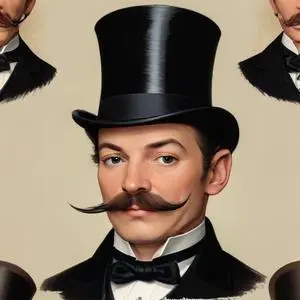
Édouard Manet: The Pioneer of Modern Art
A Revolutionary Artist
Édouard Manet was a French modernist painter who is renowned for his pivotal role in the transition from Realism to Impressionism. He is celebrated for his bold and innovative works that challenged the traditional artistic norms of the 19th century, paving the way for modern art.
Early Life and Background
Manet was born on January 23, 1832, in Paris, into an affluent and well-connected family. His mother, Eugénie-Désirée Fournier, was the daughter of a diplomat, and his father, Auguste Manet, was a French judge who expected his son to pursue a career in law. However, Manet's uncle, Edmond Fournier, encouraged him to pursue painting, which led him to enroll in a special course of drawing in 1845.
The Early Years of Artistic Expression
Manet's early works were heavily influenced by the Realist movement, which focused on depicting everyday life and contemporary social issues. His early masterpieces, such as "The Luncheon on the Grass" (1863) and "Olympia" (1865), caused a stir among critics and the Academy of Fine Arts due to their unconventional and provocative nature. These works were praised by progressive artists, who saw them as a breakthrough to the new style of Impressionism.
Artistic Philosophy and Contributions
Manet's artistic philosophy was centered around the idea of capturing modern life and reality. He believed that art should be a reflection of the world around us, rather than an idealized representation of classical themes. His contributions to the Impressionist movement paved the way for future generations of artists, including
Claude Monet,
Pierre-Auguste Renoir, and
Camille Pissarro.
Personal Milestones and Key Life Events
Manet's life was marked by significant events that shaped his artistic career. In 1863, he met Suzanne Leenhoff, a Dutch pianist, whom he married in 1867. The couple had one son, Léon Koëlla Leenhoff, in 1859. Manet's friendship with Antonin Proust, a future Minister of Fine Arts, was also instrumental in his career, as Proust provided him with valuable guidance and support.
Major Works and Career Highlights
Manet's oeuvre is characterized by his bold and innovative style, which blended elements of Realism and Impressionism. Some of his notable works include:
- "The Luncheon on the Grass" (1863)
- "Olympia" (1865)
- "A Bar at the Folies-Bergère" (1882)
- "The Railway" (1872-1873)
Influence on Modern Society
Manet's artistic legacy extends far beyond the Impressionist movement. His innovative style and philosophy paved the way for a wide range of modern art movements, including Expressionism, Fauvism, and Cubism. His influence can be seen in the works of artists such as
Pablo Picasso, Salvador Dalí, and
Henri Matisse.
Legacy and Historical Context
Manet's artistic contributions are deeply rooted in the cultural and historical context of the 19th century. His rejection of traditional artistic norms and his emphasis on modern life and reality reflect the changing values and attitudes of the time. Today, Manet is recognized as one of the pioneers of modern art, and his works continue to inspire and influence artists around the world.
Comparative Analysis with Contemporaries
Manet's artistic style and philosophy are often compared to those of his contemporaries, such as
Gustave Courbet and Charles-François Daubigny. While Courbet's Realist works focused on social and political commentary, Daubigny's landscapes emphasized the beauty of nature. Manet's innovative style, which blended elements of Realism and Impressionism, set him apart from his contemporaries.
Personal Relationships and Anecdotes
Manet's personal relationships played a significant role in his artistic career. His friendship with Antonin Proust, who later became the Minister of Fine Arts, provided him with valuable guidance and support. His marriage to Suzanne Leenhoff, a Dutch pianist, brought stability and joy to his life.
Impact on Pop Culture
Manet's artistic legacy has extended beyond the art world, influencing popular culture and fashion. His bold and innovative style has inspired designers, musicians, and writers, who have drawn upon his artistic philosophy to create their own works.
Awards and Honors
Manet's contributions to the art world were recognized during his lifetime. He was awarded the Légion d'Honneur in 1881, a prestigious honor that recognized his contributions to the arts.
Trivia and Fun Facts
Manet was known for his wit and humor, which is reflected in his letters and correspondences. He was also an avid music lover and played the violin in his spare time.
Conclusion
Édouard Manet was a trailblazing artist who paved the way for modern art. His innovative style, which blended elements of Realism and Impressionism, continues to inspire artists around the world. Through his bold and provocative works, Manet challenged traditional artistic norms and paved the way for future generations of artists.