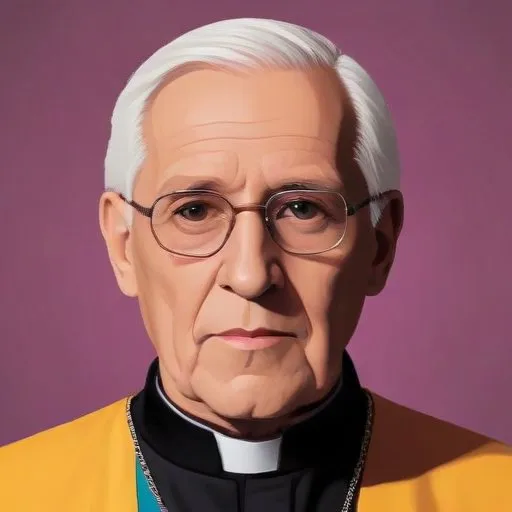
Bernard Joseph McLaughlin: A Dedicated Servant of the Catholic Church
A Life of Devotion and Service
Bernard Joseph McLaughlin was a revered American bishop of the Catholic Church, best known for his unwavering commitment to his faith and his selfless service to the Diocese of Buffalo. Throughout his long and distinguished career, McLaughlin held various prominent positions, including Auxiliary Bishop of Buffalo and titular see of Mottola.
Early Life and Education
Born on November 19, 1912, in North Tonawanda, New York, McLaughlin was the son of Michael Henry McLaughlin and Mary Agnes (née Curran) McLaughlin. He was baptized at Ascension Church in North Tonawanda in 1912. The McLaughlin family later moved to Visitation Parish in Buffalo, New York, where Bernard attended the parish school. In 1925, he entered the Preparatory Seminary in the Diocese of Buffalo, and in 1930, he became a member of its first graduation class.
The Call to Priesthood
McLaughlin's journey to priesthood took him to Rome, Italy, where he attended the Urban College for the Propagation of the Faith. He was ordained a priest in St. John Lateran Basilica, Rome, on December 21, 1935. After completing his studies, he returned to Buffalo and was appointed assistant at St. Joseph New Cathedral on August 14, 1936.
Rise to Prominence
Throughout his ministry, McLaughlin held various positions of increasing responsibility. In 1942, he became secretary of the diocesan Tribunal, and in 1946, he was appointed assistant chancellor and soon after became vice chancellor of the diocese. On December 16, 1953, he was appointed chancellor of the diocese.
Honors and Recognition
McLaughlin's dedication and service were recognized by the Vatican on several occasions. On April 6, 1950,
Pope Pius XII made him a Private Chamberlain with the title of Very Reverend Monsignor. Three years later, he was raised to the rank of Domestic Prelate.
Pastoral Leadership
In addition to his administrative roles, McLaughlin was a devoted pastor. In 1950, he was chosen to establish the new parish of Coronation of the Blessed Virgin Mary on Buffalo's West Side. He later served as pastor of Blessed Sacrament Parish in Kenmore, New York, and St. John the Baptist Parish, also in Kenmore.
Legacy
Bernard Joseph McLaughlin's life was a testament to his unwavering commitment to his faith and his service to the Catholic Church. Through his many roles and responsibilities, he inspired countless individuals and left a lasting impact on the Diocese of Buffalo. His legacy continues to inspire future generations of Catholics and clergy alike.
FAQ
What was Bernard Joseph McLaughlins role in the Catholic Church?
Bernard Joseph McLaughlin was an American bishop who served in the Catholic Church. He was ordained in 1958 and went on to hold various leadership positions within the church.
What diocese did Bernard Joseph McLaughlin serve in?
McLaughlin served as the Auxiliary Bishop of the Roman Catholic Diocese of Buffalo, New York. He was known for his dedication to social justice and his work with marginalized communities.
What was Bernard Joseph McLaughlins stance on social issues?
McLaughlin was an outspoken advocate for social justice, particularly in the areas of poverty, racism, and education. He worked to promote greater understanding and compassion within the church and beyond.
Did Bernard Joseph McLaughlin receive any notable awards?
Yes, McLaughlin received multiple awards for his work, including the Pacem in Terris Award and the Martin Luther King Jr. Award. He was recognized for his commitment to social justice and his service to the community.
What was Bernard Joseph McLaughlins legacy in the Catholic Church?
McLaughlins legacy is one of compassion, service, and advocacy. He inspired countless individuals to work towards creating a more just and equitable society, and his influence continues to be felt within the Catholic Church and beyond.