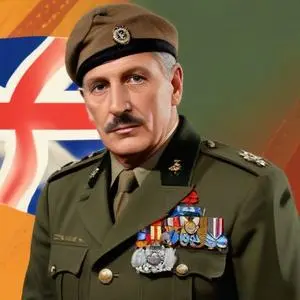
Bernard Montgomery, 1st Viscount Montgomery of Alamein: The Indomitable Field Marshal of World War II
A Leader of Unyielding Resolve
Bernard Montgomery, 1st Viscount Montgomery of Alamein, is renowned for his unwavering leadership and strategic prowess, which played a pivotal role in the Allied victory in World War II. As a skilled and fearless commander, he led the Eighth Army to triumph in the Battle of El Alamein, marking a decisive turning point in the North African Campaign.
Rise to Prominence
Born on November 17, 1887, in London, England, Montgomery's early life was marked by a strong sense of discipline and duty. He attended the Royal Military College at Sandhurst, where he developed his military skills and graduated in 1908. His early years in the army were marked by notable service in World War I, where he was severely wounded in 1914.
Battle-Hardened Commander
Montgomery's leadership abilities and tactical acumen were honed through his experiences in World War I and the interwar period. As a brigade major in the 1930s, he developed innovative training methods, emphasizing the importance of combined arms warfare and the need for mobility on the battlefield. His expertise in these areas would serve him well in the battles to come.
The Triumph of El Alamein
Montgomery's crowning achievement came in October 1942, when he assumed command of the Eighth Army in North Africa. The British forces were on the brink of defeat, but Montgomery's arrival marked a significant shift in momentum. Through his brilliant leadership and strategic planning, the Eighth Army repelled the German-Italian forces, securing a crushing victory at the Battle of El Alamein. This triumph marked a decisive turning point in the war, as the Allies gained control of the North African coast and paved the way for the invasion of Italy.
Awards and Honors
Montgomery's outstanding service was recognized with numerous honors, including:
- Knighted in 1942 for his service in North Africa
- Awarded the Distinguished Service Order (DSO) in 1914 for his bravery in World War I
- Appointed a Knight Grand Cross of the Order of the Bath (GCB) in 1944
- Created Viscount Montgomery of Alamein in 1946
Personal Milestones and Key Life Events
Montgomery's personal life was marked by significant milestones, including:
- Marriage to Elizabeth Carver in 1927, with whom he had one son, David
- Appointment as Chief of the Imperial General Staff in 1946, a position he held until 1948
- Death on March 24, 1976, at the age of 88
Legacy and Historical Context
Montgomery's legacy extends far beyond his military victories. As a champion of decentralization and adaptability, he helped shape modern military doctrine. His commitment to the welfare of his troops and his emphasis on morale-building initiatives earned him the admiration of his soldiers. As a historian and memoirist, Montgomery wrote several books, including his acclaimed autobiography,
The Memoirs of Field Marshal Montgomery.
Montgomery's impact on the course of World War II cannot be overstated. His unwavering resolve and tactical brilliance inspired confidence in his troops and paved the way for the Allied victory. As a testament to his enduring legacy, Montgomery's name remains synonymous with military excellence and strategic genius.
FAQ
What were Bernard Montgomerys military achievements?
Bernard Montgomery was a renowned English field marshal, playing a crucial role in World War II, including the Battle of El Alamein, the D-Day landings, and the Allied victory in Europe.
How did Bernard Montgomery rise through the British Army ranks?
Bernard Montgomery graduated from the Royal Military College at Sandhurst, served in World War I, and later commanded the 3rd Infantry Division, 5th Corps, and 21st Army Group during World War II.
What was Bernard Montgomerys role in the Allied victory in Europe?
Bernard Montgomery played a key role in the Allied victory in Europe, commanding the 21st Army Group and leading forces during the D-Day landings, the Battle of the Bulge, and the final push into Germany.
How did Bernard Montgomerys military strategy impact the outcome of World War II?
Bernard Montgomerys military strategy, emphasizing combined arms, air support, and careful planning, contributed significantly to the Allied victory in Europe, particularly during the D-Day landings and the Battle of the Bulge.
What honors did Bernard Montgomery receive for his military service?
Bernard Montgomery was awarded numerous honors, including the Knight Grand Cross of the Order of the Bath, the Distinguished Service Order, and the American Distinguished Service Medal, for his exceptional military service.