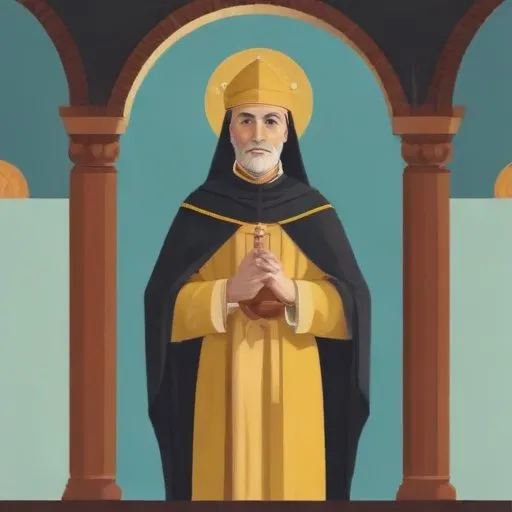
Bernardino of Siena: The Apostle of Italy
A Systematizer of Scholastic Economics and a Fearless Preacher
Bernardino of Siena, a 15th-century Italian Catholic priest and Franciscan missionary, is renowned for his unwavering dedication to reviving Catholicism in Italy and his tireless efforts to eradicate vice and immorality. Through his powerful preaching, book burnings, and bonfires of the vanities, Bernardino established a reputation as a fearless crusader against moral decay, targeting gambling, infanticide, sorcery, sodomy, and usury.
Early Life and Spiritual Journey
Born in 1380 to the noble Albizzeschi family in Massa Marittima, Tuscany, Bernardino was orphaned at the tender age of six and raised by a pious aunt. In 1397, he joined the Confraternity of Our Lady attached to the hospital of Santa Maria della Scala, where he deepened his understanding of civil and canon law. When the plague struck Siena in 1400, Bernardino selflessly ministered to the afflicted, eventually taking charge of the hospital for four months alongside ten companions.
Apostle of Italy and Canonization
Bernardino's impassioned preaching and unwavering commitment to Catholicism earned him the title of "Apostle of Italy." He was canonized by Pope Nicholas V in 1450, just six years after his death, in recognition of his invaluable contributions to the revival of Catholicism in Italy.
Philosophical Contributions and Beliefs
As a systematizer of scholastic economics, Bernardino's works delved into the intricacies of economics, emphasizing the importance of morality and ethics in trade and commerce. He strongly advocated for the eradication of usury, considering it a grave sin that undermined the fabric of society.
Personal Milestones and Key Life Events
- In 1403, Bernardino joined the Observant branch of the Order of Friars Minor, deepening his spiritual roots.
- After surviving the plague, Bernardino was confined to bed for several months due to exhaustion.
- Throughout his life, Bernardino wrote several influential works, including sermons and treatises on economics and morality.
Influence on Modern Society
Bernardino's tireless efforts to promote Catholicism and combat immorality had a profound impact on Italian society, inspiring a generation of Catholics to return to their faith. His emphasis on moral economics and the importance of ethics in trade continues to influence modern economic thought.
Historical Context and Legacy
Bernardino's life and works are a testament to the tumultuous 15th century, marked by spiritual upheaval and moral crisis. His canonization and subsequent veneration as the "Apostle of Italy" cemented his legacy as a champion of Catholicism and a beacon of hope in a society plagued by vice and decay.
Quotes and Memorable Sayings
- "The devil is more pleased by a single soul who apostatizes than by a thousand who persevere in their faith."
- "God is not a God of confusion, but of peace."
Controversies and Public Perception
Bernardino's fiery sermons and public condemnations of vice and immorality drew both admiration and criticism. While some hailed him as a champion of morality, others saw him as a zealot, excessive in his methods and harsh in his judgments.
Visual Timeline and Milestones
| 1380 |
Bernardino of Siena born in Massa Marittima, Tuscany |
| 1397 |
Joins the Confraternity of Our Lady attached to the hospital of Santa Maria della Scala |
| 1400 |
Ministers to the plague-stricken in Siena |
| 1403 |
Joins the Observant branch of the Order of Friars Minor |
| 1444 |
Bernardino dies on May 20th |
| 1450 |
Canonized by Pope Nicholas V |
Trivia and Fun Facts
- Bernardino's feast day is celebrated on May 20th.
- He is often depicted in art with a tablet and stylus, symbolizing his role as a preacher and writer.
FAQ
What was Bernardino of Sienas role in the Catholic Church?
Bernardino of Siena was a prominent Italian priest, missionary, and saint who played a significant role in the Catholic Church. He was known for his powerful preaching and his efforts to reform the Church. Bernardino was also a member of the Franciscan Order and served as a vicar general for the Observant Friars Minor.
What are Bernardino of Sienas most notable sermons?
Bernardino of Sienas most notable sermons include his sermons on the Virgin Mary, the Passion of Christ, and the importance of moral reform. His sermons were known for their eloquence and effectiveness in inspiring people to live virtuous lives.
What is Bernardino of Sienas patronage?
Bernardino of Siena is the patron saint of advertisers, advertising executives, communications personnel, public relations personnel, and publicists. He is also the patron saint of the diocese of Siena, Italy.
What is Bernardino of Sienas feast day?
Bernardino of Sienas feast day is May 20. It is celebrated by the Catholic Church and is an important day of veneration for the saint.
How did Bernardino of Siena die?
Bernardino of Siena died on May 20, 1444, in LAquila, Italy. He died of natural causes and was canonized a saint by Pope Nicholas V in 1450.