


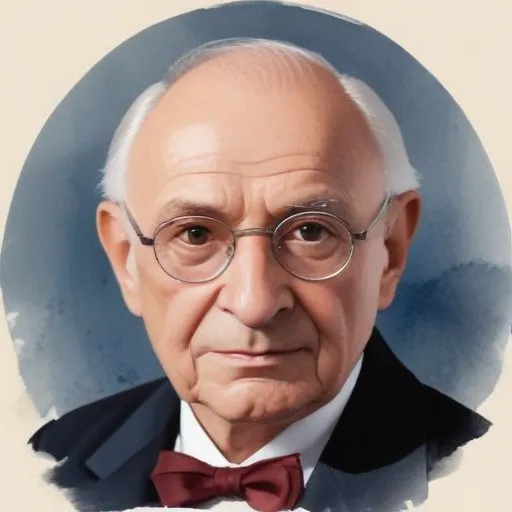
A pioneering physiologist who discovered the role of pituitary hormones in regulating blood sugar levels, earning him a Nobel Prize in Physiology or Medicine. His work laid the foundation for modern endocrinology.
Bernardo Houssay was a trailblazing Argentine physiologist who made groundbreaking contributions to our understanding of pituitary hormones and their role in regulating glucose levels in animals. His remarkable work earned him the prestigious Nobel Prize for Physiology or Medicine in 1947, sharing the honor with Carl Ferdinand Cori and Gerty Cori.
Born on April 10, 1887, in Buenos Aires, Argentina, Bernardo Houssay was the son of French immigrants Albert and Clara Houssay. From a tender age, Houssay displayed exceptional academic prowess, entering the Pharmacy School at the University of Buenos Aires at just 14 years old. He later enrolled in the Faculty of Medicine at the same university at 17, where he would spend the next six years (1904-1910) honing his skills.
Houssay's academic brilliance earned him a position as a research and teaching assistant in the Chair of Physiology while still a third-year medical student. After graduating, he presented his M.D. thesis on the physiological activities of pituitary extracts, published in 1911. This seminal work laid the foundation for his future research and cemented his reputation as a rising star in the field of physiology.
Throughout his career, Houssay held various prestigious positions, including Professor of Physiology at the University of Buenos Aires' School of Veterinary Medicine, Chief Physician at the Alvear Hospital, and Chief of the Section of Experimental Pathology at the National Public Health Laboratories in Buenos Aires. In 1919, he became the chair of physiology at the University of Buenos Aires Medicine School, a position he held until 1943, transforming the department into a world-renowned research institution.
Houssay's pioneering work on pituitary hormones and their role in glucose regulation led to his Nobel Prize win in 1947. This milestone achievement not only recognized his individual contributions but also marked a significant breakthrough in the field of physiology, paving the way for further research and discovery.
Beyond his scientific accomplishments, Houssay was an influential educator and administrator, shaping the next generation of physiologists and promoting scientific excellence in Argentina and beyond.
Houssay's remarkable journey was marked by numerous personal milestones, including his appointment as a professor at the University of Buenos Aires at just 24 years old and his election as a member of the Argentine Academy of Sciences in 1924. His legacy extends far beyond his scientific contributions, inspiring generations of researchers, educators, and scientists to pursue careers in physiology and medicine.
Bernardo Houssay's extraordinary life and achievements serve as a testament to his unwavering dedication to science, education, and humanity. As a pioneering physiologist and Nobel laureate, he left an indelible mark on the scientific community, inspiring future generations to pursue excellence and push the boundaries of human knowledge.
Born in 1896
A Nobel Prize-winning biochemist and pharmacologist who discovered the Cori cycle, a crucial process by which our bodies convert glucose into energy. Their work has had a lasting impact on our understanding of metabolism and disease.
Born in 1896
A pioneering scientist who discovered how the body breaks down and uses carbohydrates, earning a Nobel Prize in Physiology or Medicine in 1947. Her groundbreaking work has led to a deeper understanding of diabetes and other metabolic disorders.
Born in 1870
A financier and presidential advisor who made a fortune on Wall Street and later advised leaders on economic policy, known for his wise counsel and philanthropic efforts.
Born in 1923
Pioneering cardiac surgeon who developed the coronary artery bypass grafting technique, revolutionizing heart surgery.
99 Years Old
Developed groundbreaking techniques for producing monoclonal antibodies, revolutionizing the field of immunology and leading to numerous medical breakthroughs.
Born in 1852
Pioneering neuroscientist and pathologist who discovered the structure of neurons and pioneered the field of neuroscience, earning a Nobel Prize in Physiology or Medicine in 1906.
