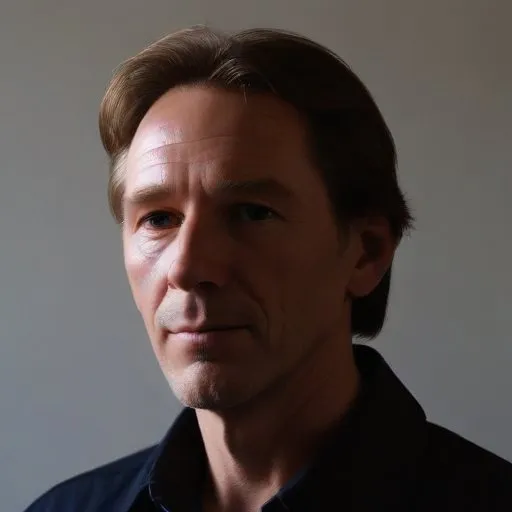
Bill Henson: The Enigmatic Australian Photographer
A Master of Chiaroscuro and Duality
Bill Henson is a renowned Australian contemporary art photographer, celebrated for his captivating and often provocative images that explore the complexities of human existence, particularly among adolescents. His distinctive visual style, characterized by the use of chiaroscuro, bokeh, and a flattened perspective, has been showcased in prestigious galleries worldwide, including the
Solomon R. Guggenheim Museum in New York and the Venice Biennale.
Early Life and Influences
Born on October 7, 1955, in Melbourne, Australia, Henson grew up in the city's eastern suburbs. He studied Visual Arts and Design at Prahran College of Advanced Education from 1974 to 1975, where he was mentored by notable photographers Athol Shmith, John Cato, and Paul Cox. Although he did not complete his diploma, his work was quickly recognized, and his first solo exhibition was held at the National Gallery of Victoria in 1975.
Artistic Style and Themes
Henson's photographs often feature adolescent subjects, exploring themes of duality, ambiguity, and the human condition. He employs a range of techniques, including underexposure and printing adjustments, to create a sense of mystery and tension. His use of bokeh, a term referring to the aesthetic quality of out-of-focus areas, adds a painterly atmosphere to his work.
The artist frequently presents his photographs as diptychs, triptychs, or other groupings, carefully curating exhibitions to evoke a sense of musicality. This deliberate approach creates a sense of narrative and emotional depth, drawing the viewer into the world he has created.
Exhibitions and Career Highlights
Throughout his career, Henson has exhibited his work extensively both nationally and internationally. Some notable exhibitions include:
- Solomon R. Guggenheim Museum, New York (2005)
- Venice Biennale (2003)
- National Gallery of Victoria, Melbourne (1975, 1985, 1996)
- Art Gallery of New South Wales, Sydney (2004)
- Bibliothèque Nationale, Paris (1999)
Henson's current practice involves holding one exhibition in Australia every two years, accompanied by up to three overseas exhibitions annually.
Awards and Recognition
Bill Henson has received numerous awards and accolades for his contributions to the world of photography, including:
- Australian Photographer of the Year (1996)
- National Gallery of Victoria's Clemenger Contemporary Art Award (2004)
Philosophical Contributions and Beliefs
Despite his work exploring complex themes, Henson asserts that he is not driven by a political or sociological agenda. Instead, he seeks to capture the essence of human experience, exploring the complexities and ambiguities that define us.
Legacy and Impact
Bill Henson's influence on contemporary photography is undeniable. His unique visual style and thematic explorations have inspired a generation of photographers, solidifying his position as one of the most important Australian photographers of our time.
FAQ
What is Bill Hensons photography style?
Bill Hensons photography style is characterized by his use of chiaroscuro and a focus on the emotional and psychological depth of his subjects. He often explores themes of youth, beauty, and the human condition.
What was Bill Hensons early career like?
Bill Henson began his career as a landscape photographer, but soon turned to portrait and figure photography. He has exhibited his work in numerous galleries and museums around the world.
Did Bill Henson receive any awards for his photography?
Bill Henson has received several awards for his photography, including the National Photography Prize and the Australia Council Visual Arts/Crafts Board Fellowship.
What is Bill Hensons impact on Australian photography?
Bill Henson has made significant contributions to Australian photography, pushing the boundaries of the medium and inspiring a new generation of photographers.
What is Bill Hensons current status in the art world?
Bill Henson continues to be a prominent figure in the art world, exhibiting his work internationally and pushing the boundaries of photography as a medium.