


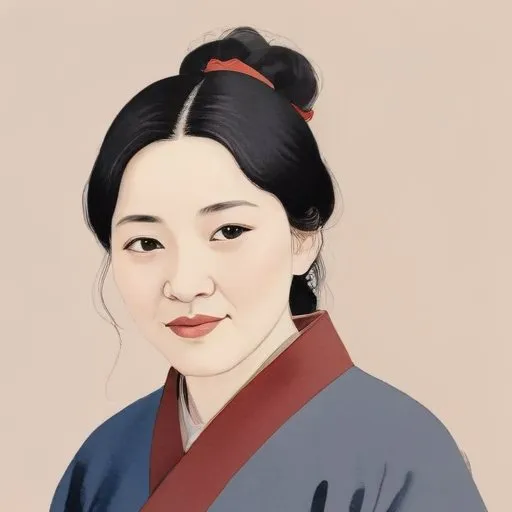
A renowned Chinese author and poet, celebrated for crafting enchanting stories and poems that captivate young minds and foster a love for reading. Her works have become beloved classics in Chinese children's literature.
Bing Xin, born Xie Wanying, is renowned as one of the most prolific Chinese women writers of the 20th century, with a career spanning over seven decades. Her writings, particularly in the genre of children's literature, have left an indelible mark on Chinese literary circles and continue to inspire generations of readers.
Born on October 5, 1900, in Fuzhou, Fujian, Bing Xin's early life was marked by frequent relocations, which would later influence her writing style and philosophical outlook. She moved to Shanghai with her family at just seven months old and later to Yantai, Shandong, at the age of four. This exposure to different environments and cultures broadened her perspective and nurtured her love for literature.
Bing Xin's formal education began at the Fuzhou Women's Normal School, where she started preparatory studies in 1911. She later moved to Beijing and enrolled in the science department of North China Union Women's University, with the aim of becoming a doctor. However, the influences of the May Fourth Movement and the New Culture Movement led her to transfer to the Department of Literature, where she discovered her true calling.
Bing Xin's literary debut came in 1919 with the publication of her first novel, Two Families, and her first prose, "The Impressions of the 21st Hearing," in the Morning Post. Her subsequent writings, including the acclaimed Jixiaoduzhe (To Young Readers), cemented her position as a pioneer in Chinese children's literature.
Her literary contributions extended beyond children's literature, as she was also an accomplished essayist, poet, and translator. Her works often explored themes of love, beauty, and the human condition, reflecting her own experiences and philosophical convictions.
Bing Xin's achievements were recognized with numerous awards and honors, including her appointment as the chairperson of the China Federation of Literary and Art Circles. She was also the first foreign female lecturer to teach a Chinese New Literature course at the University of Tokyo, a testament to her international reputation as a literary luminary.
Bing Xin's influence on Chinese literature and education is immeasurable. Her writings have inspired generations of readers and writers, and her contributions to children's literature have helped shape the genre in China. Her legacy extends beyond literature, as her advocacy for education and women's empowerment continues to resonate in modern Chinese society.
Bing Xin's personal life was marked by significant milestones, including her return to China in 1951 after studying abroad. Her life was a testament to her conviction that "a morally pure heart" could overcome any obstacle, and her writings continue to inspire readers to cultivate such a heart.
Bing Xin passed away on February 28, 1999, leaving behind a legacy that will continue to inspire generations to come. Her life and works serve as a shining example of the transformative power of literature and education in shaping individual and societal values.
Born in 1009
A renowned poet and essayist of the Song Dynasty, known for his lyrical and expressive writings that explored themes of nature, politics, and human emotions.
Born in 1885
A pioneering Chinese writer and translator, known for introducing Western literature to China and promoting cultural exchange through his translations and essays.
