


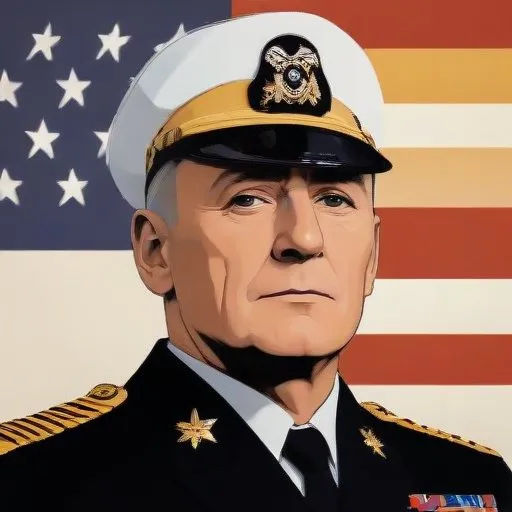
A highly decorated naval officer who served as Director of the National Security Agency and Deputy Director of Central Intelligence, known for his expertise in intelligence gathering and national security.
Bobby Ray Inman is a retired United States Navy admiral who held several influential positions in the United States Intelligence Community, leaving an indelible mark on the nation's defense and security apparatus. As the director of the National Security Agency (NSA) and deputy director of Central Intelligence, Inman played a pivotal role in shaping the country's intelligence gathering and analysis capabilities.
Born on April 4, 1931, in Rhonesboro, Upshur County, Texas, Inman grew up in a humble gas station family. Despite his small stature – he was only 5'4" and weighed 96 pounds in high school – Inman showed remarkable academic prowess, graduating from Mineola High School at the age of 15. He then attended Tyler Junior College, where he was a member of the Phi Theta Kappa National Honor Society, before earning a degree in history from the University of Texas at the age of 19.
Inman's naval career was nothing short of meteoric. After joining the Naval Reserve during the Korean War, he rapidly rose through the ranks of naval intelligence. He served as Director of Naval Intelligence from 1974 to 1976, Vice Director of the Defense Intelligence Agency from 1976 to 1977, and Director of the National Security Agency from 1977 to 1981. His last major position was as Deputy Director of Central Intelligence, a post he held from 1981 to 1982.
Inman's tenure was not without controversy. He was vocal in his rejection of Israel's claim of mistaken identity in the 1967 USS Liberty incident, stating that it was "just exceedingly difficult to believe" that the USS Liberty was not correctly identified. This stance sparked heated debate and criticism from some quarters.
Despite the controversies, Inman's contributions to the US Intelligence Community are undeniable. He played a crucial role in shaping the nation's intelligence gathering and analysis capabilities, and his leadership helped to modernize the NSA and CIA. His legacy continues to influence US intelligence policy and operations to this day.
Inman's leadership was guided by a strong belief in the importance of intelligence gathering and analysis in national security. He was a vocal advocate for the modernization of the US Intelligence Community, and his tenure saw significant investments in technology and personnel.
Inman received numerous awards and honors for his service, including the Navy Distinguished Service Medal, the Defense Distinguished Service Medal, and the National Security Medal.
Inman's personal relationships and anecdotes offer a glimpse into his personality and leadership style. He was known for his wit and humor, often using humor to defuse tense situations. His colleagues and subordinates describe him as a fair and compassionate leader who inspired loyalty and dedication.
Inman's legacy extends beyond the US Intelligence Community. His contributions to national security have had a profound impact on modern society, shaping the country's responses to global threats and challenges. His leadership helped to establish the US as a leader in intelligence gathering and analysis, and his legacy continues to influence US foreign policy and national security strategy.
Born in 1924
The 41st President of the United States, a decorated war hero and skilled diplomat, led the country through the end of the Cold War and Gulf War. He's known for his foreign policy expertise and "kinder, gentler nation" vision.
85 Years Old
The 46th Vice President of the United States, a powerful and influential figure in American politics, known for his strong conservative stance and role in shaping the country's foreign policy during the War on Terror.
89 Years Old
The first African American to serve as Secretary of State, he played a crucial role in shaping US foreign policy during the Gulf War and War on Terror. He's also known for his diplomatic efforts and leadership in the military.
94 Years Old
The 13th United States Secretary of Defense, a high-ranking government official, oversaw the US military during the Iraq War and was known for his controversial decisions and quotes. He's infamous for his "known unknowns" phrase.
84 Years Old
A prominent neoconservative strategist and former chairman of the Defense Policy Board Advisory Committee, known for his influential role in shaping US foreign policy, particularly in the Middle East.
82 Years Old
A key architect of the Iraq War, he served as Deputy Secretary of Defense under President George W. Bush and later as President of the World Bank.
Born in 1823
The 13th Premier of South Australia, serving from 1876 to 1881, known for his significant contributions to the state's infrastructure development, particularly in the areas of railways and telegraphy.
Born in 1923
A renowned diplomat and strategist who played a pivotal role in shaping global politics during the Cold War era, known for his Realpolitik approach and brokering peace agreements .
