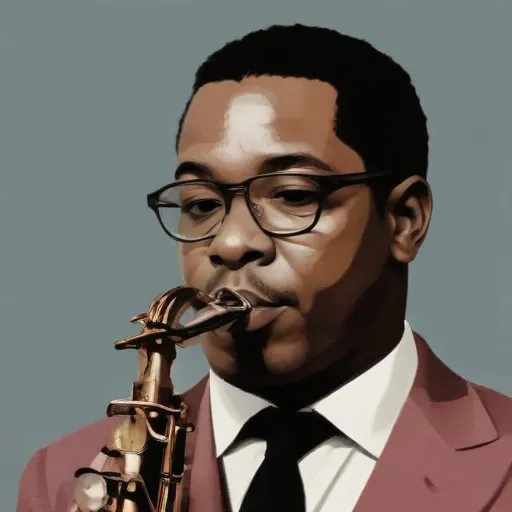
Booker Ervin: The Soulful Saxophonist
The Tenor Titan of Jazz
Booker Ervin was an American tenor saxophone player known for his strong, tough sound and blues-gospel phrasing, which earned him a reputation as one of the most distinctive and influential saxophonists of his era. His association with bassist
Charles Mingus cemented his place in jazz history, and his unique style has inspired generations of musicians.
Early Life and Career
Born on October 31, 1930, in Denison, Texas, Ervin grew up in a musical family. His father, a trombone player, taught him the instrument at a young age. After leaving school, Ervin joined the United States Air Force, where he taught himself tenor saxophone while stationed in Okinawa, Japan. After completing his service in 1953, he studied at Berklee College of Music in Boston, Massachusetts.
The Mingus Connection
Ervin's big break came when he joined Charles Mingus's band in 1958. He worked with Mingus regularly until 1960 and made several recordings with the bassist, including the iconic album
Mingus Ah Um. Ervin's playing style, which blended blues and gospel influences, perfectly complemented Mingus's complex compositions. Their collaboration resulted in some of the most innovative and soulful jazz of the late 1950s and early 1960s.
Leading His Own Quartet
In the mid-1960s, Ervin formed his own quartet, which featured pianist
Jaki Byard, bassist Richard Davis, and drummer Alan Dawson. This group recorded several albums for Prestige Records, showcasing Ervin's unique compositional style and improvisational skills.
African Cookbook and Beyond
Ervin's association with pianist
Randy Weston led to some remarkable collaborations, including the album
African Cookbook. Weston has spoken highly of Ervin, saying, "Booker Ervin, for me, was on the same level as
John Coltrane. He was a completely original saxophonist... He was a master." The album's title track, "African Cookbook," was named after Ervin's nickname "Book" and features a hypnotic melody inspired by his playing style.
Legacy and Impact
Booker Ervin's influence on modern jazz is undeniable. His unique sound, which blended blues, gospel, and bebop traditions, has inspired countless saxophonists, including
Wayne Shorter and
Michael Brecker. Ervin's music continues to be celebrated for its soulfulness, intensity, and innovation.
Discography
- The Book Cooks (1960)
- That's It! (1961)
- Exultation! (1963)
- The Space Book (1964)
- Setting the Pace (1965)
- (1966)
- African Cookbook (1964)
Remembering Booker Ervin
Booker Ervin passed away on August 31, 1970, at the age of 39, leaving behind a legacy of innovative and soulful music. His contributions to jazz continue to inspire new generations of musicians and fans alike. As Randy Weston so eloquently put it, "Booker Ervin was a master... He was a completely original saxophonist."
FAQ
What was Booker Ervins musical style?
Booker Ervin was a renowned American saxophonist known for his unique musical style, which blended elements of hard bop, soul jazz, and avant-garde music. He was particularly famous for his robust and emotive playing style.
What were some of Booker Ervins most famous albums?
Booker Ervin recorded several influential albums during his career, including The Freedom Book, The Song Book, and The Blues Book. These albums showcased his skills as a composer and arranger, as well as his virtuosic saxophone playing.
What was Booker Ervins experience in the military?
Booker Ervin served in the United States Army during the 1950s, where he played in the Army band and developed his musical skills. His military service had a profound impact on his life and music.
What was Booker Ervins relationship with other jazz musicians?
Booker Ervin collaborated with many prominent jazz musicians, including Charles Mingus, Randy Weston, and Teddy Charles. He was highly respected by his peers for his musicianship and compositional skills.
What legacy did Booker Ervin leave behind?
Booker Ervin left behind a rich legacy as a saxophonist, composer, and bandleader. His innovative style and influential recordings continue to inspire jazz musicians and enthusiasts to this day.