


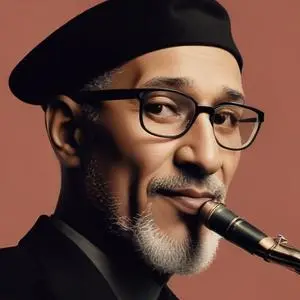
A legendary jazz saxophonist and composer, renowned for his improvisational genius and iconic recordings that redefined the genre. His playing style is characterized by intense emotional expression and harmonic innovation.
Sonny Rollins, born Walter Theodore Rollins, is widely regarded as one of the most influential and iconic jazz musicians of all time. With a career spanning over seven decades, he has recorded over 60 albums as a leader, and his compositions, such as "St. Thomas," "Oleo," "Doxy," and "Airegin," have become jazz standards.
Born on September 7, 1930, in New York City to parents from the Virgin Islands, Rollins grew up in central Harlem and Sugar Hill. He received his first alto saxophone at the age of seven or eight and was initially inspired by Louis Jordan. Later, he switched to tenor saxophone in 1946, influenced by his idol Coleman Hawkins.
After graduating from Benjamin Franklin High School in East Harlem, Rollins began performing professionally in 1949, making his first recordings as a sideman with the bebop singer Babs Gonzales. Within the next few months, he began to make a name for himself, recording with trombonist J.J. Johnson and appearing under the leadership of pianist Bud Powell.
In the early 1950s, Rollins was part of the hard bop and bebop era, recording with Miles Davis, the Modern Jazz Quartet, and other jazz legends. During this time, he developed his unique style, which blended improvisation, melody, and rhythm.
In the mid-1950s, Rollins faced personal struggles, including a stint in Rikers Island jail for armed robbery and a battle with heroin addiction. However, he emerged from these challenges with a renewed sense of purpose and creativity, releasing the iconic album "Saxophone Colossus" in 1956.
Rollins has always believed in the importance of improvisation and creative freedom in music. He has stated, "Jazz is not just music; it's a way of life." Throughout his career, he has been committed to pushing the boundaries of jazz and exploring new sounds and styles.
Sonny Rollins' influence on modern jazz is immeasurable. He has inspired generations of musicians, from John Coltrane to Kamasi Washington, and continues to be celebrated as a living legend. His music transcends genres and generations, speaking to the universal human experience.
"You can't think and play at the same time. You've got to get out of your own way and let the music play you."
Rollins' legacy is a testament to the power of music to bring people together and transcend boundaries. As he once said, "Music is the only thing that can bring people together, no matter what their background, religion, or nationality."
In 2014, Rollins announced his retirement from public performances due to health problems. However, his music continues to inspire and influence new generations of musicians and fans alike.
Sonny Rollins' life and legacy serve as a reminder of the transformative power of music and the human spirit. His music will continue to inspire and uplift, a testament to the enduring legacy of this jazz legend.
Born in 1926
A legendary jazz musician who revolutionized the genre with his improvisational style and iconic albums like "Kind of Blue". He's synonymous with cool, jazzy sophistication.
99 Years Old
A legendary jazz saxophonist and composer who revolutionized the genre with his innovative, spiritually-driven improvisations and iconic albums like "A Love Supreme".
Born in 1917
A jazz legend who revolutionized piano playing and composition with unorthodox techniques and harmonies, creating a unique, improvisational style that continues to inspire generations of musicians.
Born in 1920
A pioneering jazz saxophonist and composer, known for his lightning-fast solos and innovative bebop style that revolutionized jazz music. 82
Born in 1917
A virtuosic trumpet player and composer who revolutionized jazz with his lightning-fast solos and iconic puffy cheeks, creating a new language for the instrument. He's synonymous with bebop and modern jazz.
Born in 1915
Legendary jazz vocalist and actress known for her expressive, emotive singing style and iconic songs like "God Bless the Child" and "Strange Fruit".
Born in 1917
A virtuosic jazz vocalist known for her pure, expressive tone, impeccable phrasing, and incredible scat singing abilities. She won 13 Grammy Awards and recorded over 200 albums.
Born in 1901
A legendary jazz musician who revolutionized the genre with his unique trumpet playing and raspy vocals, leaving an indelible mark on American music.
