


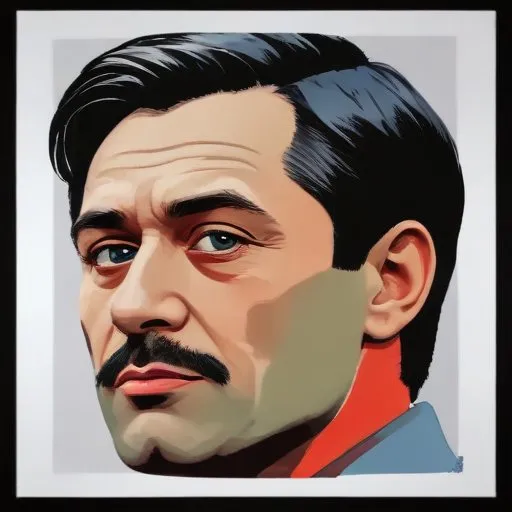
A Russian painter renowned for his vibrant, dreamlike landscapes and cityscapes that blend realism with fantasy, often featuring eerie, surreal atmospheres. His works evoke a sense of mystery and intrigue.
Boris Chetkov is renowned for his vibrant and expressive works of art, which span across genres, including Expressionism, Abstract Expressionism, and Figurative Expressionism. His unique theories on art and innovative use of color align him with Modernism and the likes of Wassily Kandinsky.
Born on October 27, 1926, in Novaya Lyalya, Sverdlovsk Oblast, Russia, Chetkov's life was marked by turmoil and hardship. His family, once well-off peasants, were forced to give up their land during collectivization, leading to a nomadic existence as they searched for work. In 1942, at just 16 years old, Chetkov was arrested for hooliganism and imprisoned in the Gulag system, where he spent time in a penal colony near Nizhny Tagil.
After his release from the Gulag, Chetkov was conscripted into a tank regiment in the Russian army and saw action in Latvia during World War II. Despite these challenges, Chetkov's passion for art remained unwavering. He joined the Saint Petersburg Union of Artists and began to develop his unique style, characterized by vivid colors and emotive brushstrokes.
Chetkov's artistic career spanned over six decades, during which he created an astonishing volume of work. He was a prolific painter, producing over 400 pieces in the early 1990s alone. His glass works, too, are highly regarded for their sophisticated use of color and form. Today, Chetkov's art can be found in private collections worldwide, as well as in esteemed institutions like the Hermitage Museum and the State Russian Museum in St. Petersburg.
Chetkov's artistic journey can be divided into three distinct periods, each marked by an evolution in his use of color and style. His early work was characterized by muted tones and a focus on form, while his later pieces became increasingly vibrant and expressive. In his final period, Chetkov's use of color reached new heights of intensity, creating a sense of depth and emotion in his works.
Despite his lack of recognition from the Soviet art establishment, Chetkov's contributions to modern art are undeniable. His work has inspired a new generation of artists, and his theories on color and art have been studied by scholars worldwide. In 2013, Chetkov's art was showcased as the opening exhibition for Russian Art Week, a testament to his enduring legacy.
Boris Chetkov's life was a testament to his unwavering passion for art and his ability to overcome adversity. Today, his work continues to inspire and delight audiences around the world, cementing his place as one of Russia's most innovative and visionary artists.
Born in 1844
A Russian master of realism, known for vivid depictions of Russian life and history, capturing the essence of the human experience through his brushstrokes.
Born in 1848
A Russian master of historical scenes, capturing the grandeur and drama of 16th- to 18th-century Russia with vivid colors and meticulous details.
Born in 1848
A Russian master of fantasy and folklore, creating vivid illustrations and paintings that brought mythical creatures and legends to life. His work continues to inspire artists and designers today.
Born in 1856
A Russian Symbolist painter who created vibrant, dreamlike works that blended fantasy and reality, often featuring mythical creatures and folklore-inspired themes.
Born in 1861
A Russian-French painter and set designer who blended Impressionism and Art Nouveau styles, creating vibrant, expressive works for the Ballets Russes and opera productions.
Born in 1878
A Russian painter and stage designer renowned for his vibrant, folk-inspired depictions of Russian life and his work on productions like Nikolai Rimsky-Korsakov's "The Golden Cockerel" .
