


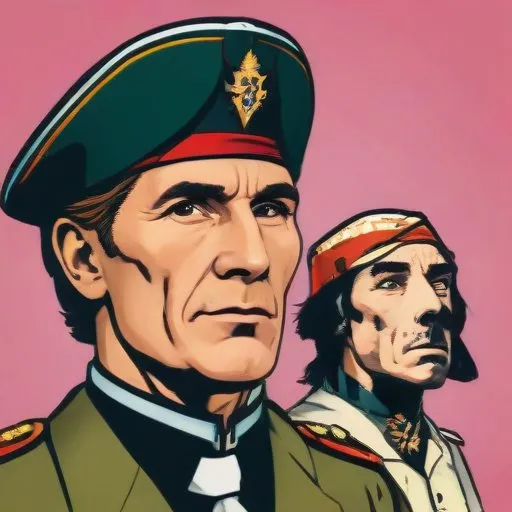
An early American settler and soldier who played a key role in the Pequot War and later became a prominent figure in the Massachusetts Bay Colony, known for his military prowess and leadership.
Known for his unwavering defiance against authority and his unrelenting pursuit of freedom, Captain John Underhill is an iconic figure in American history. As a prominent leader in the Pequot War, Underhill's name became synonymous with bravery, cunning, and a rebellious spirit that would shape the course of American identity.
Born in 1597 in England, Underhill's early life was marked by a sense of restlessness and discontent with the established order. He would go on to become a key player in the English colonization of North America, earning notoriety for his involvement in the Pequot War, a brutal conflict that would have far-reaching consequences for the indigenous populations of the region.
Underhill's rise to prominence began in 1637, when he was appointed captain of the Massachusetts Bay Colony's militia. His military prowess and strategic thinking quickly earned him recognition among the colonial elite, and he was soon entrusted with leading expeditions against the Pequot tribe. It was during this period that Underhill developed his reputation as a skilled warrior and ruthless opponent, earning the respect and fear of his enemies.
The Pequot War, waged from 1636 to 1638, was a brutal and devastating conflict that would have lasting consequences for the indigenous populations of the region. Underhill's role in the war was marked by controversy, with some hailing him as a hero and others condemning his actions as brutal and inhumane. Regardless, the war marked a turning point in Underhill's life, and he would go on to become a vocal advocate for the rights of English colonists.
Underhill's rebellious spirit was not limited to his military exploits. He was also a vocal advocate for the rights of English colonists, arguing that they should be free from the constraints of English authority. His philosophical contributions were marked by a deep distrust of authority and a belief in the power of individual freedom and autonomy.
Underhill's legacy extends far beyond the Pequot War. His rebellious spirit and advocacy for individual freedom have inspired generations of Americans, shaping the country's identity and informing its values. His influence can be seen in the works of writers, philosophers, and politicians who have drawn on his ideas to shape their own visions of American society.
Underhill's life was not without controversy. His role in the Pequot War has been widely criticized, with many regarding his actions as brutal and inhumane. Despite this, Underhill remains a complex and fascinating figure, whose legacy continues to inspire and provoke debate.
Underhill's life and legacy are inextricably linked with the complex and often fraught history of colonial America. His rebellious spirit and advocacy for individual freedom have shaped the course of American identity, influencing generations of thinkers, writers, and politicians. Today, Underhill remains a fascinating and complex figure, whose legacy continues to inspire and provoke debate.
Underhill's life and legacy are often compared to those of other prominent figures of the colonial era, including Roger Williams and John Winthrop. While each of these figures played important roles in shaping the course of American history, Underhill's rebellious spirit and advocacy for individual freedom set him apart as a unique and fascinating figure.
Underhill's life is a testament to the power of individual freedom and autonomy. His rebellious spirit and advocacy for the rights of English colonists continue to inspire generations of Americans, reminding us of the importance of questioning authority and fighting for our rights.
Today, Underhill's legacy serves as a powerful reminder of the importance of individual freedom and autonomy. His rebellious spirit and advocacy for the rights of English colonists continue to inspire and provoke debate, shaping the course of American history and informing its values.
Born in 1588
A 17th-century English lawyer and politician who played a key role in establishing the Massachusetts Bay Colony and shaping its early government and laws. He's known for his "City upon a Hill" sermon, which emphasized the colony's mission to create a model Christian community.
Born in 1576
An early American leader who played a key role in shaping the Massachusetts Bay Colony, serving as its governor and contributing to its growth and development. He was also a skilled military leader and politician.
Born in 1616
Governor of the Massachusetts Bay Colony from 1673 to 1679, known for his role in King Philip's War and his efforts to negotiate with Native American tribes.
Born in 1603
A colonial magistrate who served as a governor of the Massachusetts Bay Colony, known for his fair and diplomatic leadership during a tumultuous period in American history.
Born in 1651
The first American-born governor of the Province of Massachusetts Bay, who led a successful expedition to recover treasure from a sunken Spanish ship and played a key role in the Salem witch trials.
