


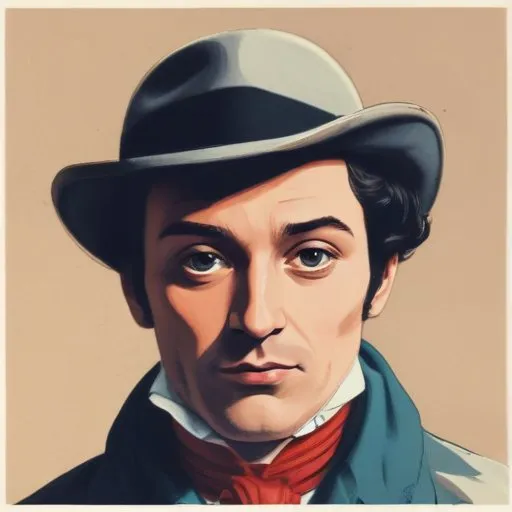
A French Romantic painter and lithographer, renowned for his vivid depictions of horses and battle scenes, capturing the essence of Napoleon's military campaigns. His work continues to inspire equine artists and historians alike.
Renowned for his breathtaking depictions of horses, battle scenes, and landscapes, Carle Vernet was a French painter who left an indelible mark on the art world. Born on August 14, 1758, in Bordeaux, France, Vernet's artistic prowess was evident from a young age, particularly in his remarkable drawings of horses.
The youngest child of Claude-Joseph Vernet, a prominent French painter, Carle Vernet was born into a family of artists. At the age of five, he demonstrated an extraordinary passion for drawing horses, which would later become a hallmark of his work. Vernet studied under his father and Nicolas-Bernard Lépicié, following the traditional academic course.
In 1782, Vernet won the prestigious Prix de Rome, which marked the beginning of his successful career. However, he soon lost interest in his work and was recalled from Rome by his father to prevent him from entering a monastery.
Vernet's artistic style underwent a significant transformation after his sister's execution by the guillotine during the French Revolution. He abandoned art for a period, only to return to it during the French Directory (1795-1799). His post-Revolutionary work saw a radical shift, focusing on detailed drawings of battles and campaigns to glorify Napoleon.
Vernet's drawings of Napoleon's Italian campaign earned him acclaim, as did his depiction of the Battle of Marengo. Napoleon awarded him the Legion of Honour, and Louis XVIII of France conferred upon him the Order of Saint Michael.
As Vernet's career progressed, he excelled in creating hunting scenes and depictions of horses, showcasing his mastery of capturing the beauty and majesty of these animals.
In addition to being a talented artist, Vernet was an avid horseman. Even at the age of seventy-eight, he was seen racing with the energy and vigor of a young man.
Carle Vernet passed away on November 27, 1836, in Paris, leaving behind a rich legacy of artwork. He is referenced in Arthur Conan Doyle's short story "The Adventure of the Greek Interpreter," where Sherlock Holmes claims that his grandmother is Vernet's sister.
Carle Vernet's remarkable body of work continues to inspire and captivate art enthusiasts to this day, earning him a revered place in the annals of French art history.
Born in 1732
A prolific Rococo painter and etcher, renowned for his delicate, whimsical, and often erotic works that capture the carefree spirit of 18th-century French aristocracy. His art often featured lush landscapes, gentle colors, and playful scenes of love and leisure.
Born in 1703
A prominent artist of the Rococo style, known for his delicate and ornate paintings, often depicting mythological and pastoral scenes, as well as designing sets for the Paris Opera.
Born in 1684
A French painter who created delicate, dreamy, and intimate scenes of everyday life, often blending reality and fantasy, and is considered a pioneer of the Rococo style.
Born in 1748
A French painter and illustrator who revolutionized Neoclassicism with his realistic and emotive works, creating iconic pieces like "Oath of the Horatii" and "Napoleon Crossing the Alps".
Born in 1780
A renowned French Neoclassicist painter and illustrator, celebrated for his exquisite portraits and historical scenes that epitomize elegance and refinement. His work continues to inspire artists and art enthusiasts alike.
Born in 1791
A Romantic-era master of dramatic and emotionally charged art, known for his powerful depictions of horses and the human experience.
Born in 1798
A Romantic-era master of expressive brushstrokes and vivid color, creating iconic works that captured the drama and emotion of historical and literary scenes.
