


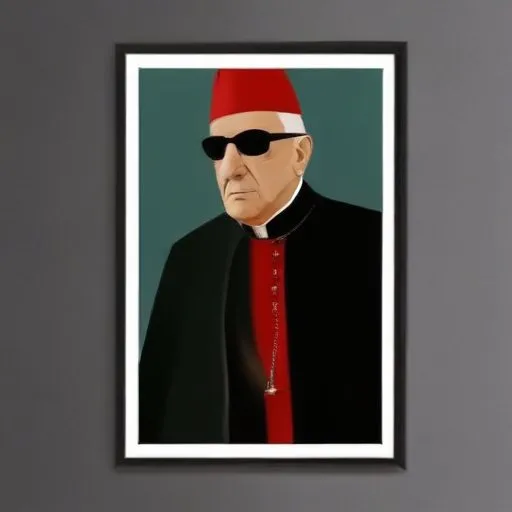
A 17th-century Italian cleric who rose to prominence as a diplomat and statesman, known for his influential role in shaping the Catholic Church's policies and politics.
Carlo Odescalchi was a remarkable figure in the Catholic Church, known for his extraordinary journey from being an Italian prince to renouncing his titles and becoming a Jesuit priest. As a close collaborator of Popes Pius VII and Gregory XVI, Odescalchi left an indelible mark on the Church's history.
Born on March 5, 1785, in Rome, Carlo Odescalchi was the second son of the noble Baldassare Erba-Odescalchi, a Prince of the Holy Roman Empire, and his wife Valeria Caterina Giustiniani. As a relative of Pope Innocent XI, Carlo was immersed in a life of nobility and faith from a young age.
Carlo's early education took place at home under the guidance of his father. However, between 1798 and 1800, he studied in a seminary in Hungary, where his family had taken refuge from Napoleon Bonaparte's invading armies. During this time, he received the clerical tonsure in 1797 and was eventually ordained as a priest on December 31, 1808.
After completing his higher studies in Italy, Odescalchi was awarded a doctorate in utroque iure (both canon and civil law) in 1809. His impressive education and noble lineage paved the way for his rise to prominence in the Catholic Church.
In 1815, Pope Pius VII sent Carlo to Olomouc as a papal legate to Antonín Colloredo-Waldsee, and again in 1819 to bestow the cardinalatial red biretta on Archduke Rudolf of Austria. This marked the beginning of Odescalchi's close collaboration with the Pope, which would span several years.
In a remarkable turn of events, Carlo Odescalchi renounced his titles and nobility in 1838 to become a Jesuit priest. This decision was not taken lightly, as it meant giving up the comforts and prestige of his noble life.
Odescalchi's decision was likely influenced by his long-standing desire to join the Society of Jesus, which was revived by Pope Pius VII in 1814. Despite initial resistance from his sister Vittoria, Carlo had been drawn to the Jesuit way of life, and eventually, he took the bold step of renouncing his titles to follow his calling.
Carlo Odescalchi's remarkable journey serves as an inspiration to those who seek to follow their calling, no matter the cost. His story is a testament to the power of faith and conviction, and his legacy continues to influence the Catholic Church to this day.
Odescalchi's journey also highlights the complexities of the Catholic Church during the 19th century, a time marked by great upheaval and change. Through his life, we gain a glimpse into the intricate web of relationships between the Church, nobility, and the faithful.
Born in 1876
The leader of the Catholic Church from 1939 to 1958, known for his controversial role during World War II, particularly in regards to the Holocaust. He is also remembered for his encyclicals on social justice and liturgical reforms.
Born in 1876
The leader of the Catholic Church from 1939 to 1958, known for his controversial role during World War II, particularly in regards to the Holocaust. He is also remembered for his encyclicals on social justice and liturgical reforms.
Born in 1881
Reformed the Catholic Church, introducing progressive reforms and ecumenical dialogue, and convened the Second Vatican Council.
Born in 1417
A 15th-century pope who played a significant role in the fall of the Western Schism, ending the division in the Catholic Church. He's also known for his lavish spending and nepotism.
Born in 1920
Leader of the Catholic Church from 1978 to 2005, known for helping to end communism in Poland and being a charismatic advocate for human rights and social justice.
Born in 1920
Leader of the Catholic Church from 1978 to 2005, known for helping to end communism in Poland and being a charismatic advocate for human rights and social justice.
98 Years Old
A prominent Catholic Church leader who served as Secretary of State and Dean of the College of Cardinals, known for his diplomatic efforts and influential role in the Church's governance.
