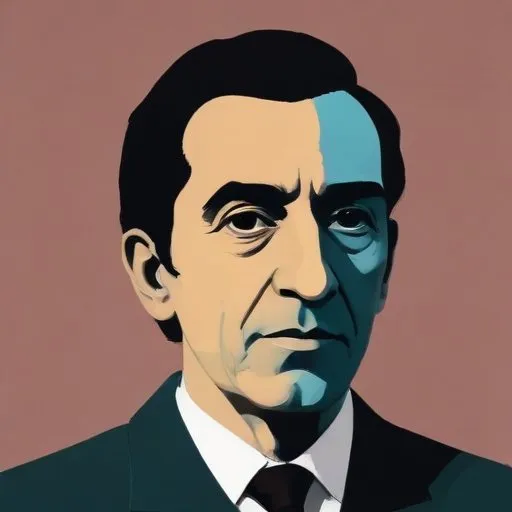
Carlos Alberto Sacheri: The Philosopher-Scholar Who Defied Modernism and Liberation Theology
A Life Dedicated to Unwavering Conviction
Carlos Alberto Sacheri, an Argentine Thomist philosopher and scholar, is best known for his bold critique of modernism and liberation theology, which led to his tragic assassination in 1974. Through his works, particularly his seminal book "The Clandestine Church" (1971), Sacheri fearlessly challenged the status quo, leaving an indelible mark on the intellectual and philosophical landscape of his time.
The Formative Years: Shaping a Critical Mind
Born on October 22, 1933, in Buenos Aires, Argentina, Sacheri's academic pursuits began with law studies at the University of Buenos Aires. However, his true passion lay in philosophy, which he went on to study under the guidance of Father Julio Meinvielle, a prominent Argentine nationalist. Meinvielle's influence, coupled with Sacheri's fascination with Thomas Aquinas, paved the way for his philosophical endeavors.
A Thomist in the Making
In 1957, Sacheri graduated in philosophy from the University of Buenos Aires. He then received a scholarship from the Arts Council of Canada to further his studies at Laval University in Quebec, Canada. Under the mentorship of the renowned Canadian Thomist Charles de Koninck, Sacheri earned his doctorate in 1963 with a thesis on "The Existence and Nature of Deliberation." This period solidified his commitment to Thomistic thought, setting the stage for his future critiques of modernism and liberation theology.
A Life of Academic Service and Activism
Upon returning to Argentina in 1967, Sacheri assumed various academic positions, including teaching Philosophy of Law and History of Philosophical Ideas at the University of Buenos Aires and Social Philosophy at the Argentine Catholic University. He also served as a visiting professor at the Institute of Comparative Philosophy in Paris and Laval University. Through his teachings and writings, Sacheri aimed to bridge the gap between faith and reason, inspiring a new generation of scholars.
The Martyrdom of a Courageous Intellectual
Tragically, Sacheri's unwavering stance against modernism and liberation theology made him a target for radical groups. On December 22, 1974, at the age of 41, he was brutally assassinated by ERP members in Buenos Aires. This senseless act of violence silenced a powerful voice, but his legacy continues to resonate through his works and the countless lives he touched.
Legacy and Impact
Carlos Alberto Sacheri's unyielding dedication to Thomistic philosophy and his critical approach to modernism and liberation theology have inspired many. His martyrdom serves as a testament to the power of conviction and the importance of intellectual courage. Through his writings and teachings, Sacheri has left an enduring mark on the world of philosophy, ensuring that his ideas will continue to shape and inspire future generations.
- Major Works: "The Clandestine Church" (1971)
- Awards and Honors: Scholarship from the Arts Council of Canada
- Teaching Positions: University of Buenos Aires, Argentine Catholic University, Institute of Comparative Philosophy in Paris, Laval University, Andrs Bello University in Caracas
FAQ
Who is Carlos Alberto Sacheri and what is he known for?
Carlos Alberto Sacheri is an Argentine philosopher known for his work on metaphysics, epistemology, and the philosophy of language.
What is Carlos Alberto Sacheris area of expertise?
Carlos Alberto Sacheris area of expertise is metaphysics, particularly in the areas of ontology, modality, and the nature of reality.
Has Carlos Alberto Sacheri written any influential books?
Yes, Carlos Alberto Sacheri has written several influential books on metaphysics and philosophy, including The Metaphysics of Modality and The Nature of Reality.
What is Carlos Alberto Sacheris take on the nature of reality?
Carlos Alberto Sacheris take on the nature of reality is that it is fundamentally metaphysical and that understanding reality requires a deep exploration of its underlying structures and principles.
Has Carlos Alberto Sacheri taught at any prestigious universities?
Yes, Carlos Alberto Sacheri has taught at several prestigious universities, including the University of Buenos Aires and the University of Oxford.