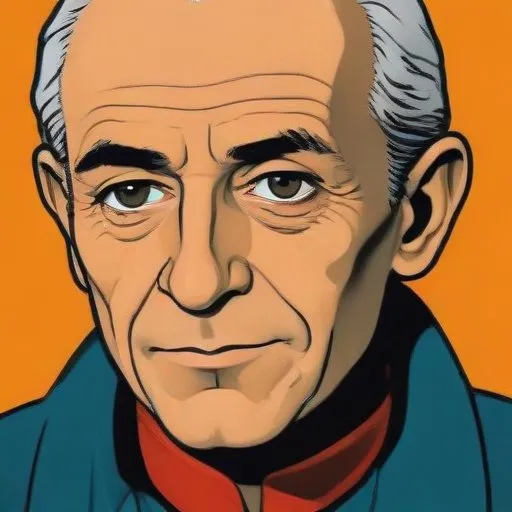
Jos Ortega y Gasset: A Pioneering Spanish Philosopher and Essayist
A Philosophy of Life
Jos Ortega y Gasset is renowned for his profound philosophical contributions, which have been characterized as a philosophy of life that encompasses a wide range of influences, from pragmatist metaphysics to realist phenomenology. His work has had a lasting impact on modern thought, transcending traditional disciplinary boundaries to offer a unique perspective on human existence.
Early Life and Education
Born on May 9, 1883, in Madrid, Spain, Ortega y Gasset was the son of a prominent family of liberal journalists and intellectuals. His father, José Ortega Munilla, was the director of the newspaper El Imparcial, which belonged to his mother's family, Dolores Gasset. This liberal tradition and journalistic engagement had a profound influence on Ortega y Gasset's activism in politics and his future philosophical pursuits.
Ortega y Gasset received his education from the Jesuit priests of St.
Stanislaus Kostka College in Málaga (1891-1897) and later attended the University of Deusto in Bilbao (1897-1898) and the Faculty of Philosophy and Letters at the Central University of Madrid (1898-1904), where he earned his doctorate in Philosophy. He furthered his studies in Germany from 1905 to 1907, where he was influenced by the neo-Kantianism of
Hermann Cohen and Paul Natorp, among others.
Academic and Literary Career
Upon his return to Spain in 1908, Ortega y Gasset was appointed professor of Philosophy, Logic, and Ethics at the Escuela Superior del Magisterio de Madrid. In 1910, he married Rosa Spottorno Topete, a Spanish translator and feminist, and was named full professor of Metaphysics at Complutense University of Madrid, a seat previously held by Nicolás Salmerón.
Ortega y Gasset's literary career was marked by his prolific writing, which spanned multiple genres, including philosophy, essay, and literature. Some of his most notable works include "Meditations on Quixote" (1914), "Invertebrate Spain" (1921), and "Man and Crisis" (1933). His writings addressed a range of topics, from politics and culture to philosophy and history, and were characterized by their accessibility, elegance, and depth.
Philosophical Contributions and Beliefs
Ortega y Gasset's philosophical contributions are marked by their emphasis on the individual's experience and the importance of understanding human existence within its historical and cultural context. His work was influenced by a range of philosophers, including
William James,
Edmund Husserl,
Wilhelm Dilthey, and
Benedetto Croce, and can be seen as a precursor to existentialism.
Influence on Modern Society
Ortega y Gasset's influence on modern society extends far beyond the realm of philosophy. He was a vocal critic of totalitarianism and nationalism, and his advocacy for democracy and individual freedom has inspired generations of thinkers and politicians. His concept of "I am I and my circumstance" has become a rallying cry for those seeking to understand the complexities of human existence.
Personal Milestones and Key Life Events
- 1908: Appointed professor of Philosophy, Logic, and Ethics at the Escuela Superior del Magisterio de Madrid.
- 1910: Married Rosa Spottorno Topete and became full professor of Metaphysics at Complutense University of Madrid.
- 1914: Published "Meditations on Quixote," his first major philosophical work.
- 1921: Published "Invertebrate Spain," a critique of Spanish politics and culture.
- 1933: Published "Man and Crisis," a philosophical exploration of human existence.
- 1955: Passed away on October 18th in Madrid, Spain.
Legacy
Ortega y Gasset's legacy extends far beyond his own philosophical contributions. He has inspired generations of thinkers, politicians, and writers, and his work continues to be studied and debated around the world. His emphasis on individual freedom, democracy, and the importance of understanding human existence within its historical and cultural context has made him a pioneer of modern thought.
Quotes and Memorable Sayings
- "I am I and my circumstance."
- "The metaphor is perhaps one of man's most fruitful possibilities."
- "To be surprised, to wonder, is to begin to understand."
Historical Context and Legacy
Ortega y Gasset's work must be understood within the context of early 20th-century Spain, a time marked by political turmoil, cultural upheaval, and intellectual ferment. His philosophy of life, which emphasized individual freedom, democracy, and historical awareness, was a response to the challenges of his time, and its relevance continues to be felt today.
FAQ
What was José Ortega y Gassets most notable philosophical contribution?
José Ortega y Gassets most notable philosophical contribution was his development of the concept of Ratiovitalism, which emphasized the importance of reason and vital energy in understanding human existence.
What was José Ortega y Gassets early life like?
José Ortega y Gasset was born on May 9, 1883, in Madrid, Spain. He studied philosophy at the University of Madrid and later in Germany, where he was influenced by the works of Friedrich Nietzsche and Martin Heidegger.
What were José Ortega y Gassets notable literary achievements?
José Ortega y Gasset was a prolific writer and philosopher, publishing numerous books and essays on philosophy, literature, and politics. His most famous work is The Revolt of the Masses, which critiqued the rise of mass culture in modern society.
What is José Ortega y Gassets legacy in Spanish philosophy?
José Ortega y Gassets legacy in Spanish philosophy is significant. He is remembered as one of the most important Spanish philosophers of the 20th century, and his ideas on reason, vitalism, and modernity continue to influence contemporary thought.
How did José Ortega y Gassets philosophy reflect his views on politics?
José Ortega y Gassets philosophy reflected his critical views on politics, particularly his critique of fascism and totalitarianism. He advocated for a more nuanced understanding of human existence and the importance of individual freedom and creativity.