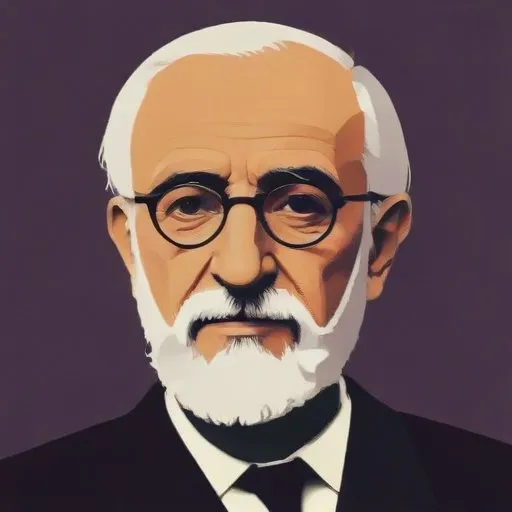
Miguel de Unamuno

Miguel de Unamuno

Miguel de Unamuno was born on September 29th, 1864

Full Name: Miguel de Unamuno
Occupation: Philosopher
Nationality: Spanish
Field: Philosophy
Known For: Literary works
Born In: Spain
Profession: Author
Notable Work: Novels and essays

A Spanish philosopher and author who explored the human condition, faith, and the search for meaning in life, creating influential works that continue to resonate with readers today.

Timeline
1864
Birth
Miguel de Unamuno was born on September 29, 1864, in Bilbao, Spain.
1883
Becomes Professor
Unamuno became a professor of Greek language and literature at the University of Salamanca.
1897
Publishes En torno al casticismo
Unamuno published his influential book En torno al casticismo, which critiqued the concept of Spanish identity.
1901
Becomes Rector of University
Unamuno became the rector of the University of Salamanca, a position he held until 1936.
1936
Death
Unamuno died on December 31, 1936, in Salamanca, Spain, at the age of 72.
Miguel de Unamuno

Miguel de Unamuno Quiz

Miguel de Unamuno's philosophical ideas were heavily influenced by which of the following philosophical movements?

Score: 0/5
FAQ
What was Miguel de Unamunos contribution to Spanish philosophy?
Miguel de Unamuno was a Spanish philosopher and author who made significant contributions to the development of existentialism and the philosophy of life. He is best known for his concept of the tragic sense of life, which emphasizes the importance of individual freedom and the absurdity of human existence.
What was Miguel de Unamunos view of human existence?
Miguel de Unamuno believed that human existence is characterized by uncertainty, ambiguity, and absurdity. He argued that individuals must take responsibility for creating their own meaning in life, and that this requires a willingness to confront and accept the unknown.
How did Miguel de Unamunos philosophy impact Spanish literature?
Miguel de Unamunos philosophy had a significant impact on Spanish literature, particularly in the 20th century. His concept of the tragic sense of life influenced several generations of writers, including Federico García Lorca and Camilo José Cela.
What was Miguel de Unamunos approach to philosophy?
Miguel de Unamunos approach to philosophy was characterized by his emphasis on individual experience and subjective interpretation. He believed that philosophy should be grounded in everyday life and that it should be accessible to all people, regardless of their background or education.
What was Miguel de Unamunos legacy?
Miguel de Unamunos legacy is that of a pioneering philosopher who helped to shape the development of existentialism and the philosophy of life. He is remembered as a champion of individual freedom and creativity, and his work continues to influence philosophers and writers today.

Related People:

Antonio Machado

Born in 1875

A leading figure in Spanish literature, known for his innovative and influential poetry that explored themes of love, nature, and the human condition. His works are considered a bridge between modernism and the Generation of '27.

Federico García Lorca

Born in 1898

A Spanish poet, playwright, and director who explored themes of love, death, and Spanish culture through his works, including the famous play "Blood Wedding".

Vicente Blasco Ibáñez

Born in 1867

A pioneering journalist and novelist who explored the human condition through his works, particularly in his novel "The Four Horsemen of the Apocalypse", which was adapted into a silent film.

Benito Pérez Galdós

Born in 1843

A renowned Spanish literary figure, known for his influential and insightful novels of manners that explored the social and political landscape of 19th-century Spain. His works are celebrated for their nuanced characterizations and vivid portrayals of everyday life.

Leopoldo Alas

Born in 1851

A renowned Spanish writer, critic, and academic, known for his influential novels and essays that explored the human condition, morality, and social issues. His works are considered classics of Spanish literature.