


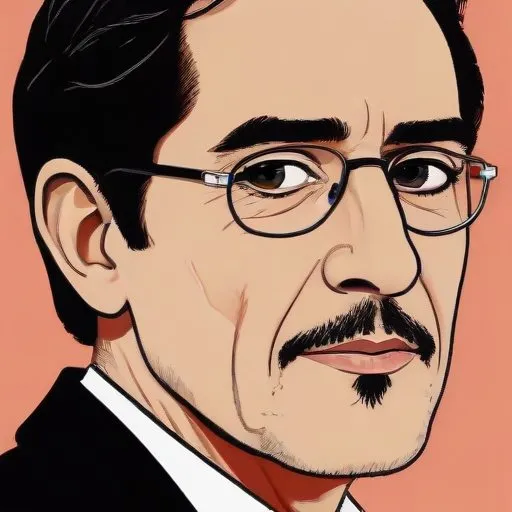
A pioneering journalist and novelist who explored the human condition through his works, particularly in his novel "The Four Horsemen of the Apocalypse", which was adapted into a silent film.
Vicente Blasco Ibez is renowned for his captivating literary works that have been adapted into Hollywood films, making him a household name in the English-speaking world. As a bestselling Spanish novelist, journalist, and politician, he left an indelible mark on the literary and political landscape of Spain and beyond.
Born in Valencia, Spain on January 29, 1867, Blasco Ibez's life was a tapestry of politics, literature, and romance. He studied law at university, graduating in 1888, but his true passions lay in politics and writing. He was drawn to the works of Miguel de Cervantes, which would later influence his own writing style.
Blasco Ibez's foray into politics began with his founding of the newspaper El Pueblo (The People) in his hometown, which became a mouthpiece for his Republican populist movement known as Blasquismo. The paper's provocative content led to numerous court cases, and in 1896, he was arrested and sentenced to a few months in prison. This didn't deter him, and he continued to write, undeterred by the controversies surrounding him.
Blasco Ibez's personal life was marked by tumultuous love affairs, which often inspired his writing. He volunteered as a proofreader for José Rizal's novel Noli Me Tángere, which criticized Spanish colonization in the Philippines. In 1909, he traveled to Argentina, where he gave conferences on Spanish literature and historical events, and two new settlements, Nueva Valencia and Cervantes, were established in his honor.
Disillusioned with government inaction, Blasco Ibez moved to Paris at the outbreak of World War I, where he met poet Robert W. Service. He became a strong supporter of the Allies, and his writing reflected his patriotism. He spent the latter years of his life in Menton, France, where he passed away on January 28, 1928, just a day shy of his 61st birthday.
Vicente Blasco Ibez's literary works continue to captivate audiences worldwide, with many adapted into films, including The Four Horsemen of the Apocalypse and Blood and Sand. His writing often explored themes of love, politics, and social justice, leaving an indelible mark on Spanish literature. His legacy extends beyond literature, as his politics and social activism paved the way for future generations of Spanish politicians and writers.
"The word is the instrument of the human spirit; it is the tool with which we shape our thoughts, our desires, our dreams."
Vicente Blasco Ibez's life was a testament to his unwavering passion for literature, politics, and social justice. His legacy continues to inspire and captivate audiences, cementing his place as one of Spain's most beloved and influential writers.
Born in 1843
A renowned Spanish literary figure, known for his influential and insightful novels of manners that explored the social and political landscape of 19th-century Spain. His works are celebrated for their nuanced characterizations and vivid portrayals of everyday life.
Born in 1864
A Spanish philosopher and author who explored the human condition, faith, and the search for meaning in life, creating influential works that continue to resonate with readers today.
Born in 1883
A Spanish philosopher, author, and critic who explored the human condition, culture, and the role of the individual in society, known for his concept of "mass man" and the "revolt of the masses".
Born in 1898
A Spanish poet, playwright, and director who explored themes of love, death, and Spanish culture through his works, including the famous play "Blood Wedding".
Born in 1875
A leading figure in Spanish literature, known for his innovative and influential poetry that explored themes of love, nature, and the human condition. His works are considered a bridge between modernism and the Generation of '27.
Born in 1898
A Spanish poet and author, celebrated for his surreal and introspective works that explored the human condition, earning him the Nobel Prize in Literature in 1977.
Born in 1898
A renowned Spanish poet and philologist who made significant contributions to the study of Spanish literature, particularly in the field of Golden Age poetry. He's also known for his own poetry, which explores themes of love, death, and existential crisis.
Born in 1916
A Spanish writer and politician who won the Nobel Prize in Literature in 1989 for his innovative and influential literary style, which explored the human condition and Spanish culture.
