


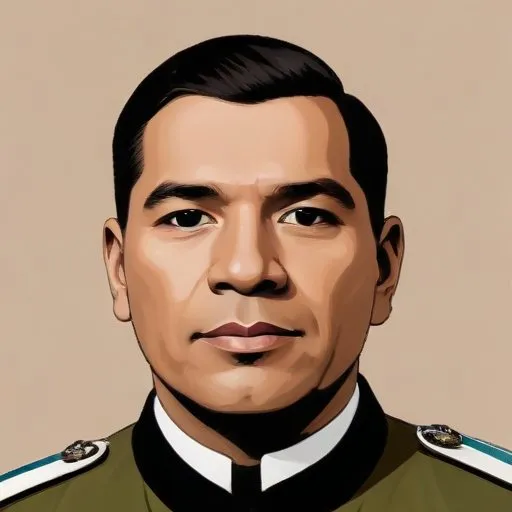
Peruvian-American colonel and astronaut who flew on two Space Shuttle missions, including the first docking with the Russian space station Mir. He's also a decorated veteran of the Gulf War.
Carlos I. Noriega is a name synonymous with excellence in space exploration and military service. As a former NASA astronaut and retired U.S. Marine Corps lieutenant colonel, Noriega has left an indelible mark on the world of space travel and beyond.
Born on October 8, 1959, in Peru, Noriega's journey to becoming a space pioneer began with his graduation from Wilcox High School in Santa Clara, California, in 1977. He then went on to earn a bachelor of science degree in computer science from the University of Southern California in 1981.
Noriega's military career took off when he joined the Naval ROTC unit at the University of Southern California and received his commission in the United States Marine Corps in 1981. He flew CH-46 Sea Knight helicopters with HMM-165 from 1983 to 1985 at Marine Corps Air Station Kaneohe Bay, Hawaii. During this period, he made two 6-month shipboard deployments in the West Pacific and Indian Ocean, including operations in support of the Multinational Peacekeeping Force in Beirut, Lebanon.
In 1988, Noriega was selected to attend the Naval Postgraduate School in Monterey, California, where he earned two master of science degrees in computer science and space systems operations. Upon graduation in 1990, he was assigned to United States Space Command in Colorado Springs, Colorado. His exceptional skills and experience soon earned him a spot in the NASA Astronaut Candidate Program in 1994.
Noriega's astronaut career was marked by several notable achievements. He flew on two Space Shuttle missions, STS-84 and STS-97, logging over 17 days in space. During these missions, he was responsible for conducting several spacewalks and deploying critical components of the International Space Station.
Noriega's outstanding service has been recognized with numerous awards and honors, including:
Carlos I. Noriega's remarkable career serves as a testament to his unwavering dedication to space exploration and national service. His contributions to the International Space Station and his commitment to advancing our understanding of space have left a lasting impact on the world.
As a trailblazing astronaut and Marine Corps officer, Noriega continues to inspire generations of scientists, engineers, and explorers, reminding us that with hard work, determination, and a passion for discovery, we can achieve greatness.
98 Years Old
American baseball player who pitched in the Major Leagues from 1965 to 1975, known for being a four-time All-Star and winning the American League ERA title in 1968.
Born in 1923
First American in space, commanded Apollo 14 mission, and walked on the Moon.
Born in 1926
One of the original seven astronauts in NASA's Project Mercury, a decorated military pilot, and a pioneer in space exploration, known for being the second American in space and commanding the first manned Gemini mission.
Born in 1923
One of the original seven astronauts in Project Mercury, this pioneer flew on three historic spaceflights, including the first American manned orbital flight and the Apollo 7 mission.
Born in 1924
One of the original Mercury Seven astronauts, he was a decorated war veteran and test pilot who later became a NASA executive, playing a crucial role in the development of the US space program.
96 Years Old
First person to walk on the Moon during the Apollo 11 mission, marking a historic milestone in space exploration.
96 Years Old
Second man to walk on the Moon during the Apollo 11 mission, a pioneering astronaut and advocate for space exploration.
96 Years Old
Led the third manned mission to land on the Moon, Apollo 12, and became the third person to walk on its surface. Known for his bold and fearless approach to space exploration.
