


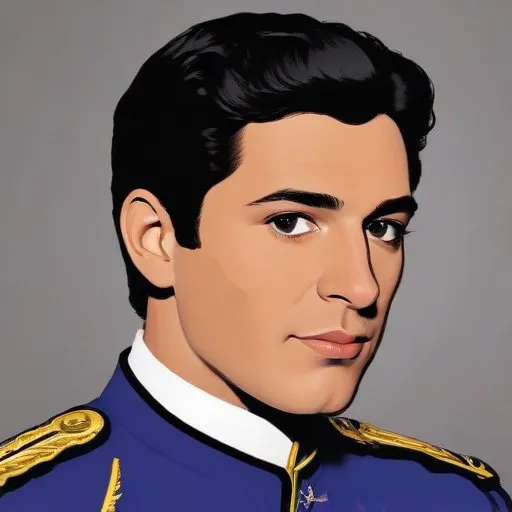
Heir to the Spanish throne, known for his royal duties and charitable work, particularly in the fields of education and culture.
Carlos, Prince of Asturias, the eldest son of King Philip II of Spain, is renowned for his tumultuous life, marked by mental instability and ultimately, a tragic demise. His short-lived existence inspired literary masterpieces, cementing his place in history as a figure of fascination and intrigue.
Born on July 8, 1545, in Valladolid, Spain, Carlos was the product of a double first-cousin marriage between King Philip II and Maria Manuela of Portugal. His paternal grandfather, Emperor Charles V, was the reigning king of Spain, making Carlos the heir apparent to the throne.
Tragically, Carlos's mother, Maria Manuela, died four days after giving birth, leaving the young prince to be raised by his paternal aunts, Maria and Joanna, until their marriages in 1548 and 1552. This emotional deprivation would have a lasting impact on Carlos's development.
Carlos was born with unequal leg length and lordosis, resulting in his shoulders and stance being asymmetrical. These physical abnormalities, combined with his behavioral issues, are often attributed to inbreeding within the House of Habsburg and the House of Aviz.
As a member of these noble families, Carlos had only four great-grandparents instead of the typical eight, and his parents shared a close coefficient of relationship, equivalent to being half-siblings. This genetic legacy would shape Carlos's life and destiny.
Philip II's frequent absences abroad and the departure of his aunts left Carlos feeling emotionally neglected. Courtiers described the young prince as spoiled and prone to tantrums, which would escalate into violent outbursts as he grew older.
Despite his privileged upbringing, Carlos's life was marked by turmoil and instability, foreshadowing the tragic events that would unfold.
In early 1568, Carlos was imprisoned by his father, King Philip II, due to his increasingly erratic behavior and perceived threat to the throne. The prince spent six months in solitary confinement, where he eventually succumbed to his fate, dying on July 24, 1568.
Carlos's imprisonment and tragic demise would later be exploited as part of Spain's Black Legend, a campaign to tarnish the reputation of the Spanish monarchy.
Carlos's life inspired literary masterpieces, including Friedrich Schiller's play Don Carlos and Giuseppe Verdi's opera of the same name. These works cemented the prince's place in the cultural consciousness, ensuring his enigmatic figure would continue to captivate audiences for centuries to come.
Despite the tragic circumstances of his life, Carlos, Prince of Asturias, remains an intriguing figure, symbolizing the complexities and pitfalls of royal privilege and the enduring power of human drama.
Carlos's life and death are a testament to the complexities of royal heritage and the darker aspects of history. His story serves as a reminder of the human cost of power struggles and the enduring impact of tragedy on art and literature.
58 Years Old
The current King of Spain, reigning since 2014, known for his efforts to modernize the monarchy and promote Spanish culture. He's also been involved in various charitable initiatives and international diplomacy.
88 Years Old
The former King of Spain who reigned from 1975 to 2014, known for transitioning the country from dictatorship to democracy and playing a key role in preventing a military coup in 1981.
