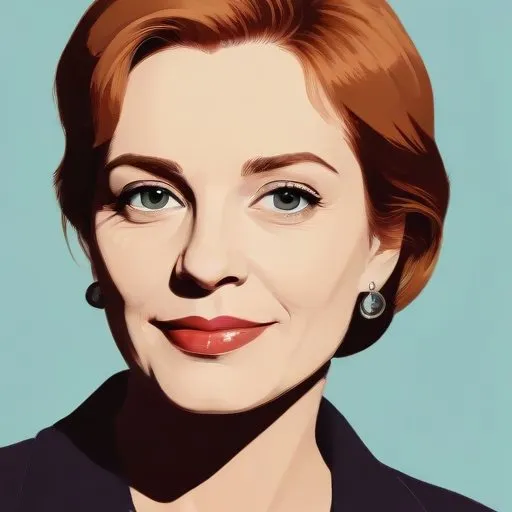
Carolyn Cassady: The Artistic Heart of the Beat Generation
A Renaissance Woman in the Midst of Rebellion
Carolyn Cassady, the American writer and artist, is best known for her integral role in the Beat Generation, a literary and cultural movement that shook the foundations of American society in the 1950s and 60s. Through her marriage to
Neal Cassady and her friendships with
Jack Kerouac,
Allen Ginsberg, and other prominent Beat figures, she became an muse and a frequent character in their works.
Early Life and the Artistic Spark
Born on April 28, 1923, in Lansing, Michigan, Carolyn Elizabeth Robinson was the youngest of five siblings. Her father, Charles S. Robinson, a college professor of nutrition and biochemist, and her mother, a former English teacher, instilled in her a strong sense of conventional values. However, Carolyn's artistic nature was evident from a young age. She began formal art lessons at 9, sold her first portrait at 14, and continued to develop her passion for fine arts and theater arts.
A Life of Creative Pursuits
Carolyn's educational pursuits took her to Bennington College, where she initially studied art and then switched to drama. In 1943, she spent six months in New York City, studying at the Traphagen School of Fashion and working for Dazians fabric company. Her artistic explorations continued as she frequented the Metropolitan Museum of Art and the Museum of Modern Art (MoMA) for inspiration.
The Beat Generation and Literary Inspiration
Carolyn's marriage to Neal Cassady in 1948 catapulted her into the midst of the Beat Generation. Her relationships with Jack Kerouac, Allen Ginsberg, and other prominent figures of the movement led to her appearances in Kerouac's works, including
On the Road and
Visions of Cody. Her own writing, although lesser-known, provides a unique perspective on the era, as seen in her memoir,
Off the Road: My Years with Cassady, Kerouac, and Ginsberg.
A Legacy of Art and Literature
Carolyn Cassady's impact on the Beat Generation extends beyond her relationships with its key figures. Her artistic pursuits, including her portrait painting and set design, influenced the aesthetic of the era. Her writing, although not as widely recognized as that of her contemporaries, offers a distinct voice and perspective on the movement.
- 1923: Born in Lansing, Michigan
- 1943: Studied in New York City
- 1948: Married Neal Cassady
- 1960s: Became a frequent character in Jack Kerouac's works
- 1990: Published memoir, Off the Road: My Years with Cassady, Kerouac, and Ginsberg
- 2013: Passed away on September 20
A Lasting Impact on Modern Society
Carolyn Cassady's contributions to the Beat Generation, both as a muse and an artist, have left an indelible mark on American literary and cultural history. Her story serves as a testament to the power of creativity and the importance of preserving the tales of those who fueled the flames of rebellion. As we look back on the era, Carolyn Cassady's artistic heart and literary spirit continue to inspire generations of writers, artists, and free thinkers.
FAQ
What was Carolyn Cassadys connection to the Beat Generation?
Carolyn Cassady was a member of the Beat Generation, married to Neal Cassady, and a close friend of authors Jack Kerouac, Allen Ginsberg, and William S. Burroughs.
What notable books did Carolyn Cassady write?
Carolyn Cassady wrote several notable books, including Heart Beat: My Life with Jack and Neal (1976) and Off the Road: Twenty Years with Neal Cassady and Jack Kerouac (1990).
What awards did Carolyn Cassady receive?
Carolyn Cassady received several awards, including the National Endowment for the Arts Fellowship in 1984.
How did Carolyn Cassadys life influence her writing?
Carolyn Cassadys life as a member of the Beat Generation and her relationships with prominent authors influenced her writing, which often explored the intersection of art, literature, and personal relationships.
What is Carolyn Cassadys legacy in American literature?
Carolyn Cassadys legacy is that of a talented writer, artist, and witness to the Beat Generation, providing a unique perspective on the era and its most prominent figures.