


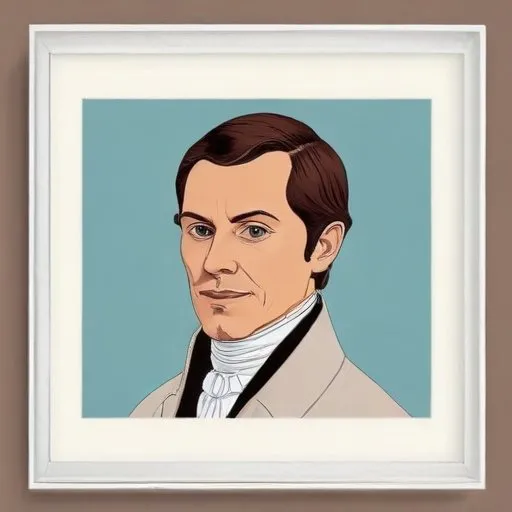
A 17th-century Danish anatomist who discovered the Bartholin's glands, a pair of glands located in the female reproductive system that produce lubrication during sexual arousal. His discovery is still an essential part of human anatomy today.
Caspar Bartholin the Younger, a 17th-century Danish anatomist, is renowned for being the first to describe the Bartholin's gland, a vital organ in the human body. This groundbreaking discovery has had a lasting impact on the field of anatomy and medical science, earning him a prominent place in the annals of history.
Born in Copenhagen, Denmark on September 10, 1655, Bartholin came from an illustrious family of scholars. His grandfather, Caspar Bartholin the Elder, was a prominent theologian and anatomist, while his father, Thomas Bartholin, was a physician, mathematician, and theologian. His uncle, Rasmus Bartholin, was a scientist and physician. This rich intellectual heritage undoubtedly influenced Bartholin's pursuit of knowledge and discovery.
Bartholin began his medical studies at the age of 16 in 1671. He then spent several years studying in the Netherlands, France, and Italy, before returning to Denmark in 1677. Upon his return, he was appointed lecturer of natural philosophy at the University of Copenhagen. The following year, he earned his medical degree and became a full professor at the university.
In 1677, Bartholin made his landmark discovery, describing the Bartholin's gland, which bears his name. This achievement not only showcased his exceptional anatomical skills but also underscored his contribution to the field of medical science.
Bartholin's academic career was marked by several notable milestones. He served as rector of the University of Copenhagen from 1687 to 1688. He also authored several works, including De tibiis veterum et earum antiquo usu (1677) and De ovariis mulierum et generationis historia epistola anatomica (1678). The latter work showcased his expertise in the field of anatomy, particularly in the study of human reproduction.
In 1680, Bartholin inherited the Hagestedgård manor house and estate at Holbæk from his father. He sold the estate twice, first in 1686 and again in 1704. In 1690, he left his academic career to become a high court judge, subsequently becoming Procurator General in 1719 and Deputy of Finance in 1724. He received the Order of the Dannebrog in 1729, a testament to his distinguished service to the monarch and the state.
Bartholin's discovery of the Bartholin's gland has had a lasting impact on the field of anatomy and medical science. His work has paved the way for further research and advancements in the understanding of human reproduction and sexual health. His legacy continues to inspire generations of scholars and medical professionals.
Caspar Bartholin the Younger's life and work are a testament to the power of dedication, hard work, and innovative thinking. His discovery of the Bartholin's gland has left an indelible mark on the history of anatomy and medical science. As we continue to celebrate his achievements, we are reminded of the importance of honoring the pioneers who have shaped our understanding of the human body.
Born in 1616
A 17th-century polymath who made significant contributions to the fields of medicine, mathematics, and theology, particularly in the discovery of the lymphatic system.
Born in 1625
A 17th-century Danish polymath who made significant contributions to the fields of medicine, mathematics, and physics, particularly in the discovery of the double refraction of light.
Born in 1588
A 17th-century Danish physician and historian who cataloged and studied ancient Scandinavian artifacts, making significant contributions to the field of antiquarianism. His work laid the foundation for modern archaeological and historical research.
Born in 1561
Developed influential mathematical concepts, including the introduction of the terms "tangent" and "secant" in trigonometry, and made significant contributions to the study of optics.
Born in 1596
A prominent Baroque painter who created elaborate, dramatic, and emotive works that adorned the ceilings of Roman palaces and churches, influencing the development of 17th-century art.
Born in 1608
Italian physiologist and physicist who studied the movement of animals and developed the concept of animal mechanics, applying mathematical and physical principles to understand biological systems.
Born in 1628
Italian physician and biologist who discovered capillaries, the tiny blood vessels connecting arteries and veins, and is considered the father of microscopy and histology.
Born in 1514
A pioneering figure in the study of human anatomy, known for performing detailed dissections and creating accurate drawings of the body's inner workings, revolutionizing medical understanding.
