


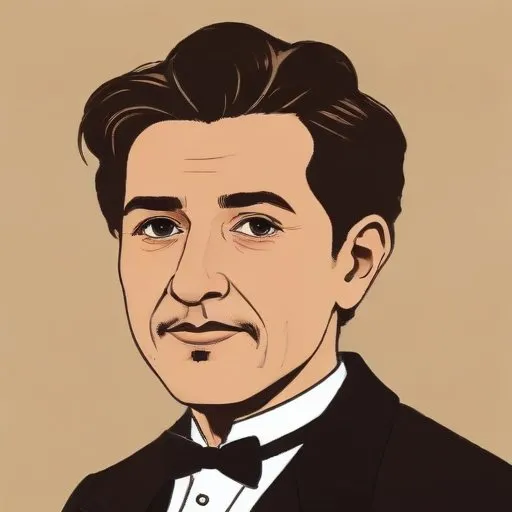
Italian physiologist and physicist who studied the movement of animals and developed the concept of animal mechanics, applying mathematical and physical principles to understand biological systems.
Giovanni Alfonso Borelli, a Renaissance Italian physiologist, physicist, and mathematician, is often credited as the father of biomechanics. He made significant contributions to the modern principle of scientific investigation by testing hypotheses against observation, a practice he inherited from Galileo.
Borelli was born on January 28, 1608, in Naples, Italy, to a Spanish infantryman, Miguel Alfonso, and a local woman, Laura Porello. He was the firstborn son among five siblings. Borelli pursued his studies in Rome, where he was trained in mathematics under the tutelage of Benedetto Castelli at the Sapienza University of Rome.
From 1635 to 1656, Borelli served as a Professor of Mathematics in Messina, Sicily. During this period, he was appointed a member of the prestigious Accademia della Fucina, an intellectual society of scientists dedicated to studying and publishing on physical and natural sciences.
Borelli's contributions to science are multifaceted. He made extensive studies of Jupiter's moons, the mechanics of animal locomotion, and the constituents of blood using microscopy. He also investigated the stomatal movement of plants and undertook studies in medicine and geology.
Borelli enjoyed the patronage of Queen Christina of Sweden, which facilitated his research and publications. His work had a significant impact on the scientific community, earning him recognition as a pioneer in his field.
Giovanni Alfonso Borelli's legacy is profound. He laid the foundation for biomechanics, a field that continues to evolve and influence various disciplines, including medicine, engineering, and sports science. His contributions to the scientific method and his emphasis on experimentation and observation have inspired generations of scientists.
In conclusion, Giovanni Alfonso Borelli was a true Renaissance man, whose groundbreaking work in biomechanics, physics, and mathematics continues to influence modern science. His legacy serves as a testament to the power of human curiosity and the importance of rigorous scientific inquiry.
Born in 1564
Pioneering astronomer, physicist, and mathematician who played a major role in the Scientific Revolution, making key discoveries that challenged Aristotelian views and laid the foundation for modern science.
Born in 1608
Developed the mercury barometer, a device that measures atmospheric pressure, and made significant contributions to the study of vacuums and fluids.
Born in 1628
Italian physician and biologist who discovered capillaries, the tiny blood vessels connecting arteries and veins, and is considered the father of microscopy and histology.
Born in 1626
An Italian physician who pioneered the study of parasites and disproved spontaneous generation, making significant contributions to the field of biology.
Born in 1682
An Italian anatomist and pathologist who pioneered the field of pathology by performing detailed autopsies to understand the causes of diseases, and is considered the father of modern anatomical pathology.
Born in 1514
A pioneering figure in the study of human anatomy, known for performing detailed dissections and creating accurate drawings of the body's inner workings, revolutionizing medical understanding.
Born in 1578
Discovered the circulatory system and described how blood flows through the body, revolutionizing understanding of human physiology.
Born in 1561
This 16th-century pioneer in the field of medicine invented the first precision thermometer, enabling accurate measurement of body temperature, and is considered the father of modern quantitative physiology.
