


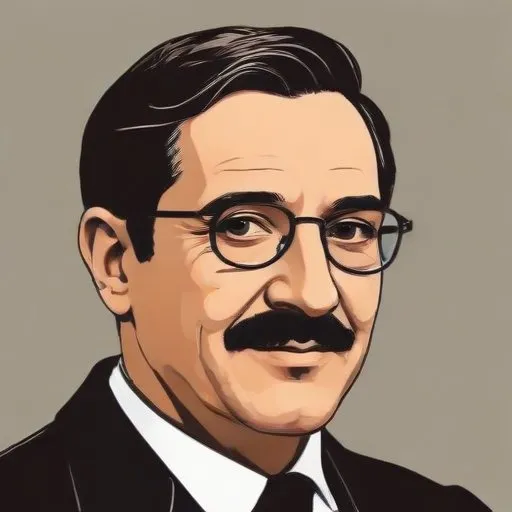
This 16th-century pioneer in the field of medicine invented the first precision thermometer, enabling accurate measurement of body temperature, and is considered the father of modern quantitative physiology.
Santorio Santorio, a renowned Italian physiologist, physician, and professor, is credited with introducing the quantitative approach into the life sciences, earning him the title of the father of experimental physiology. His groundbreaking work, particularly his book De Statica Medicina, published in 1614, had a profound impact on the medical community, influencing generations of physicians and shaping the course of medical research.
Santorio was born on March 29, 1561, in Capodistria, Istria (now Slovenia), to Antonio, a nobleman from Friuli working for the Venetian Republic, and Elisabetta Cordoni, a noblewoman from an Istrian family. He received his early education in his hometown and later continued his studies in Venice, before entering the University of Padua in 1578, where he obtained his medical degree in 1585.
Santorio's seminal work, De Statica Medicina, was a comprehensive treatise on the quantitative measurement of physiological processes, marking a significant shift from traditional Galenic medicine. This book saw multiple publications and became a foundation for modern physiology. Santorio was also an inventor, credited with designing several medical devices, including the sanctorius' thermometer, a precursor to modern thermometers.
From 1611 to 1624, Santorio held the chair of theoretical medicine at the University of Padua, where he conducted pioneering experiments on bodily temperature, insensible perspiration, and weight. During this period, he also taught and mentored students, including the famous astronomer Galileo Galilei.
In 1587, Santorio became a personal physician to a Croatian nobleman, a position he held until 1594. He later established a successful medical practice in Venice, where he continued to work until his death.
Santorio died on February 25, 1636, at the age of 74, due to complications from a urinary tract disease he had suffered from for many years. He was buried in the Servants of the Blessed Virgin Mary Church in Venice, where he had served as a physician for many years.
Santorio's contributions to physiology and medicine had far-reaching consequences, paving the way for significant advances in the field. His emphasis on quantitative measurement and experimentation laid the foundation for modern scientific methodology, influencing generations of scientists and physicians.
Santorio's work, particularly De Statica Medicina, was widely acclaimed and recognized as a landmark publication in the history of medicine. His influence extended beyond the scientific community, as his work helped to establish Padua as a center of learning and intellectual inquiry.
In conclusion, Santorio Santorio's remarkable contributions to physiology, medicine, and scientific methodology have left an indelible mark on the history of science. His pioneering spirit, innovative ideas, and dedication to advancing human knowledge have inspired generations of scholars and continue to influence the scientific community today.
Born in 1564
Pioneering astronomer, physicist, and mathematician who played a major role in the Scientific Revolution, making key discoveries that challenged Aristotelian views and laid the foundation for modern science.
Born in 1578
Discovered the circulatory system and described how blood flows through the body, revolutionizing understanding of human physiology.
Born in 1514
A pioneering figure in the study of human anatomy, known for performing detailed dissections and creating accurate drawings of the body's inner workings, revolutionizing medical understanding.
Born in 1596
Developed influential philosophical and mathematical concepts, including the famous phrase "I think, therefore I am," and laid the foundation for modern Western philosophy.
