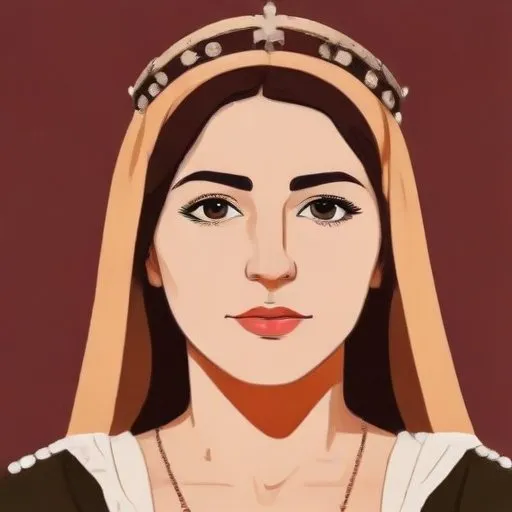
Catherine Cornaro: The Last Monarch of the Kingdom of Cyprus
A Sovereign of Unwavering Resilience
Catherine Cornaro, also known as Caterina Corner, is renowned for being the last monarch of the Kingdom of Cyprus, a titular queen of Jerusalem and Armenia. Her remarkable reign, marked by astute diplomacy and unwavering resilience, spanned from 1474 to 1489, leaving an indelible mark on the history of Cyprus and the Mediterranean region.
Early Life and Family Ties
Born on November 25, 1454, Catherine was the daughter of Marco Cornaro, a Venetian nobleman and Knight of the Holy Roman Empire, and Fiorenza Crispo. Her family had a long history of associations with Cyprus, primarily through trade and commerce. The Cornaro family administered sugar mills in the Episkopi area of the Limassol District and exported Cypriot products to Venice.
Rise to Power and Marriage to James II
The succession crisis following the death of King
John II of Cyprus in 1458 led to a heated dispute between his daughter Charlotte and her illegitimate half-brother James. In 1468, Catherine's father and uncle negotiated her marriage to James, securing the throne for the young couple. This union was extremely advantageous to the Republic of Venice, as it guaranteed the commercial rights and privileges of Venice in Cyprus.
Reign and Diplomatic Efforts
Upon James' death in 1474, Catherine became the regent of Cyprus during the minority of her son
James III. Following her son's death in 1474, she ascended to the throne, becoming the queen regnant of Cyprus. Catherine's reign was marked by her efforts to maintain the independence of Cyprus and navigate the complex web of alliances between European powers. Her diplomatic prowess earned her the title of "Daughter of Saint Mark," allowing the Republic of Venice to claim control of Cyprus.
Cultural and Artistic Legacy
Catherine was a patron of the arts, and her likeness was captured by some of the most prominent artists of the Renaissance, including
Albrecht Dürer, Titian, Giovanni Bellini, and Giorgione.
Personal Milestones and Key Life Events
- Birth: November 25, 1454
- Marriage to James II of Cyprus: 1468
- Ascension to the throne: 1474
- Death: July 10, 1510
Historical Context and Legacy
Catherine Cornaro's reign marked the end of the Kingdom of Cyprus as an independent state. Her legacy extends beyond her role as a sovereign, as she played a significant part in shaping the destiny of Cyprus and the Mediterranean region during a tumultuous period in history. Her diplomatic and cultural achievements have cemented her place as one of the most notable female figures of the Renaissance.
Comparative Analysis with Contemporaries
Catherine Cornaro's reign coincided with the rise of powerful women in Europe, including
Isabella I of Castile and
Elizabeth I of England. While her contemporaries were shaping the course of European politics, Catherine navigated the complex landscape of Mediterranean politics, earning her a place among the most notable female rulers of the Renaissance.
Influence on Modern Society
Catherine Cornaro's legacy extends beyond her historical significance. Her reign has inspired countless works of art, literature, and music, ensuring her place in the cultural consciousness of the modern world. Her diplomatic efforts and cultural patronage have made her an enduring symbol of female leadership and empowerment.
FAQ
Who was Catherine Cornaro?
Catherine Cornaro was the Queen of Cyprus from 1474 to 1489, and the last Queen of the Lusignan dynasty.
What was Catherine Cornaros connection to the Lusignan dynasty?
Catherine Cornaro was a member of the Cornaro family of Venice, and she married James II of Cyprus, becoming the Queen of Cyprus through her marriage.
What was Catherine Cornaros role in the history of Cyprus?
Catherine Cornaro played a significant role in the history of Cyprus, as her reign marked the end of the Lusignan dynasty and the beginning of Venetian rule on the island.
How did Catherine Cornaro lose her throne?
Catherine Cornaro was forced to abdicate her throne and sell her claims to the Republic of Venice, which then occupied Cyprus.
What was Catherine Cornaros later life like?
After relinquishing her throne, Catherine Cornaro returned to her familys estates in Venice, where she lived out the rest of her life in relative obscurity.