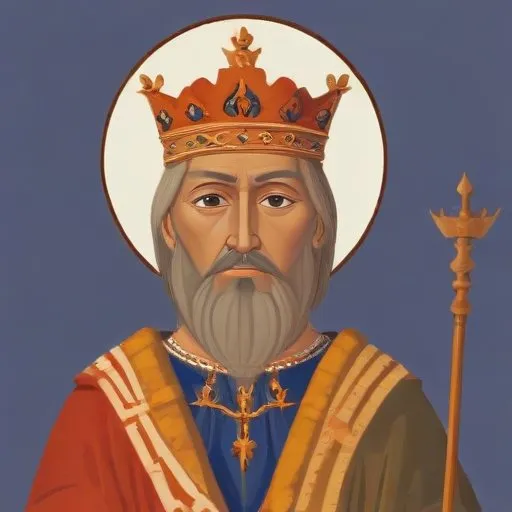
John II of Cyprus: The King of Controversy
A Turbulent Reign: Conflict and Power Struggles
John II of Cyprus, also known as John III, was the King of Cyprus and Armenia, and titular King of Jerusalem from 1432 to 1458. He is famously known for his tumultuous reign, marked by power struggles, family feuds, and a trail of controversy that left a lasting impact on the kingdom.
Early Life and Ascension to the Throne
Born on May 16, 1418, in Nicosia, Cyprus, John was the son of King Janus of Cyprus and Charlotte of Bourbon. He was preceded by his father, who ruled Cyprus from 1398 to 1432. Upon his father's death, John inherited the throne, becoming the new King of Cyprus and Armenia.
Marriages and Family Feuds
John's personal life was marred by controversy, particularly with regards to his marriages. He married Amadea Palaiologina of Monferrato, daughter of John Jacob Palaiologos, Marquess of Montferrat, between 1435 and 1440. The marriage was childless, and he subsequently married
Helena Palaiologina, a distant relative of his first wife, who had one daughter,
Charlotte, Queen of Cyprus. However, his illegitimate son, James II, King of Cyprus, would later become a point of contention in his reign.
The Struggle for Power: Helena and James
Helena and James vied for influence over John, leading to a bitter power struggle. James, who was appointed Archbishop of Nicosia at the age of 16, proved to be a problematic choice, murdering the royal chamberlain and being stripped of his title. John eventually forgave him and restored him to the Archbishopric. The rivalry between Helena and James continued until Helena's death in 1458.
Loss of Corycus and Failure of Diplomacy
During John's reign, the Cypriot stronghold in mainland Anatolia, Corycus, was lost to the Karamanids in 1448. This significant loss weakened Cyprus' position in the region and marked a failure in John's diplomatic efforts.
Legacy and Death
John II of Cyprus died on July 28, 1458, in Nicosia, leaving behind a tumultuous legacy. His daughter, Charlotte, succeeded him to the throne, but the kingdom was left reeling from the power struggles and controversies that plagued his reign.
Controversies and Public Perception
John's reign was marked by controversy, family feuds, and power struggles, which have left a lasting impact on his public perception. His tumultuous reign has been the subject of much debate and speculation, with some viewing him as a conflicted leader who failed to maintain stability in the kingdom.
Philosophical Contributions and Beliefs
While John's reign was marked by controversy, he did leave behind a philosophical legacy. His struggles with power and family dynamics have been the subject of much analysis, offering insights into the complexities of medieval politics and the human condition.
Historical Context and Legacy
John II of Cyprus ruled during a time of great upheaval in the region. His reign was marked by the decline of the Crusades and the rise of the Ottoman Empire. In this context, his legacy serves as a testament to the fragility of power and the complexities of human relationships.
Key Life Events and Milestones
- May 16, 1418: Born in Nicosia, Cyprus
- 1432: Became King of Cyprus and Armenia
- Between 1435 and 1440: Married Amadea Palaiologina of Monferrato
- 1448: Lost Corycus to the Karamanids
- 1458: Died in Nicosia, Cyprus, succeeded by his daughter Charlotte
Trivia and Fun Facts
- John II of Cyprus was also known as John III
- He was the son of King Janus of Cyprus and Charlotte of Bourbon
- His illegitimate son, James II, King of Cyprus, would later become a significant figure in Cypriot history
John II of Cyprus' tumultuous reign serves as a reminder of the complexities of power, family dynamics, and the human condition. His legacy continues to fascinate historians and scholars, offering a unique glimpse into the medieval world and its many mysteries.