


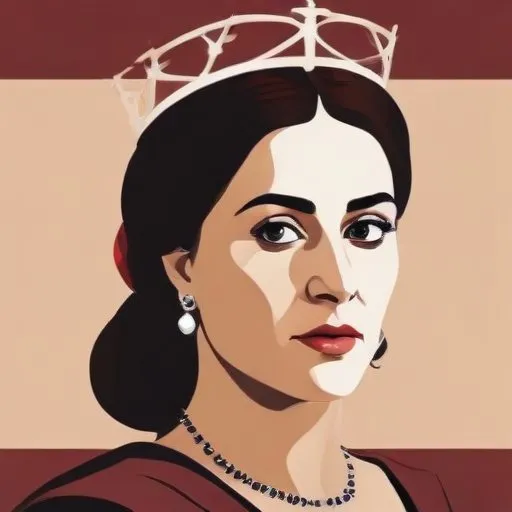
The queen who ruled Cyprus from 1432 to 1458, known for her diplomatic efforts to strengthen the kingdom's ties with European powers and her role in the Crusades.
Helena Palaiologina, a member of the prestigious Palaiologos family, is renowned for her remarkable rise to power as Queen of Cyprus and Armenia, as well as her tumultuous marriage to King John II of Cyprus and Armenia. Her life was marked by controversies, scandals, and a strong sense of justice, earning her a place in the annals of history.
Born on February 3, 1428, in the castle of Mistras, Morea, Greece, Helena was the only child of Theodore II Palaiologos, Despot of Morea, and Cleofa Malatesta. Her paternal grandfather was Byzantine Emperor Manuel II Palaiologos, and her uncles included emperors John VIII Palaiologos and Constantine XI Palaiologos.
On February 3, 1442, Helena married King John II of Cyprus and Armenia, becoming his second wife after the death of his first wife, Amadea of Montferrat. The marriage was a strategic alliance between the Palaiologos and Lusignan dynasties, solidifying Helena's position as Queen of Cyprus and Armenia, as well as titular Queen consort of Jerusalem and Princess of Antioch.
Helena's reign was marked by controversy, including allegations that she ordered the nose of her husband's mistress, Marietta de Patras, to be cut off. Marietta had borne John a son, James, several years before his marriage to Helena. Additionally, rumors swirled that Helena poisoned her son-in-law, John of Portugal, further solidifying her reputation as a ruthless and cunning queen.
Despite her controversial reputation, Helena demonstrated compassion and generosity towards the refugees fleeing the Fall of Constantinople in 1453. She welcomed and assisted many Byzantine refugees in Cyprus, earning her a reputation as a caring and empathetic leader.
Helena's life was a complex tapestry of power struggles, controversies, and humanitarian efforts. Her reign as Queen of Cyprus and Armenia left an indelible mark on the region's history, and her legacy continues to fascinate historians and scholars to this day. As a member of the esteemed Palaiologos family, Helena's life serves as a testament to the intrigue and drama that often accompanied the lives of Byzantine royalty.
Helena Palaiologina's life was a testament to the complexities and intrigues of Byzantine royalty. Despite her controversial reputation, she demonstrated compassion and generosity towards those in need, earning her a place in the annals of history as a multifaceted and intriguing figure.
Born in 1418
King of Cyprus, Armenia, and Jerusalem, ruling from 1432 to 1458, known for his reign during a time of significant cultural and economic development in the region.
Born in 1328
King of Cyprus who ruled from 1359 to 1369 and is known for his military campaigns and attempts to reclaim the Holy Land from the Muslims. He was also a patron of the arts and literature.
Born in 1454
The last monarch of the Kingdom of Cyprus, who sold her kingdom to Venice in 1489, and is remembered for her remarkable diplomatic skills and strategic thinking.
