


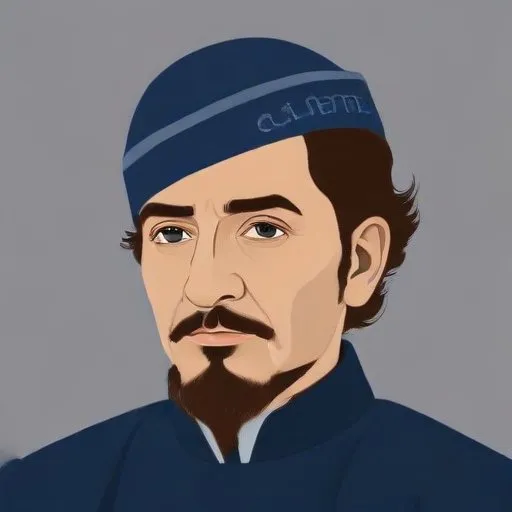
King of Cyprus who ruled from 1359 to 1369 and is known for his military campaigns and attempts to reclaim the Holy Land from the Muslims. He was also a patron of the arts and literature.
Peter I of Cyprus, also known as Pierre I de Lusignan, was a king with a mission – to fight Islam and reclaim the Kingdom of Jerusalem for Christianity. His entire life was devoted to this purpose, and he became famous for his unwavering dedication to this cause.
Born on October 9, 1328, in Nicosia, Cyprus, Peter was the second son of Hugh IV of Cyprus and his second wife, Alice of Ibelin. Although his older brother, Guy, was the heir apparent, Guy's early death led to Peter being crowned King of Cyprus in 1359.
Before his crowning, Peter traveled secretly to Europe with his brother John, which upset their father and resulted in their imprisonment for leaving without permission. Despite this setback, Peter was determined to pursue his dream of reclaiming the Holy Land.
In 1360, Peter was crowned as the titular King of Jerusalem, succeeding his father. With his new title came a sense of responsibility and purpose. He understood the importance of his kingdom, which had become the last stronghold of Christianity in the Middle East after the fall of Acre in 1291.
Peter's ambition was to retake the Kingdom of Jerusalem, which the house of Lusignan had long claimed. He was willing to do whatever it took to achieve this goal, even if it meant facing opposition from within his own kingdom.
Peter married Eschiva de Montfort, the only daughter and heiress of Humphrey de Montfort, in 1342. Unfortunately, Eschiva died before 1350, leaving Peter a widower at a young age.
Little is known about Peter's personal life beyond his marriages and his dedication to his mission. His focus on reclaiming the Holy Land overshadowed all other aspects of his life.
During his reign, Peter achieved some military successes, but he was unable to complete many of his plans due to internal disputes and power struggles within his kingdom. Despite this, he remained committed to his goal of reclaiming the Holy Land.
Tragically, Peter's life was cut short when he was assassinated by three of his own knights in 1369. His legacy, however, continued to inspire others to pursue the dream of reclaiming the Kingdom of Jerusalem.
Peter's unwavering dedication to his mission serves as a inspiration to anyone who has ever dared to dream big. His story reminds us that even in the face of adversity, we can remain committed to our goals and strive to make a difference in the world.
In conclusion, Peter I of Cyprus was a king with a vision, a mission, and a legacy that continues to inspire us to this day. His story is a testament to the power of determination and dedication, and serves as a reminder that even the smallest actions can have a profound impact on the world.
Born in 1328
King of Cyprus who ruled from 1359 to 1369 and is known for his military campaigns and attempts to reclaim the Holy Land from the Muslims. He was also a patron of the arts and literature.
Born in 1418
King of Cyprus, Armenia, and Jerusalem, ruling from 1432 to 1458, known for his reign during a time of significant cultural and economic development in the region.
Born in 1476
French regent who governed France during her son's minority, playing a crucial role in shaping the country's politics and economy during the Italian Wars. She's also known for her patronage of the arts and humanism.
Born in 1454
The last monarch of the Kingdom of Cyprus, who sold her kingdom to Venice in 1489, and is remembered for her remarkable diplomatic skills and strategic thinking.
