


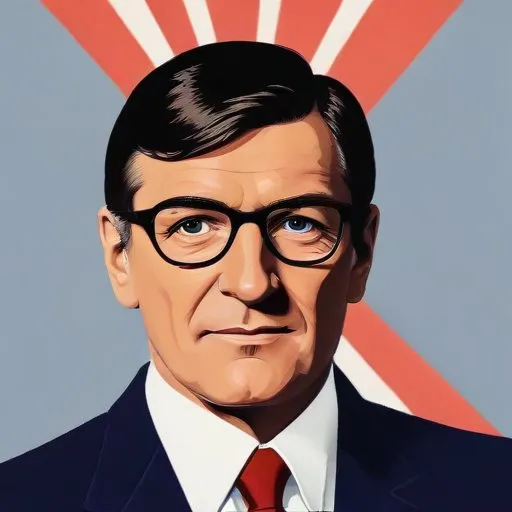
A British politician who served as Secretary of State for Transport, known for his role in shaping the country's transportation policies and infrastructure development.
Cecil Parkinson, a stalwart of British politics, is remembered for his meteoric rise to power as a cabinet minister under Margaret Thatcher's government, as well as his dramatic fall from grace following a scandalous affair. As a chartered accountant turned politician, Parkinson's astute financial acumen and shrewd political instincts propelled him to the forefront of British politics in the 1980s.
Born on September 1, 1931, in Carnforth, Lancashire, Parkinson's humble beginnings belied his future success. His father, Sydney, a warehouseman, and mother, Bridget, instilled in him a strong work ethic and values that would shape his future. Educated at Lancaster Royal Grammar School, Parkinson won a scholarship to Cambridge University, where he read English at Emmanuel College, later switching to law. A talented athlete, he competed in track and field, earning a Blue in 1950.
After national service in the Royal Air Force, Parkinson entered politics, initially as a Labour supporter. However, he soon switched allegiance to the Conservative Party, won election to Parliament in 1970, and quickly rose through the ranks. In 1979, he joined Margaret Thatcher's government as a minister, and his financial expertise earned him a key role in managing the Conservative Party's 1983 election campaign.
Parkinson's meteoric rise was halted abruptly in 1983 when it was revealed that his former secretary, Sara Keays, was pregnant with his child. The scandal led to his resignation as Secretary of State for Trade and Industry, a post he had held for only a few months. The aftermath of the scandal was far from trivial, as Keays gave birth to a daughter, Flora, who was born with severe cerebral palsy.
Despite the scandal, Parkinson continued to serve in government, holding posts as Secretary of State for Energy and Secretary of State for Transport. He resigned from the latter role in 1990, on the same day as Thatcher's resignation as Prime Minister. Created Baron Parkinson in 1992, he served in the House of Lords until his retirement in 2015.
Throughout his political career, Parkinson was known for his conservative beliefs, championing free market economics and limited government intervention. His experience as a chartered accountant informed his economic policies, which were geared towards promoting business growth and individual enterprise.
Today, Cecil Parkinson's legacy serves as a poignant reminder of the fragility of political power and the consequences of personal indiscretions. Despite his meteoric rise and fall, Parkinson's contributions to British politics remain a testament to his intellect, tenacity, and unwavering commitment to conservative ideals.
Born in 1925
The first female Prime Minister of the United Kingdom, serving from 1979 to 1990, known for her conservative policies and leadership during the Falklands War.
83 Years Old
A former Prime Minister of the United Kingdom, he led the country from 1990 to 1997, playing a key role in shaping the nation's economy and foreign policy during a tumultuous period.
Born in 1916
The Prime Minister who led the UK into the European Economic Community (EEC) and navigated the country through a period of economic and industrial turmoil. He's also known for his diplomatic efforts, particularly in regards to the Cold War.
Born in 1903
A British aristocrat who served as Prime Minister from 1963 to 1964, known for his brief tenure and aristocratic background.
Born in 1894
A British politician who served as Prime Minister from 1957 to 1963, known for leading the country through a period of economic prosperity and decolonization.
Born in 1912
A British politician who served as Secretary of State for Health, infamous for his controversial "Rivers of Blood" speech on immigration, sparking national debate and outrage. He was a polarizing figure in British politics.
Born in 1912
A British racing driver who won the 1958 British Grand Prix, and is remembered for his brief but successful Formula One career.
88 Years Old
A British journalist-turned-politician who served as Secretary of State for Transport, known for privatizing British Telecom and introducing the first commercial TV franchises.
